If you are a brand buyer sourcing bags from China in 2026, the honest answer is: the landscape has not moved as much as trade headlines suggest, but the levers have. Labor is not dramatically cheaper in China than it was three years ago. What has changed is that factories are sharper about what they will and will not run at small quantities, sustainability materials are no longer a marketing footnote, and freight planning has become as important as the quote itself. This white paper compiles what we actually see on the Dongguan floor every month, what buyers ask us, and where the real cost levers sit.
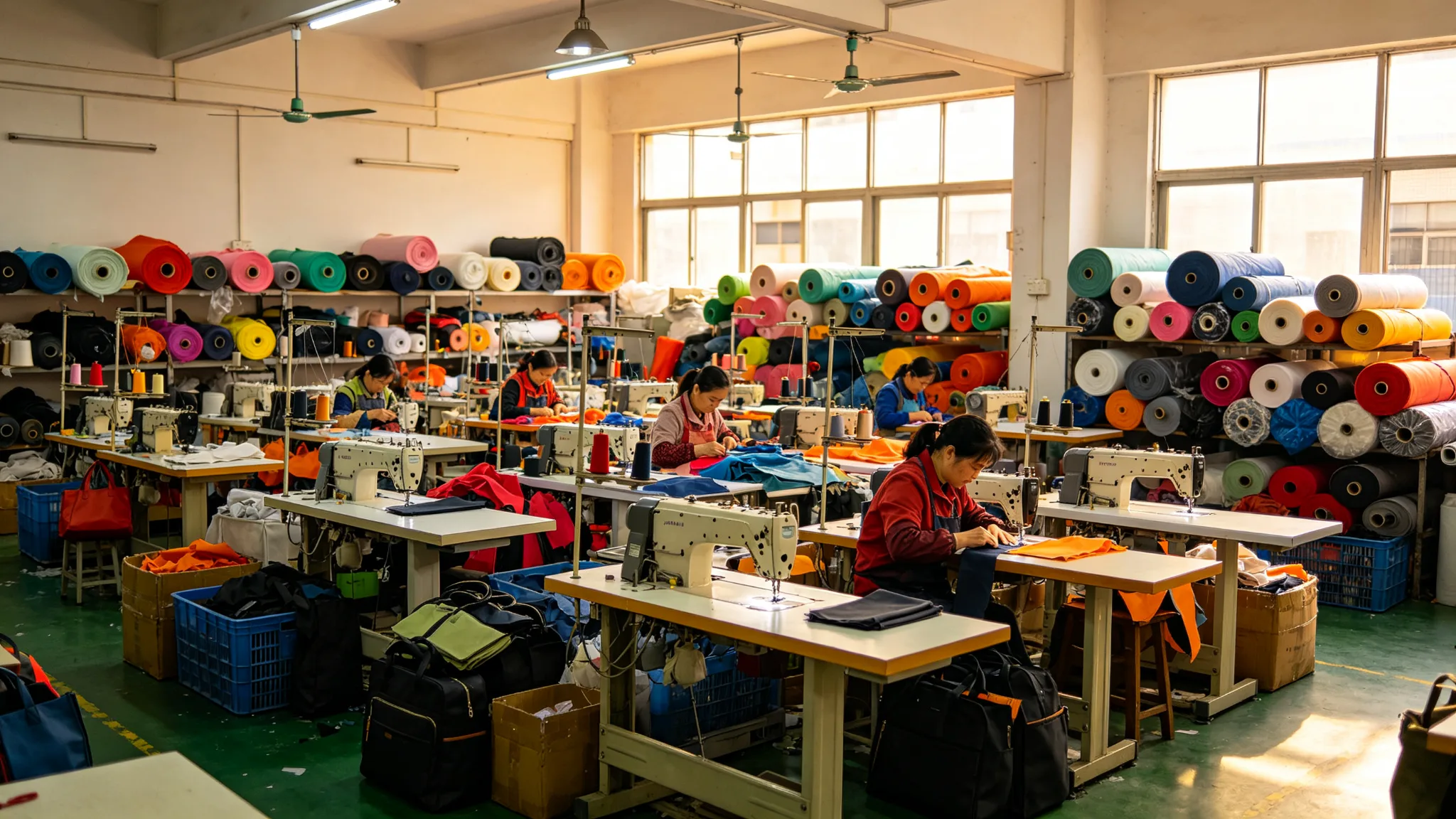
What a Bag Actually Costs in 2026
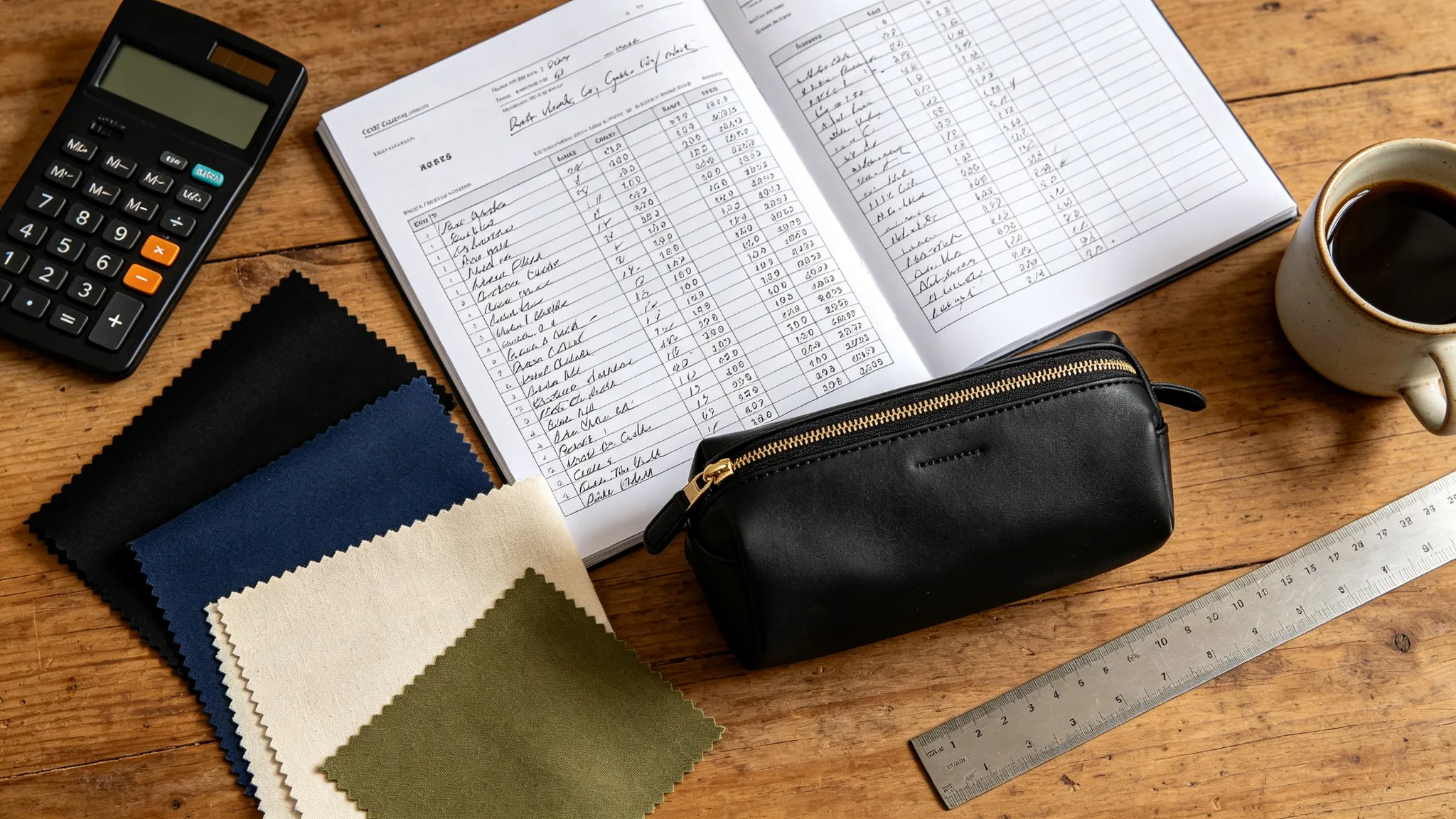
Start with the cost structure, because it determines which levers matter. For a typical custom cosmetic pouch or canvas tote FOB Dongguan, the unit price splits roughly like this: fabric and lining 40–50%, hardware (zippers, pulls, hooks) 15–20%, direct labor 20–25%, decoration (print, embroidery, foil) 5–10%, and factory overhead plus margin 5–10%. That means a 10% reduction in fabric cost moves the unit price about 5 points; a 50% reduction in decoration moves it 3–4 points. Buyers who negotiate only on the total number without looking at this split usually end up trading material weight for a fake discount.
| Cost Component | Share of FOB Price | What Moves It |
|---|---|---|
| Fabric & lining | 40–50% | GSM, fabric type, custom dye vs. stock color, r vs. virgin |
| Hardware | 15–20% | Zipper brand (YKK vs. local), pulls, snaps, webbing |
| Direct labor | 20–25% | Bag complexity, lining, finishing steps |
| Decoration | 5–10% | Print colors, embroidery stitch count, foil vs. print |
| Overhead & margin | 5–10% | Factory utilization, QC level, payment terms |
The realistic FOB ranges we quote in 2026, at 2,000 pieces for zippered pouches and 1,000 pieces for totes, look like the table below. These are not aspirational numbers — they are the ranges we send out on a normal quote week. If you want the line-by-line logic applied to one real order, our 1,000-piece cosmetic bag cost breakdown walks through every component.
Materials: The rPET Shift Is Real, but It Has Fine Print
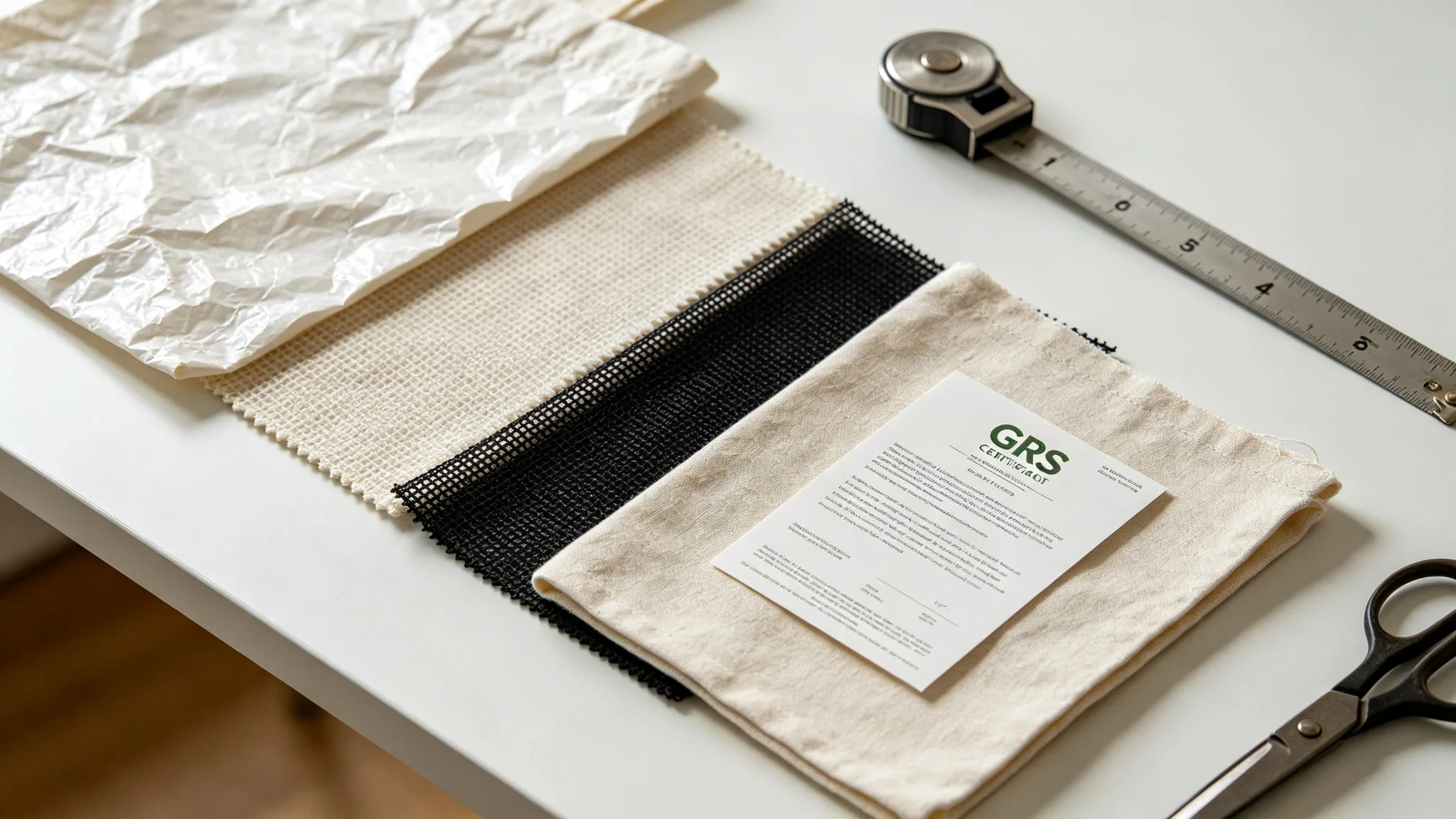
The biggest material shift in 2026 is not exotic — it is rPET. Recycled polyester made from PET bottles has stopped being a marketing story and become a default request from mid-size beauty and lifestyle brands. The cost gap over virgin polyester is 10–25% at the fabric mill level, and that flows through to the bag. What surprises buyers is that the gap is not closing fast: rPET supply is still tighter than virgin, and GRS-certified fabric carries audit paperwork that most small mills cannot carry.
| Material | 2026 FOB Cost Index (virgin PET = 1.0) | Best For |
|---|---|---|
| Virgin 210D / 600D polyester | 1.0 (baseline) | Budget gift bags, promotional items |
| rPET (GRS-certified) | 1.10–1.25 | ESG-committed beauty and lifestyle brands |
| Recycled nylon | 1.30–1.50 | Premium pouch, durable daily carry |
| Organic cotton canvas (GOTS) | 1.40–1.60 | Totes, grocery, corporate gifting |
| Recycled PU / vegan leather | 1.50–1.80 | Premium beauty accessories |
The fine print on "recycled" claims
If your bag says "100% recycled" or "made from X plastic bottles", you need GRS or equivalent chain-of-custody certification on the fabric mill and on the finished bag. Without it, the claim itself is the compliance risk — not the fabric. Plan 2–3 extra weeks and ask your supplier which mill the GRS certificate actually belongs to. For the full material comparison, see our fabric selection guide.
Capacity and Lead Times: The Calendar Still Wins
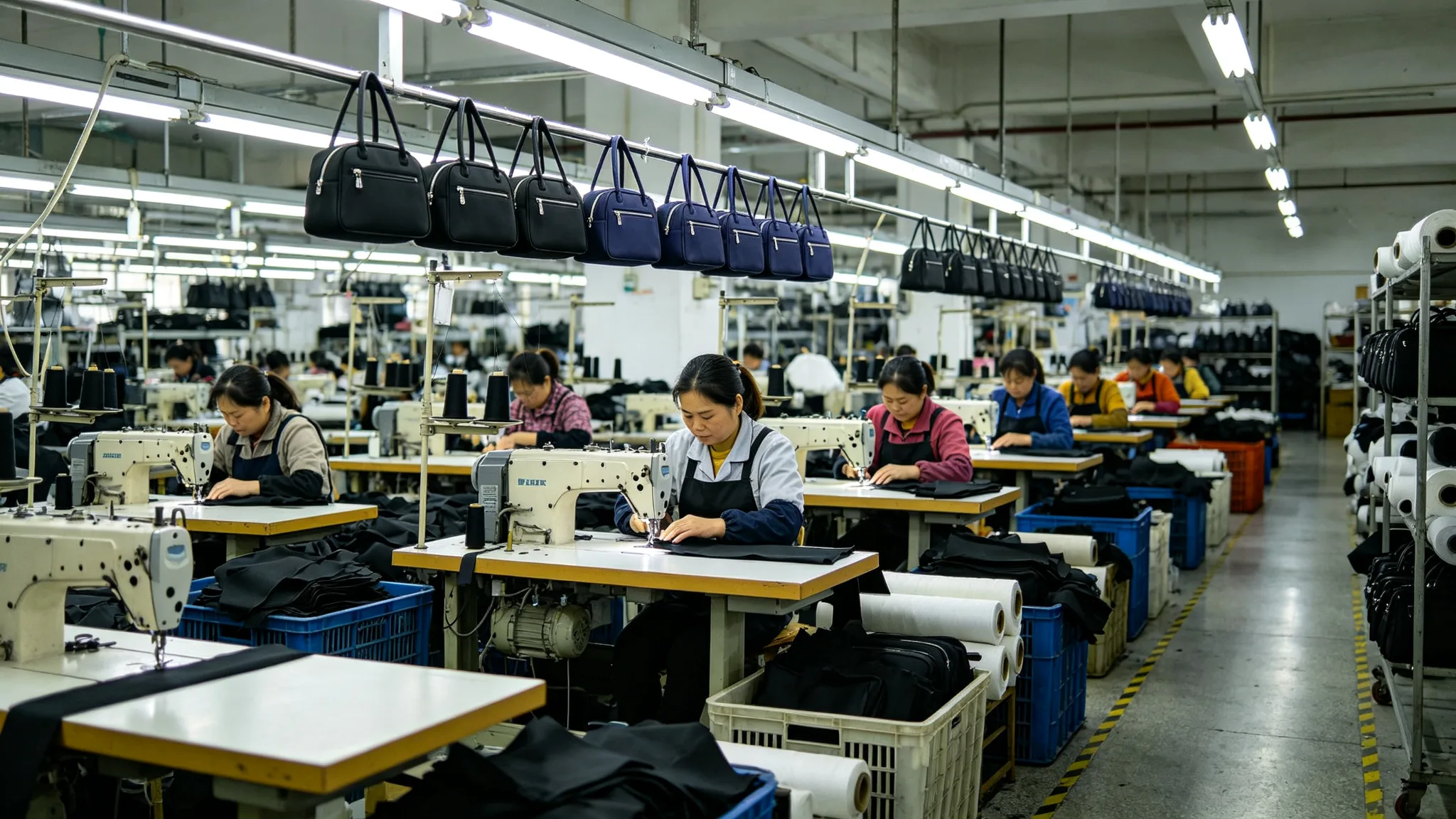
Chinese bag factories have not added meaningful sewing capacity since 2022. The industry contracted during the post-2023 inventory correction and has not re-expanded. That means the factory floor is busier than the macro numbers suggest, and Q3 in particular is tight. A typical custom bag order moves through the stages below; these are our own measured cycles, not aspirational marketing numbers.
Quotation & tech pack
Specs, quantities, decoration confirmed. Itemized quote returned within 24–48 hours.
Sampling
Pattern, material sourcing, embroidery or print digitization, physical prototype. Two revision rounds included.
Approval & fabric buy
Sample signed off, fabric ordered. Stock fabric ships in days; custom-dyed adds 3–5 days.
Bulk production & QC
Cutting, sewing, decoration, finishing, in-line checks. AQL 2.5 final inspection.
Packing, booking, vessel
Carton marking, container booking, then 18–25 days sea to US West Coast.
Net: a 2,000-piece order confirmed in September lands on the US West Coast in mid-November. That is workable for non-seasonal goods. It is not workable for holiday retail — those buyers need to have confirmed bulk the previous December. For the full season-by-season math, our Christmas sourcing calendar shows how the same timeline shifts.
China vs. Southeast Asia: The Honest Comparison
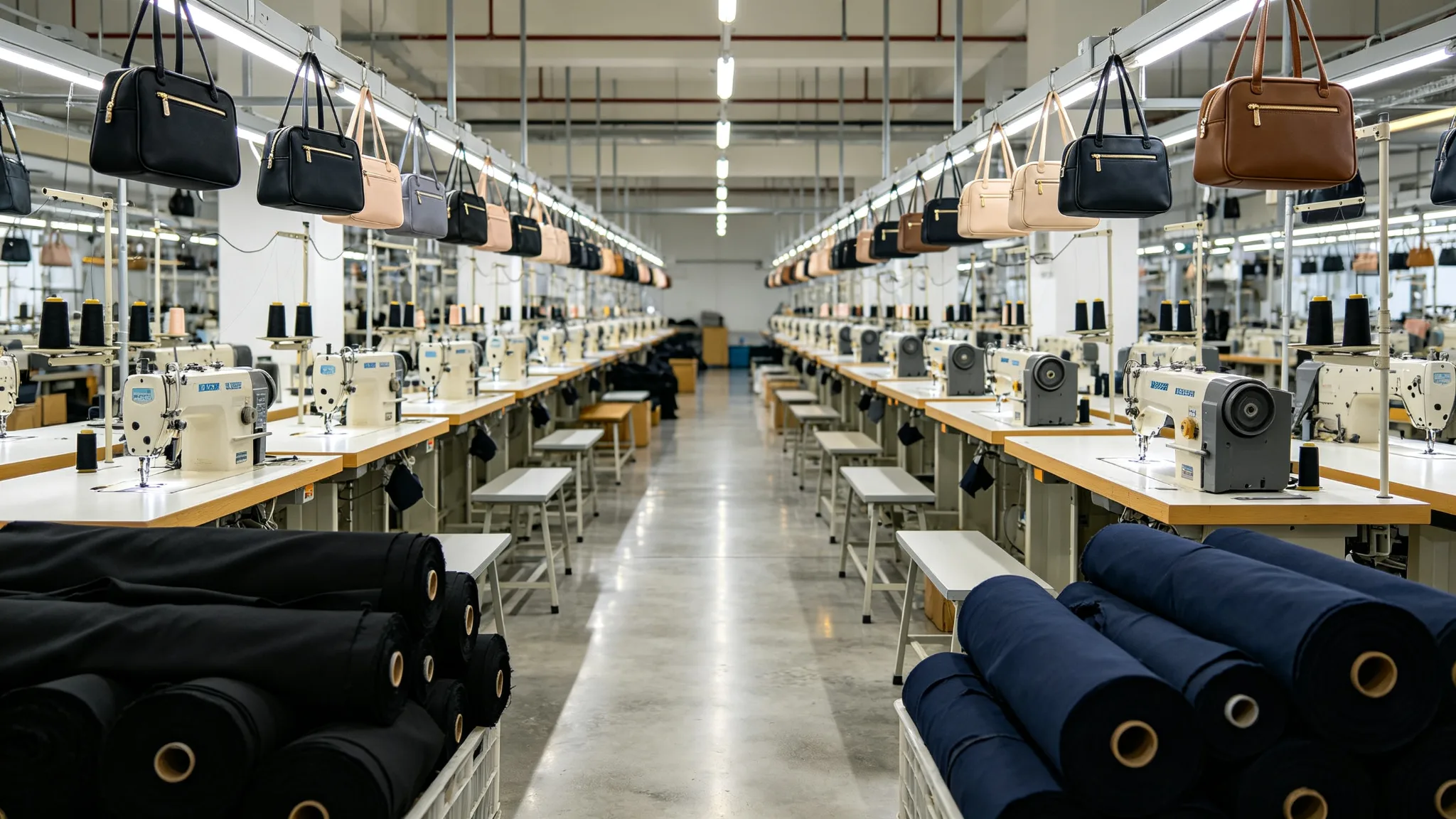
Buyers ask this every week. The honest version is nuanced. Vietnam, Indonesia, and Cambodia now offer real labor-cost advantages for simple sewn goods — a basic cotton tote with a one-color print can be 15–25% cheaper out of Vietnam than out of China. But the comparison changes the moment the bag needs anything non-standard: custom color, multi-color print, embroidery, metal hardware, a zipper with a branded pull, or a small first run under 1,000 pieces.
| Factor | China (Dongguan) | Vietnam / SE Asia |
|---|---|---|
| Labor cost advantage | Higher but stable | 15–25% lower on simple sewn goods |
| Fabric & hardware supply | Within 1 hour; 200+ fabric mills | Most fabric still imported from China |
| Decoration (print / embroidery / foil) | Mature, fast, multi-color | Limited; often subcontracted back to China |
| Low MOQ flexibility (500–1,000 pcs) | Common practice | Usually 3,000+ MOQ |
| Sample turnaround | 7–12 days | 15–25 days |
Practical take: if your product is a plain unprinted canvas tote at 10,000+ pieces, Southeast Asia is worth quoting. If it is a custom cosmetic pouch with branded zipper pulls, foil logo, and a first run of 1,000 pieces, the savings vanish in logistics, samples, and engineering changes. We see buyers split programs strategically — commodity volume to SE Asia, branded and low-MOQ work to China.
MOQ Is Moving, but Not the Way You Think
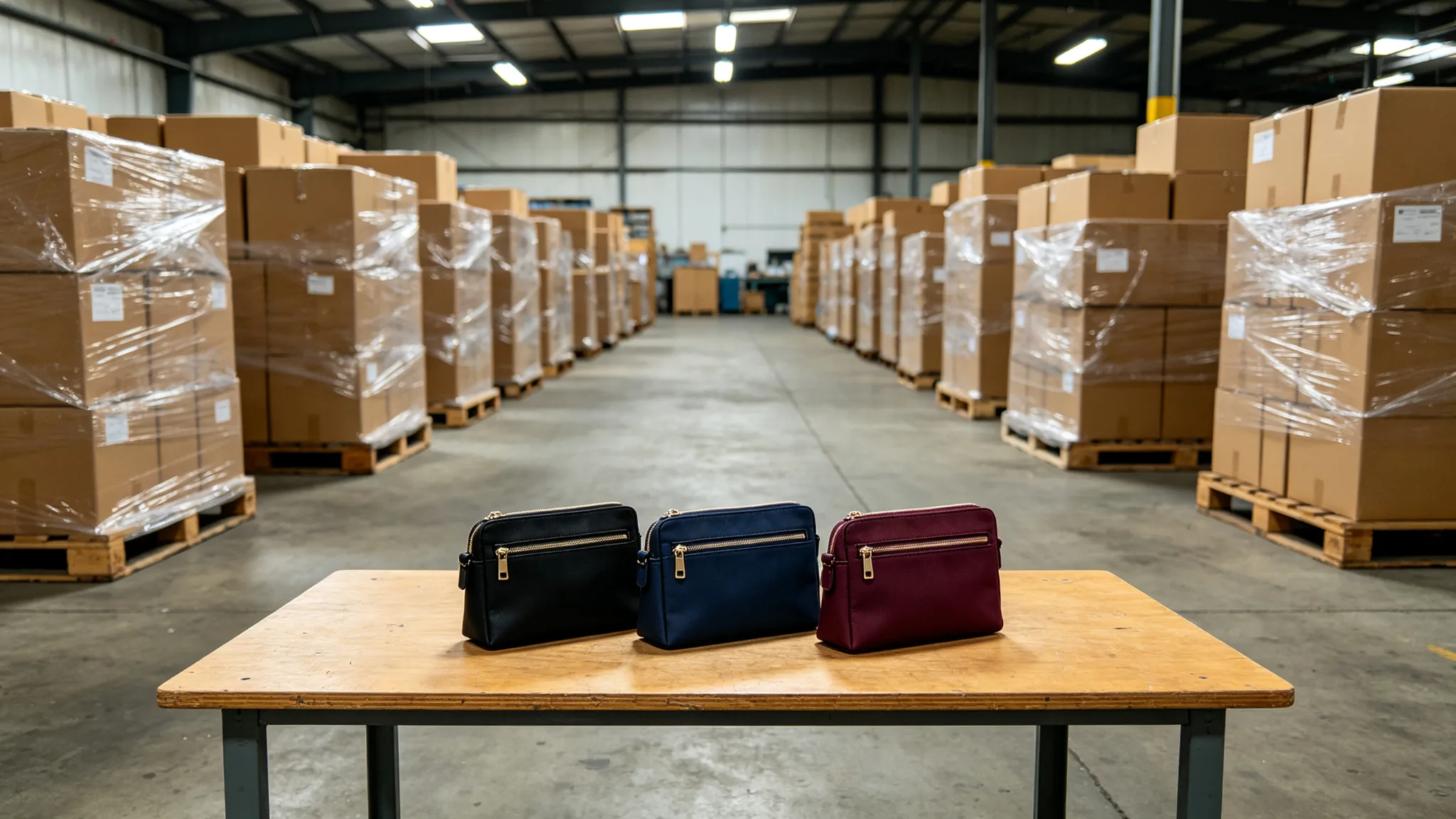
Two years ago, "low MOQ" was a marketing phrase. In 2026 it is a real program tier. Most of our buyers now split orders: a 500-piece low-MOQ first run to test a design or a seasonal color, followed by a 3,000–5,000-piece reorder once the sell-through data is in. The unit price on the 500-piece run is 15–25% higher than the 3,000-piece run, but the inventory risk saved is usually worth it. For the full MOQ landscape, see our MOQ buyer's guide.
Compliance Is the Gate, Not the Afterthought
The compliance burden on a bag order is not growing — it is just less forgiving. US importers and EU retailers are auditing test reports at the buyer's desk, not at the border. The three items to have ready before bulk:
- CPSIA (US children's products): applies when the bag is marketed to children 12 and under. Lead and phthalate limits apply to the finished article, not just the fabric. Third-party test reports are required.
- California Prop 65: warning label may be needed for certain coatings, prints, or metallic trims. Confirm with your importer or retail customer; the label text is standardized.
- EU REACH / UK REACH: restricted substances list applies to all consumer bags sold in the EU/UK. Nickel release on metal hardware and AZO dyes on fabric are the two items buyers forget.
- BSCI / Sedex audit: not mandatory by law, but every mid-size European retail customer now asks for it. Plan the audit cycle 6 months before your peak order.
Our packaging and labeling guide covers label content, country-of-origin, and care labels in detail. The practical move is to list the compliance requirements in the tech pack at the quotation stage, not after sample approval.

Freight: The Number Everyone Forgets to Budget
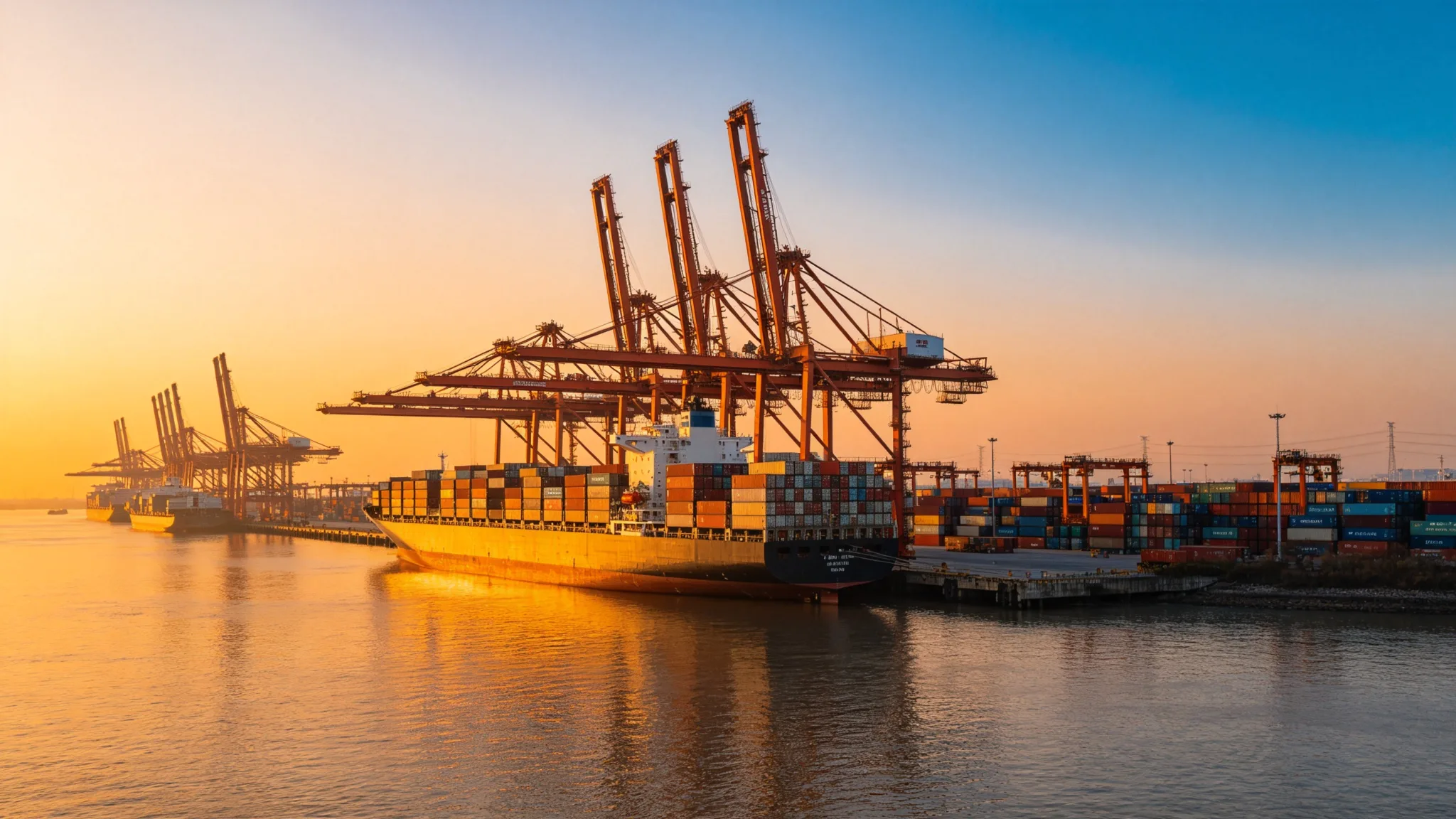
Sea freight from Shenzhen/Yantian to the US West Coast runs roughly $2,500–$4,500 per 40HQ in normal season, and spikes to $6,000–$9,000 during the Q3 peak. That is the difference between a $0.45 FOB pouch landing at $0.60 vs. $0.85. The 2026 pattern we see: buyers who order in April–May land cheap; buyers who order in September pay the peak premium and wait longer for the container slot. Our landed-cost guide walks through duty, customs, and the actual per-unit freight math.
The 12-Month Outlook
We expect four things over the next four quarters:
- rPET pricing softens slightly as more mills certify, but the 10% gap stays — it is a supply issue, not a marketing one.
- Low-MOQ tiers become standard, not a premium program. Factories that cannot run 500-piece tests will lose DTC brand buyers.
- Trade policy noise stays high, but actual landed duty on polyester bags has not moved as dramatically as headlines suggest. The bigger risk is port delay, not tariff.
- AI-assisted sampling accelerates: digital renderings and tech packs now cut the first sample round by 3–4 days. Physical samples still decide, but they come faster.

What Buyers Should Actually Check on a Production Run
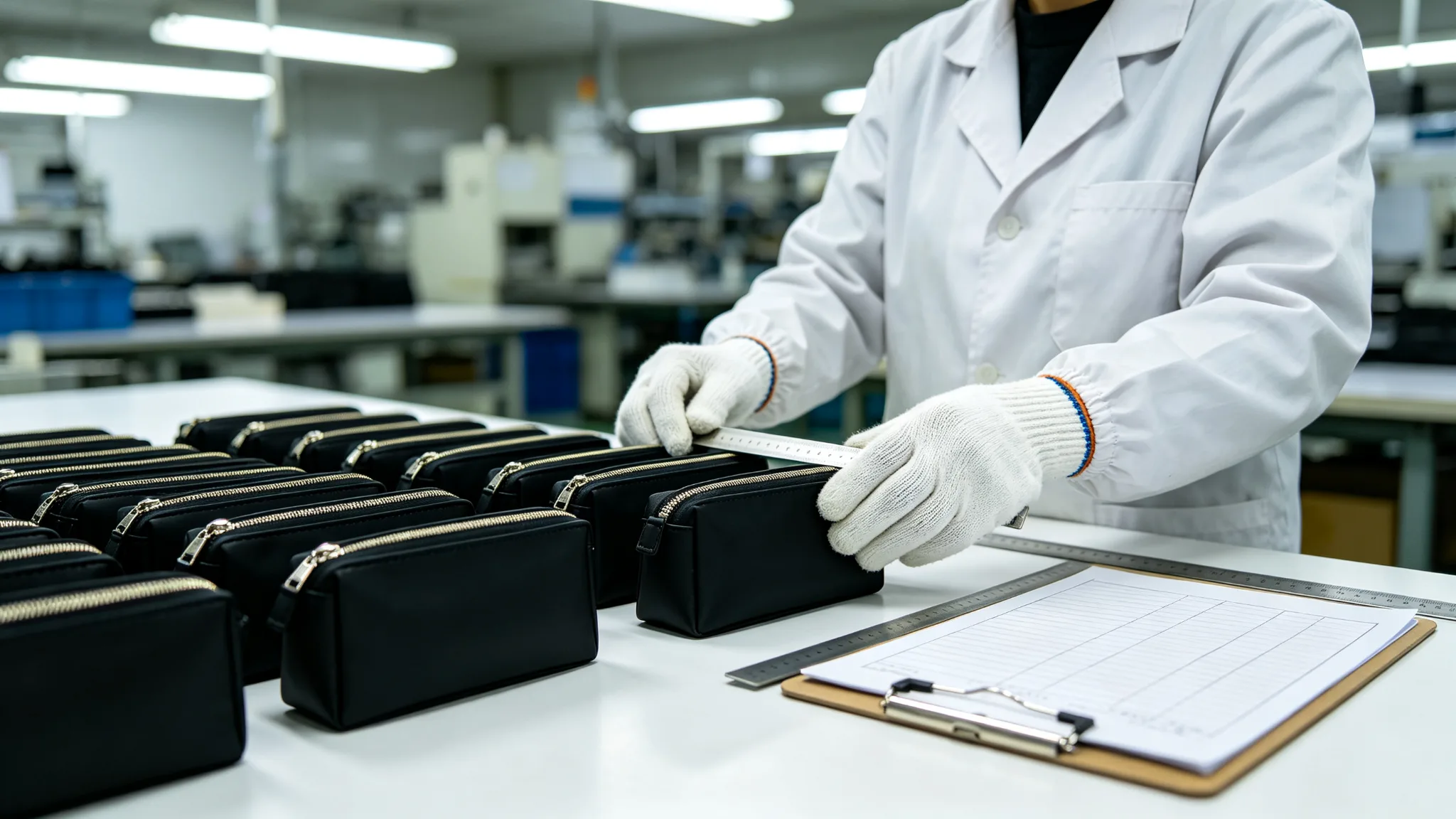
Most QC failures in bag production are not catastrophic defects. They are consistent small issues: zipper alignment off by a few millimeters, print color drifted between lot A and lot B, lining stitched 5 mm off the seam, label wrong. AQL 2.5 catches these. Beyond that, the three checks that matter:
- Color lab dip approval before bulk, signed on a physical swatch not a screen. Our color matching guide explains why.
- First-article approval after the bulk cut, before the full run. This is the cheapest fix point.
- Final random inspection at AQL 2.5, with measurement checks on dimensions and hardware function.
Frequently Asked Questions
Is China still a good place to source custom bags in 2026?
Yes, for custom bags with decoration, small-to-medium MOQs, and fast iterations. China's advantage in 2026 is not the cheapest unit price but the densest supply chain: fabric, hardware, zippers, printing, and embroidery all within an hour of most Dongguan factories. Vietnam and Indonesia win on labor cost for simple sewn tote bags, but they struggle with complex decoration, small MOQ flexibility, and color matching. For cosmetic bags, gift bags, and branded programs, China remains the default.
How much does it actually cost to OEM a custom bag from China in 2026?
A simple 210D polyester drawstring pouch runs $0.35–$0.65 FOB at 5,000 pieces. A 600D polyester zippered cosmetic pouch runs $1.20–$2.50 at 2,000 pieces. A cotton canvas tote (12 oz, one-color print) runs $1.80–$3.20 at 1,000 pieces. These are factory-ex-work FOB Dongguan prices; they exclude shipping, duty, and your margin. Material is roughly 40–50% of the unit price, labor 20–25%, hardware 15–20%, and decoration 5–10%.
What is the typical lead time for custom bag OEM in 2026?
Sampling takes 7–12 days from approved tech pack. Bulk production takes 4–6 weeks depending on order complexity. Sea freight to the US West Coast adds 18–25 days. So a 2,000-piece order confirmed on September 1 typically ships from China in mid-October and lands in the US West Coast in mid-November. Q3 peak season adds 1–2 weeks to both production and freight.
What is the minimum order quantity for custom bags in 2026?
The market standard has not moved much: 1,000 pieces per style for zippered cosmetic and gift bags, 3,000 pieces for simple drawstring or paper bags. What has changed is that more factories now offer a low-MOQ tier at 500 pieces per style at a 15–25% unit-price premium, which suits first-time buyers and seasonal test runs. MerrisBags runs this low-MOQ program explicitly; it is not a negotiation trick, it just reflects the higher setup cost per unit.
Do I need GRS or other sustainability certificates for bag orders?
Not for every order. GRS is required when your brand itself makes a recycled-content claim on the product or packaging, or when a major retailer asks for it. rPET fabric without GRS still works, but you cannot label it "100% recycled". Plan 2–3 extra weeks for GRS material sourcing and audit paperwork, and expect a 10–25% fabric price premium over virgin polyester.
Get a Factory-Side Quote, Not a Sales Number
A white paper is useful only if it changes what you ask your next supplier. The questions that matter in 2026 are not "what is your best price" but "show me the cost breakdown", "what is your actual Q3 lead time", and "can you run 500 pieces as a first test". MerrisBags answers all three on the first quote. We are a Dongguan OEM bag factory running cosmetic bags, tote bags, and gift bags for beauty and lifestyle brands worldwide, with low-MOQ flexibility and itemized FOB pricing.
Browse our cosmetic bag catalog and tote and shopping bag range, or send your brief through the contact form or WhatsApp at +86 151 1281 5393. We will come back within 24 hours with an itemized quote, a sampling timeline, and a freight estimate for your target market.
The buyers who are not surprised by 2026 are the ones who stopped negotiating the unit price and started negotiating the calendar, the material specification, and the compliance file. The factory floor has not changed; the buyer who knows which numbers to ask for has.