Short answer: a Pantone reference starts the conversation, but it does not approve a production color. Reliable custom bag color matching requires the exact material, a physical lab dip or component sample, agreed viewing light, a signed master and dye-lot checks before cutting. If any of those references change, the color decision must be reopened.
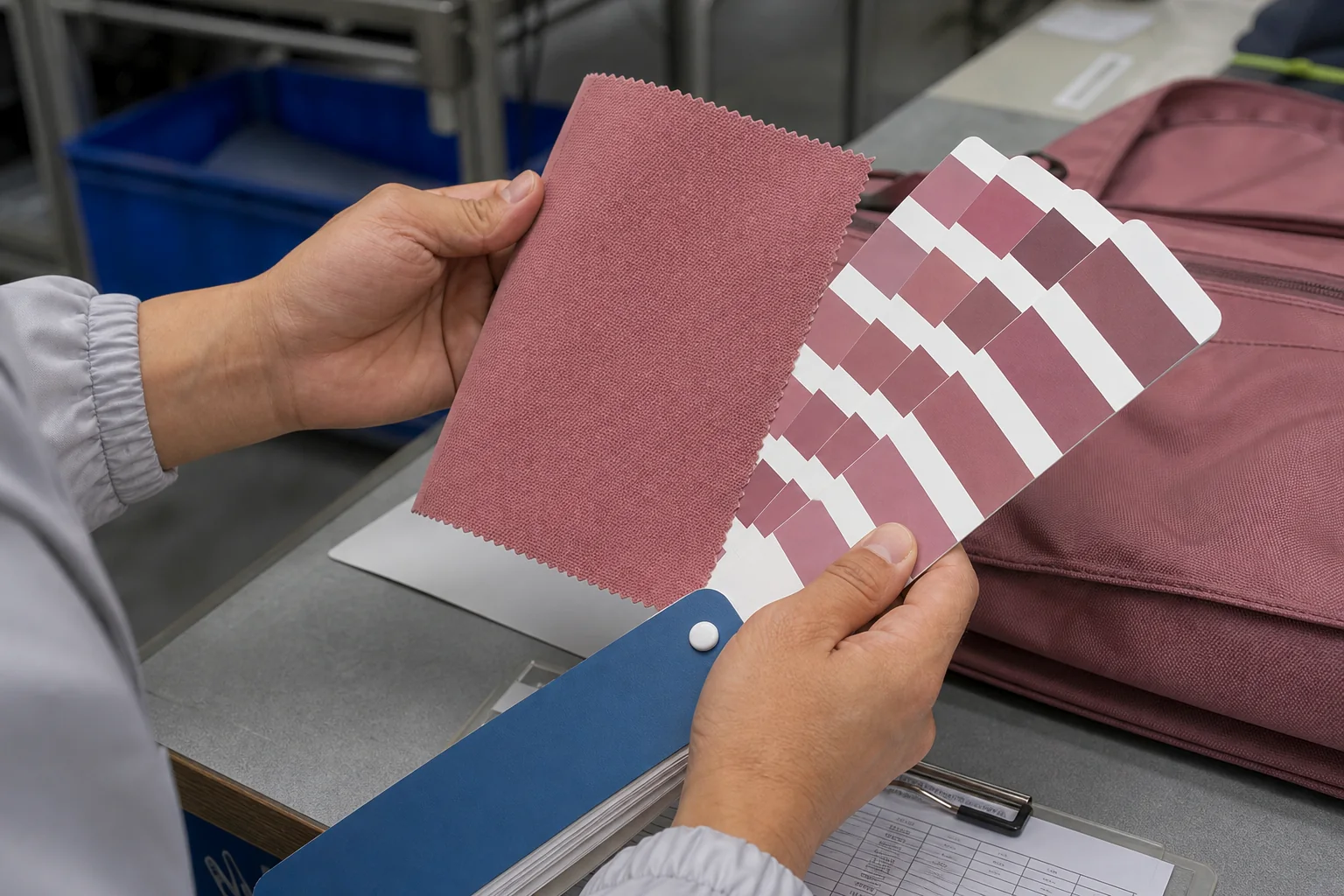
Pantone Is a Target, Not the Finished Standard
Buyers often send a color number and expect every part of the bag to match it exactly. That works poorly in production. A printed color chip, a textile cotton chip and a coated plastic reference do not have the same surface, gloss or light response. Even two references carrying a similar color name may be built for different substrates.
State which physical guide supplied the target and record its edition or reference type. For textile materials, a textile reference is normally more useful than a coated-paper chip. For PU, silicone patches or painted metal, the supplier still needs to make a substrate-specific sample. Screenshots, phone photos and monitor values can support discussion, but should never become the approval master.
What a Lab Dip Actually Approves
A lab dip is a small cutting of the intended fabric dyed with a proposed formula before the mill commits to bulk. We normally ask for three options when the target is difficult: one closest to the request, one slightly lighter or warmer, and one adjusted in the opposite direction. That makes the buyer's preference clearer than repeatedly saying “a little closer.”
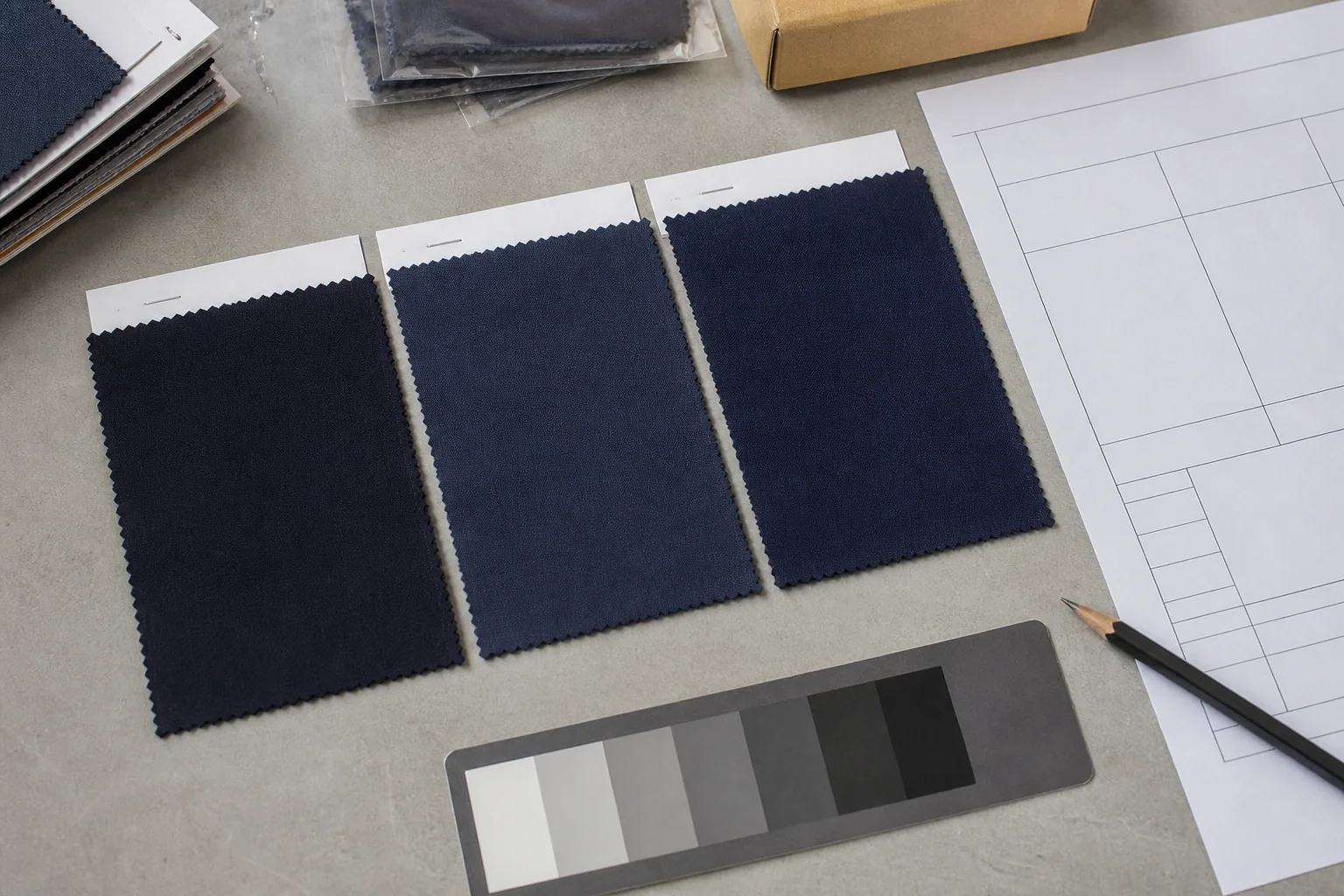
The approval applies to that fabric construction and finish. If the mill changes fiber content, yarn, coating, lamination or finishing temperature, request a new submission. A good record includes material code, color target, option number, date, approver, light source and any accepted limitation.
Check Color Under More Than One Light
A sample can match in daylight and turn greener, duller or more purple under retail lighting. This is metamerism: two materials appear similar under one light but separate under another because their spectral responses differ. For consumer bags, review at least a daylight condition and the lighting that matters at retail or during use.
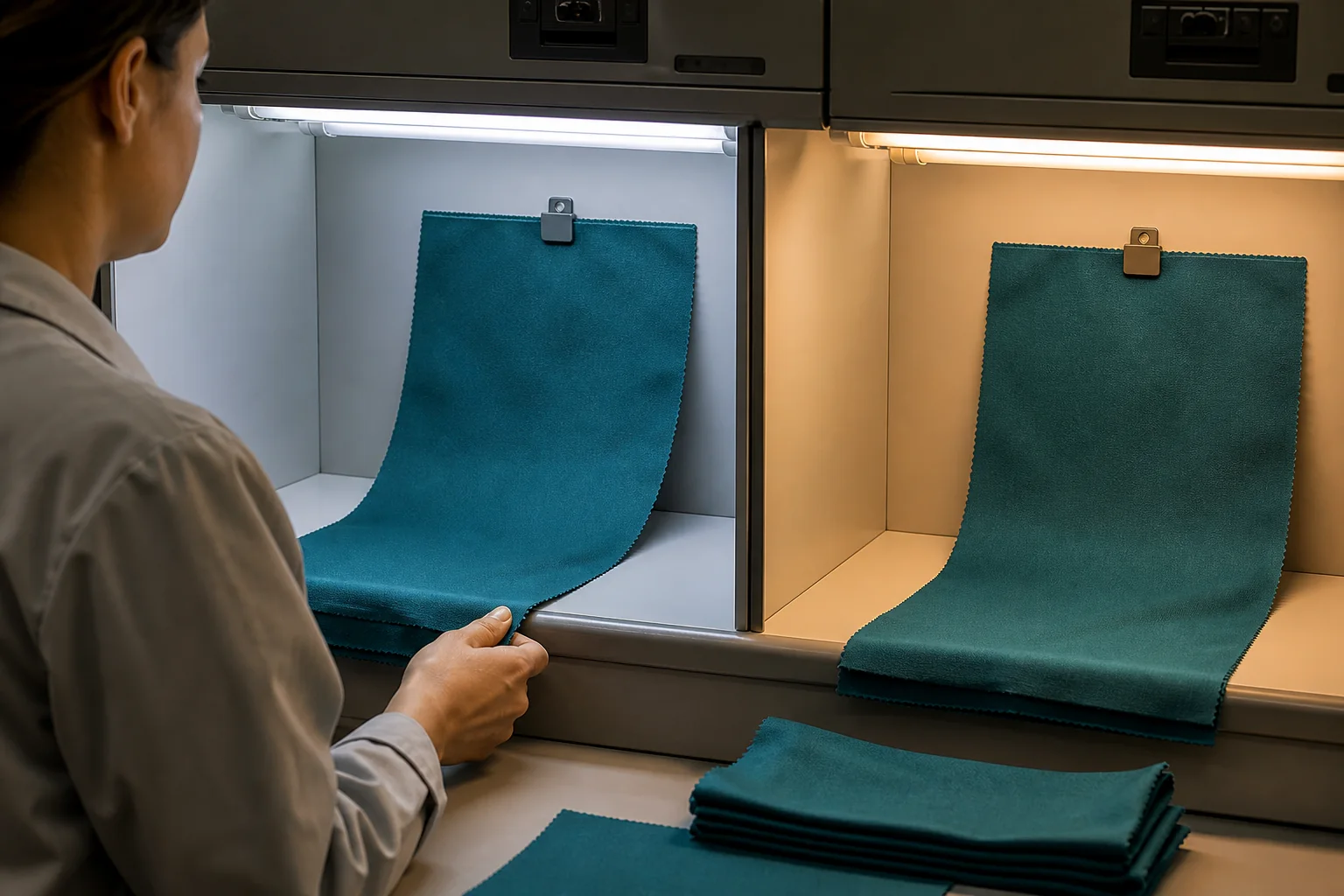
| Viewing condition | What it reveals | Approval use |
|---|---|---|
| Daylight reference | General hue and undertone | Primary material decision |
| Cool retail light | Blue/green shifts and fluorescent response | Store presentation check |
| Warm light | Red/yellow shift and component mismatch | Lifestyle and hospitality products |
| Low ambient light | Contrast between logo, trim and body | Usability and brand visibility |
The Same Color Formula Will Not Look the Same on Every Material
Nylon, polyester, cotton canvas, microfiber, PU, zipper tape and webbing use different fibers and finishing systems. Texture also changes perceived depth: a smooth coated surface may look darker than a woven fabric even when an instrument reports a small difference. Trying to force one formula across all parts often wastes sample rounds.
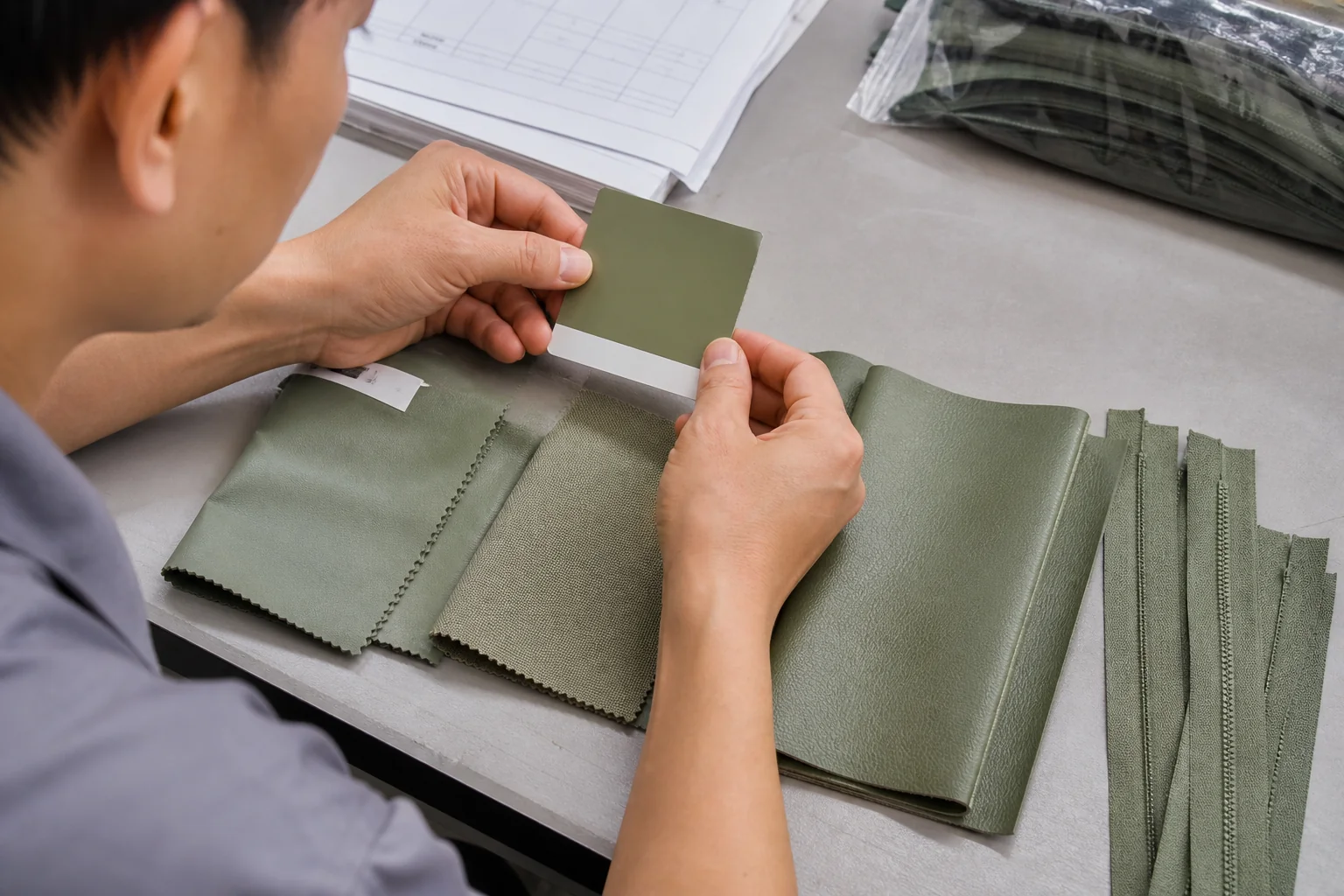
Approve the main body first, then judge secondary components beside it. A zipper may be accepted as the nearest standard shade while a visible logo patch needs a dedicated sample. Put that hierarchy into the bill of materials and tech pack. Our bag tech pack guide explains how to keep those component references tied to the correct revision.
Visual Approval and Instrument Data Serve Different Jobs
A spectrophotometer helps factories quantify drift and communicate with a dye house. It does not replace visual judgment on textured, glossy, curved or translucent materials. Instrument readings also depend on aperture, calibration, measurement mode and sample preparation. A single number without a method is not a useful contract.
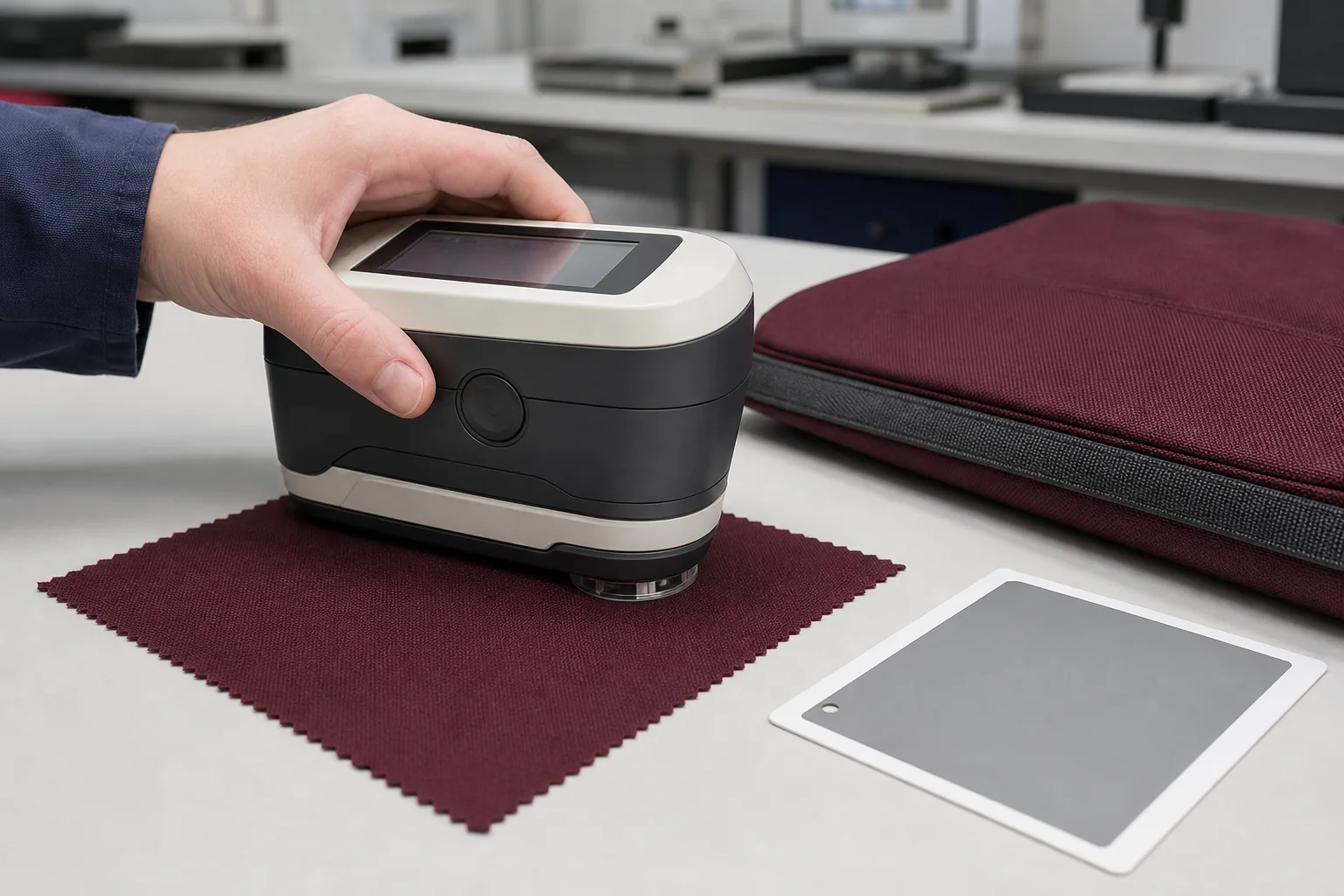
For most bag programs, the safest acceptance standard is a signed physical master plus a documented visual method. Numerical tolerance can support that standard, but should not be copied from another material or project without trials.
Control the Bulk Dye Lot Before Cutting
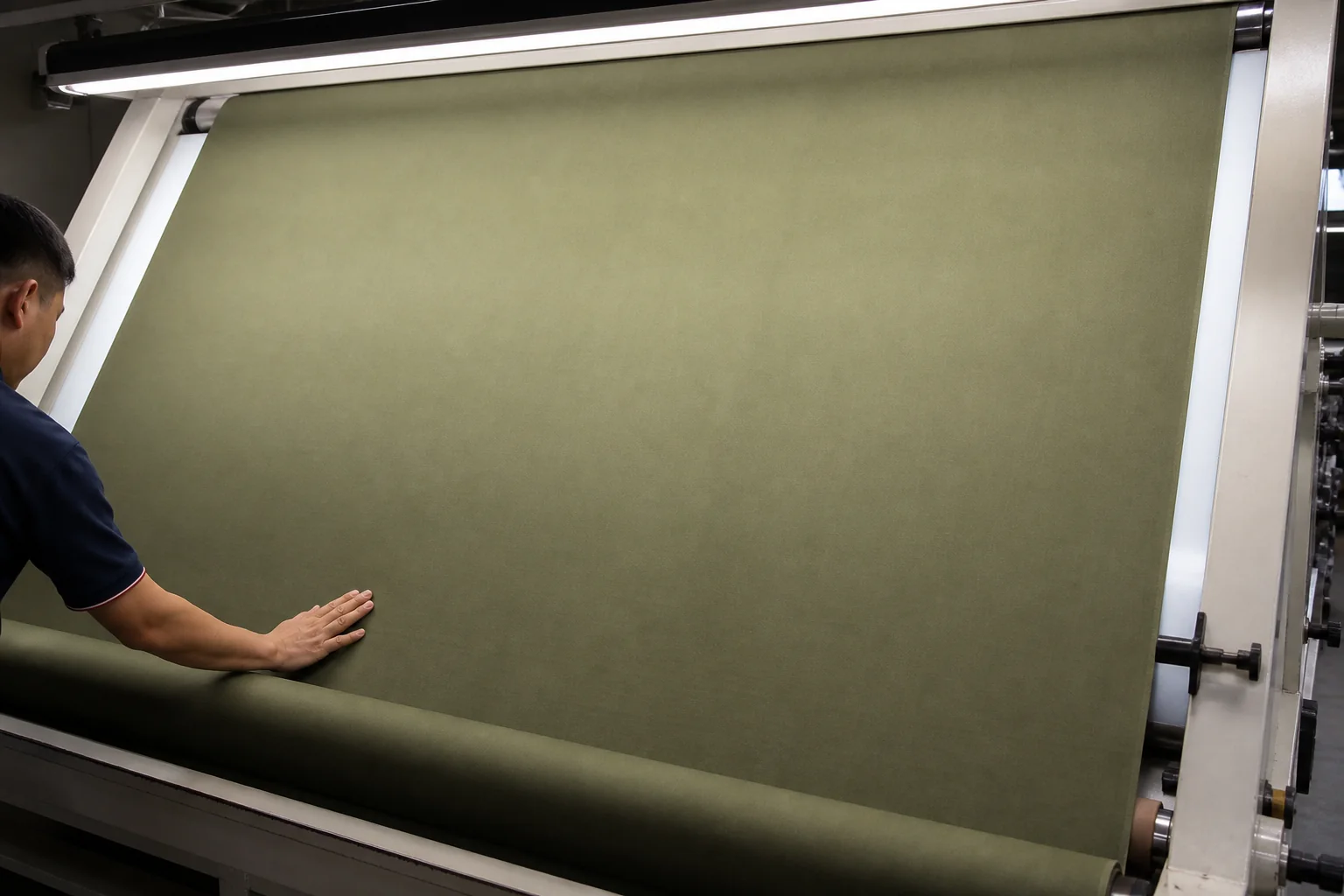
The approved lab dip confirms a formula at small scale. Bulk dyeing introduces machine load, water chemistry, temperature and finishing variables. Ask the mill or factory for a bulk cutting before the entire roll is released. For a critical launch color, check cuttings from more than one position or roll.
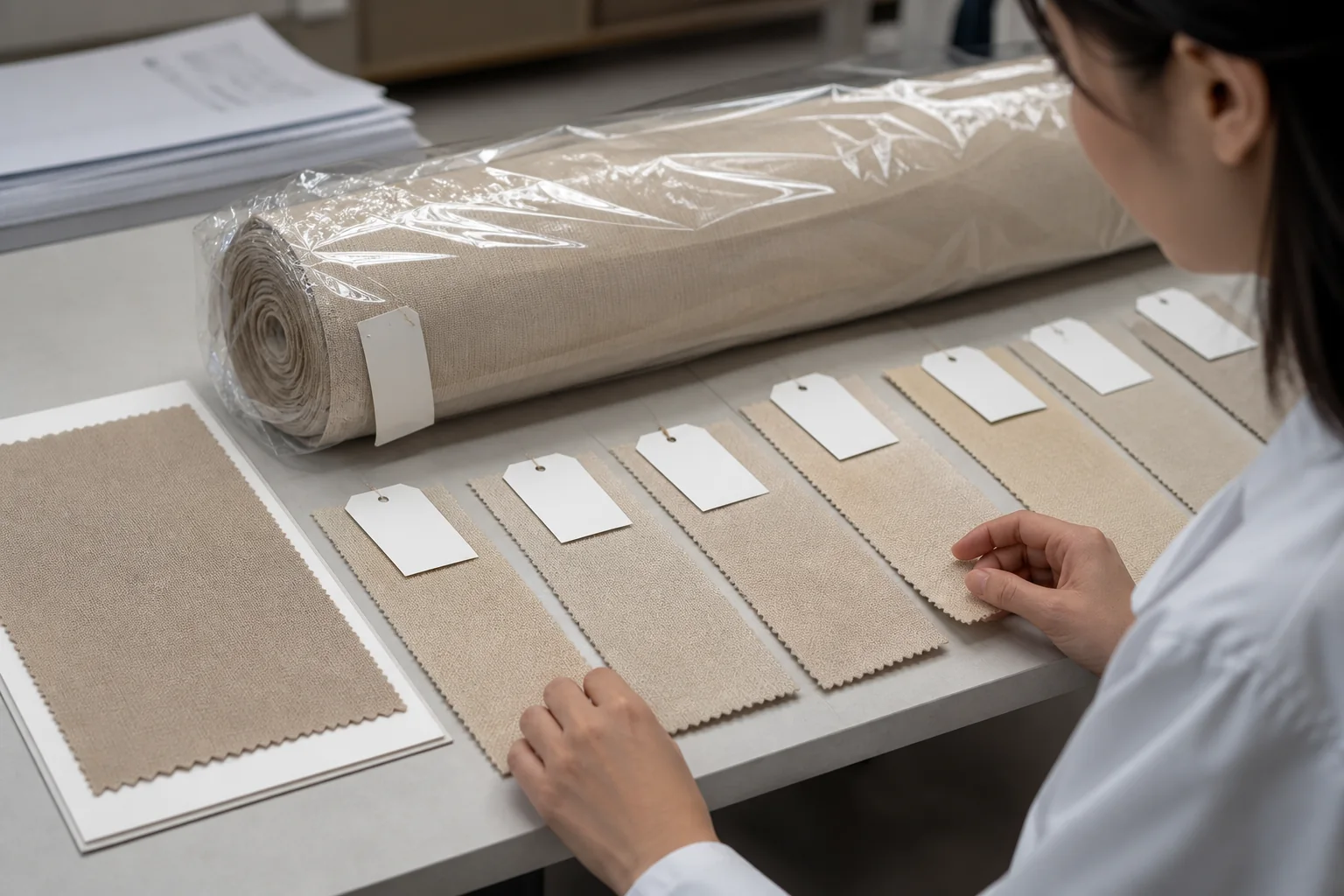
Once material arrives, incoming inspection should compare roll ends, inspect side-to-center shade and flag rolls that should not be mixed. A small variation may be acceptable within one roll yet become obvious when two different lots meet on the same bag panel.
Build a Complete Color Approval Set
A bag is a collection of surfaces. Main fabric, lining, binding, zipper tape, webbing, thread, embroidery, print ink and metal finish can each come from a different supplier. Review them together, not as isolated email photos. Decide which parts must match, which may be tonal and which are intentional accents.
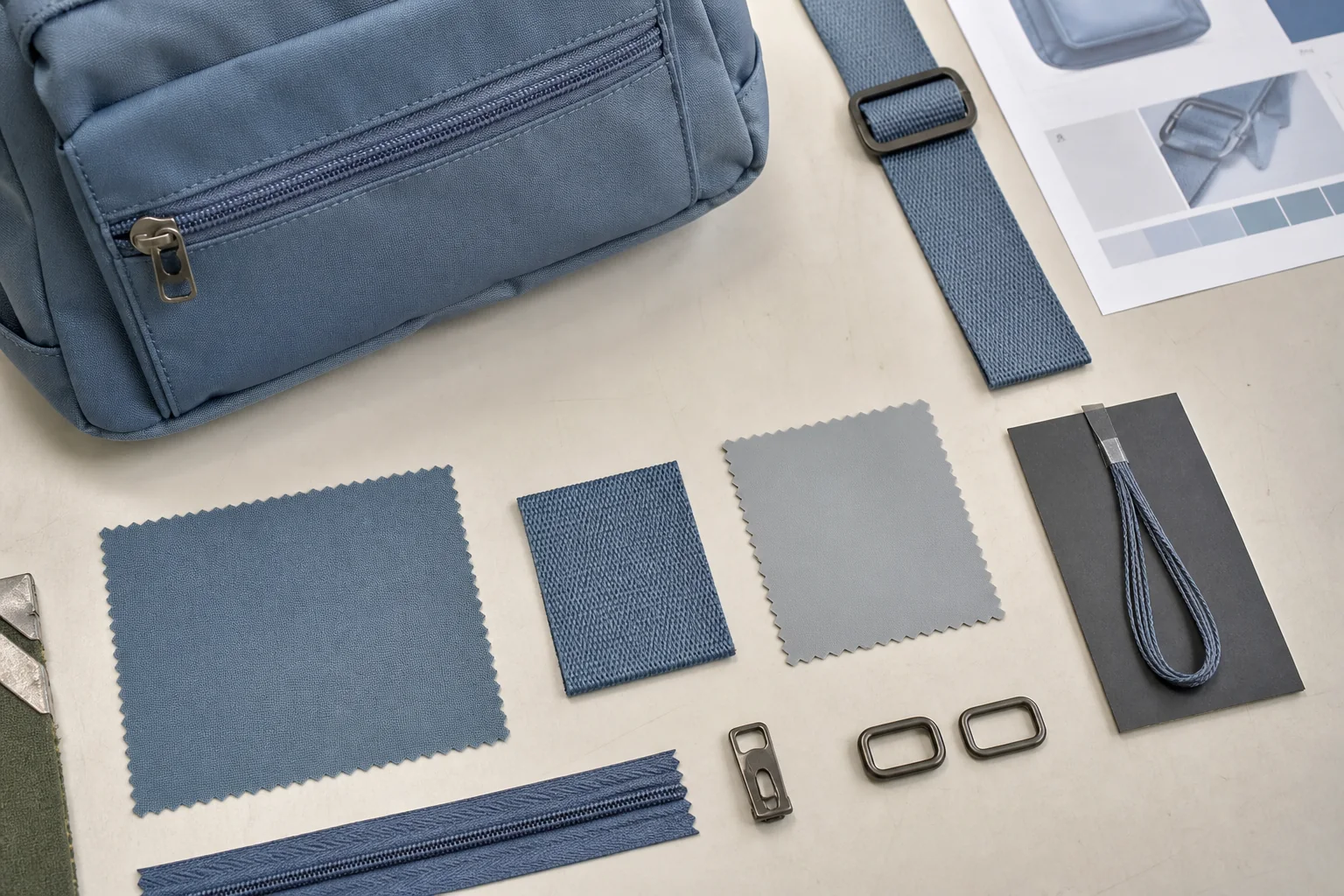
Pay special attention to lining at the zipper opening, zipper tape beside the seam, webbing laid over the main fabric and thread across both light and dark panels. Metal finishes should be approved for tone and gloss rather than compared to a textile color number.
Approve Logo Color in the Actual Process
Embroidery thread has sheen and direction; screen ink changes with opacity and base color; heat-transfer films can appear different after pressing. Approve a stitch-out, strike-off or transfer on the production fabric. A thread card or digital mockup cannot predict how the logo will read after construction.
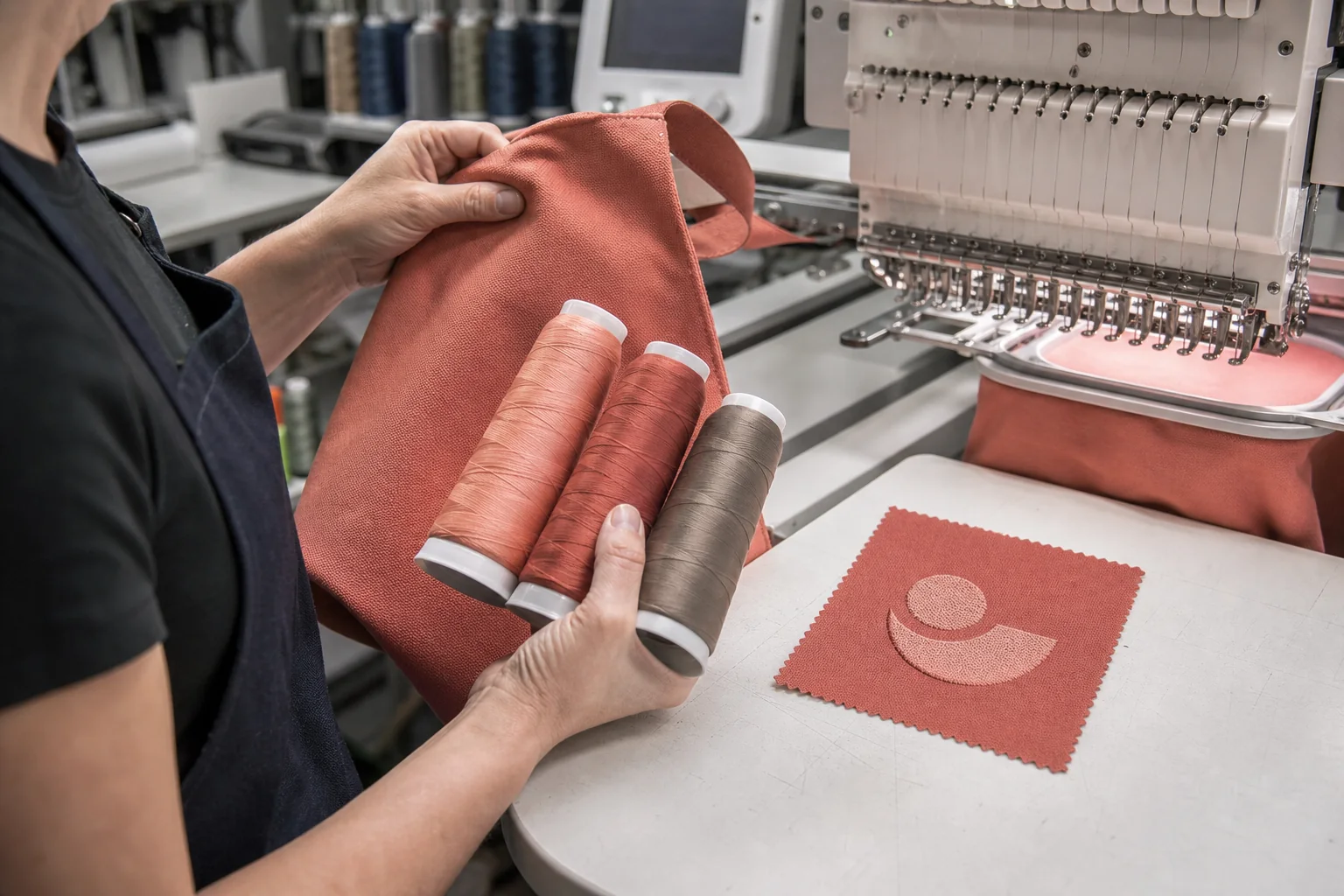
For more process-specific trade-offs, see our guide to choosing logo crafts for custom bags.
Write an Acceptance Rule People Can Repeat
| Decision point | Required reference | Action if it fails |
|---|---|---|
| Main fabric | Signed lab dip and bulk cutting | Correct bulk lot before cutting |
| Zipper, webbing and lining | Component board beside main fabric | Select closer stock shade or resample |
| Logo process | Strike-off or stitch-out on production base | Adjust thread, ink or process settings |
| Finished sample | Approved component set under agreed lights | Resample if brand-critical relationship changes |
| Repeat order | Retained master plus current material cutting | Disclose new-lot difference before production |
Avoid vague notes such as “must be exact.” State the master, lighting, comparison arrangement and who has authority to approve. If a numerical limit is required, establish it through actual material trials with the supplier and keep the measurement method with the specification.
Close the Loop with the Golden Sample
After every color component is accepted, seal the approved cuttings with the finished pre-production sample. The factory and buyer should retain matching references whenever possible. Photograph the set for communication, but treat the physical items as the controlling standard.
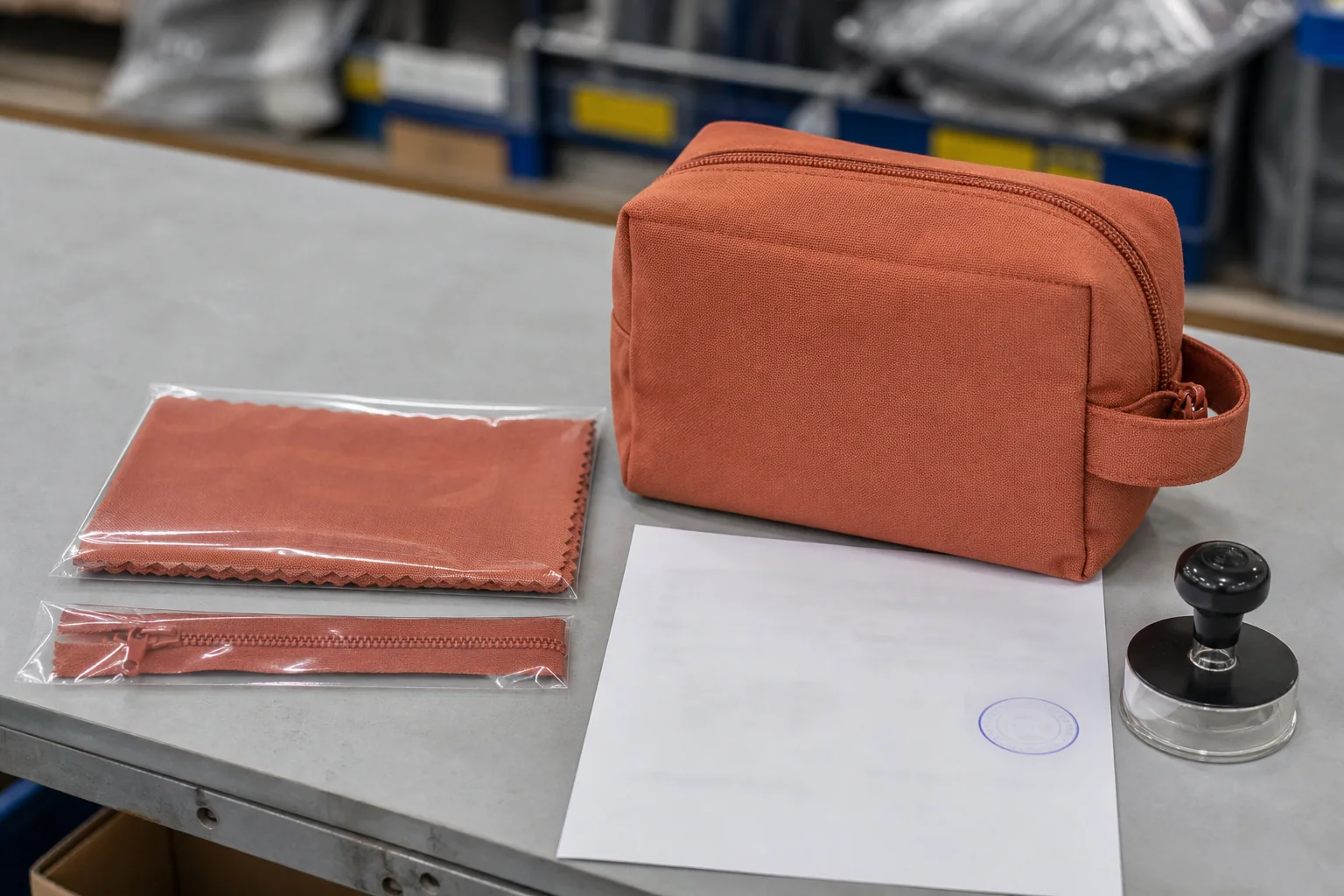
Color is only one part of sample approval. Use the custom bag sample approval checklist to review dimensions, construction, hardware, strength, labels and packaging before authorizing bulk production.
Frequently Asked Questions
Is a Pantone number enough to approve a custom bag color?
No. It communicates a target, but fiber, weave, coating, gloss and lighting change the physical result. Approve the actual material or component under agreed light sources.
What is a lab dip for bag fabric?
It is a small piece of the intended material dyed to a proposed formula before bulk dyeing. The buyer approves one physical option as the master for that material construction.
Why do zippers and webbing not exactly match the main fabric?
They may use different fibers, textures and dye systems. Agree whether the relationship should be matching, tonal or contrasting, then approve the components together.
How should dye-lot variation be controlled?
Keep a sealed master, label every lot and roll, compare bulk cuttings before cutting, inspect shade continuity and avoid mixing visibly different lots in one bag or retail shipment.
When should a color difference trigger resampling?
Resample when the main material misses the approved master, components clash under the specified lights, metamerism is unacceptable or a brand-critical color changed without written approval.
Need a Production-Ready Color Approval Set?
Send the material specification, physical color reference, component list and target order quantity. MerrisBags can coordinate lab dips, component samples and a documented bulk color standard before cutting.
Request Color Matching Support