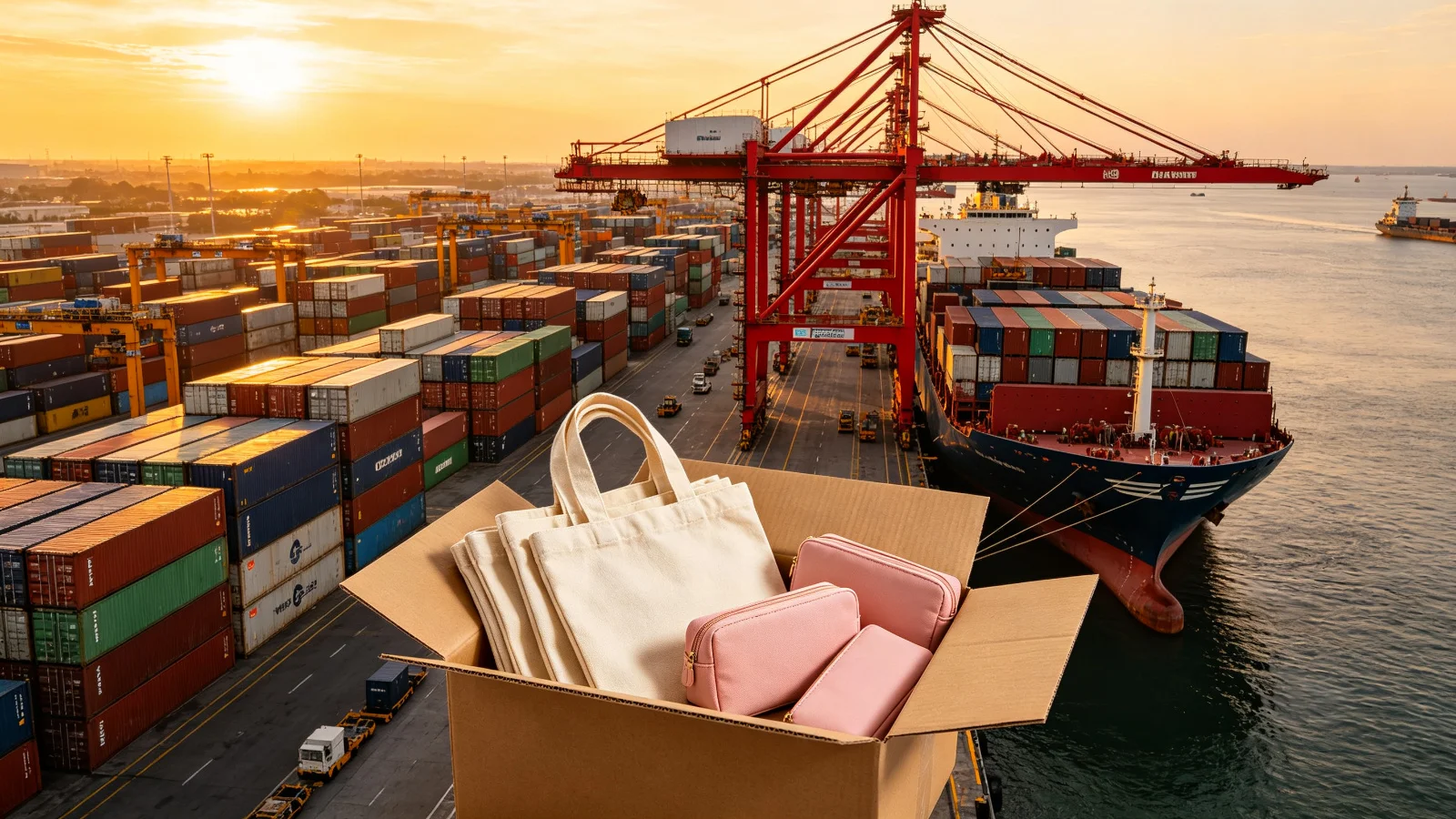
If you've ever received a bag quotation from a Chinese factory and wondered "what does this actually cost me when it arrives at my door?" — you're not alone. Most first-time importers focus exclusively on the FOB unit price and get blindsided by shipping, duties, brokerage fees, and port charges that can add 40-60% to their product cost.
This guide walks through every step of importing bags from China, with real numbers, actual HTS codes, and a complete landed-cost example. We'll cover the decisions that cost you money, the fees that surprise first-timers, and the insurance that protects your investment.
Choosing the Right Shipping Method
The first decision you make after production is how to get your goods from China to your warehouse. There are three main options, and the right choice depends on your order volume, timeline, and budget.
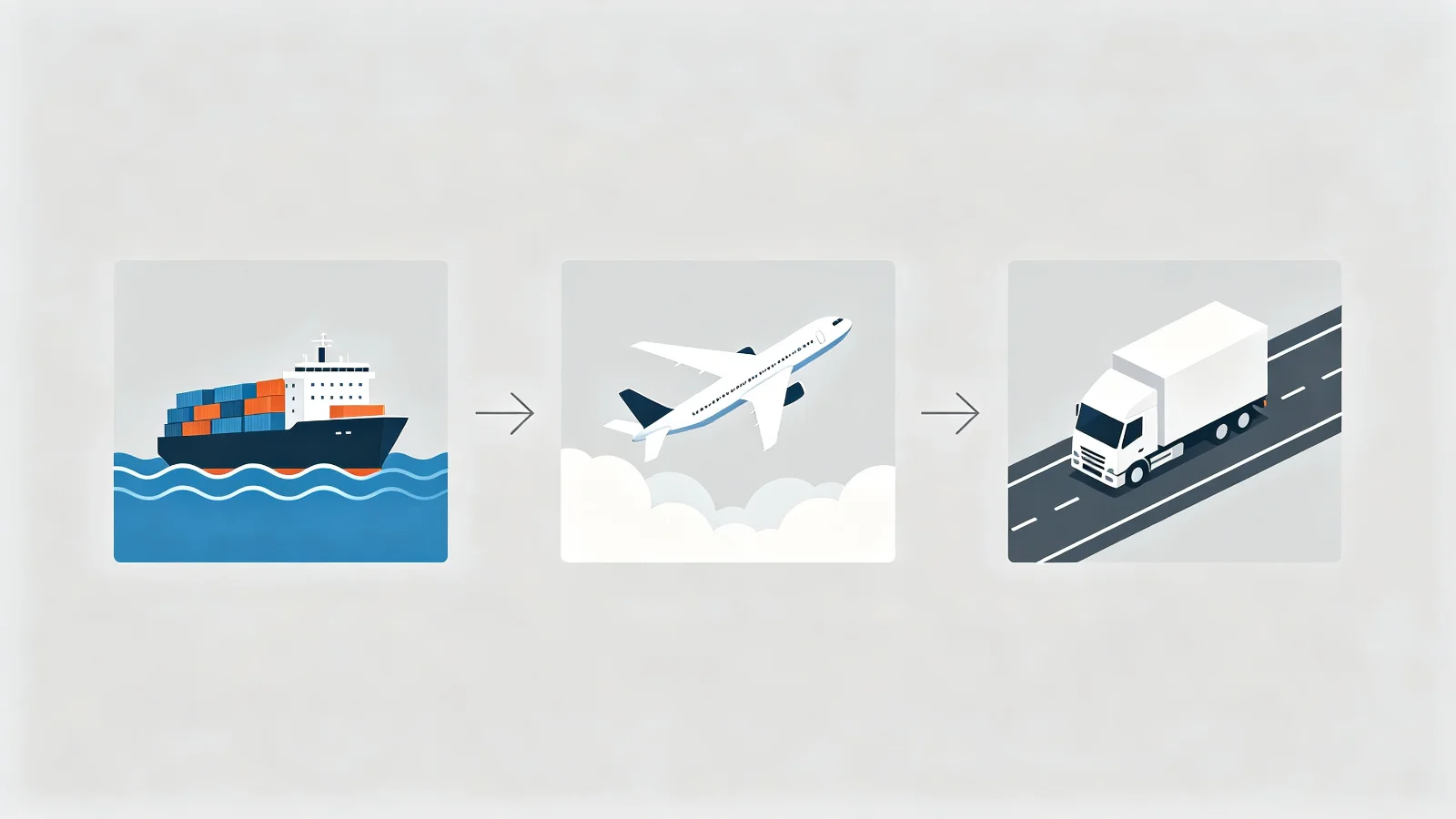
| Method | Transit Time | Cost per kg | Best For |
|---|---|---|---|
| Ocean freight (LCL/FCL) | 25-40 days | $0.50-$1.50 | Orders over 2 CBM or 500+ bags. Lowest per-unit cost. |
| Air freight | 5-10 days | $4.00-$8.00 | Urgent orders, high-value goods, or when you need inventory fast. |
| Express courier (DHL/FedEx/UPS) | 3-7 days | $6.00-$15.00 | Samples, small orders under 100 pieces, or prototype shipments. |
LCL vs FCL: Which Container Option Is Right?
If you choose ocean freight, you have two container options: LCL (Less than Container Load) and FCL (Full Container Load). The difference matters more than most first-time importers realize.
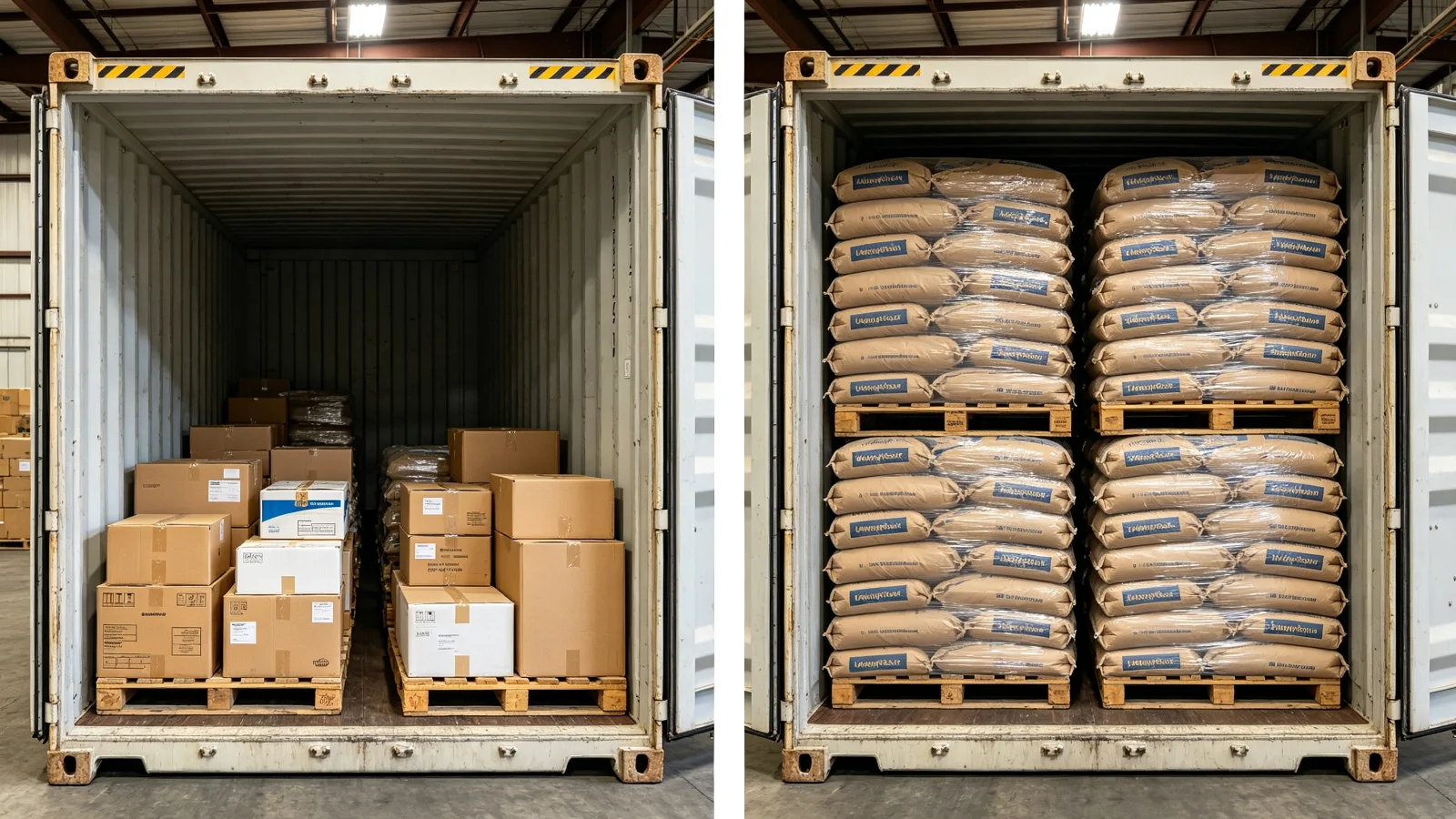
| Factor | LCL (Less than Container Load) | FCL (Full Container Load) |
|---|---|---|
| How it works | Your goods share a container with other shippers' cargo | You rent the entire container (20ft or 40ft) |
| Minimum volume | 1 CBM (cubic meter) | ~25 CBM (20ft) or ~55 CBM (40ft) |
| Cost structure | Per CBM rate + destination port fees (can be unpredictable) | Flat container rate + predictable port fees |
| Transit time | 5-10 days longer (consolidation/deconsolidation) | Faster — direct sailing |
| Damage risk | Higher (more handling, mixed cargo) | Lower (your cargo only, sealed container) |
| Best for | Orders under 15 CBM (typically under 1,500 bags) | Orders over 15-20 CBM (1,500+ bags) |
Incoterms: Who Pays for What?
Incoterms are international trade terms that define who is responsible for shipping, insurance, customs clearance, and risk at each point in the journey. Choosing the wrong Incoterm can cost you hundreds or thousands of dollars in unexpected fees.
| Term | Seller Responsibility | Buyer Responsibility | Recommendation |
|---|---|---|---|
| EXW (Ex Works) | Make goods available at factory | Everything from factory gate onward (transport, export clearance, shipping, import, delivery) | Avoid — hidden costs, you handle export paperwork |
| FOB (Free On Board) | Transport to port, export clearance, load on ship | Ocean freight, insurance, import clearance, duties, inland delivery | Recommended — most common, predictable costs |
| CIF (Cost, Insurance, Freight) | Everything FOB + ocean freight + insurance | Import clearance, duties, inland delivery | Use with caution — seller controls freight, may overcharge |
| DDP (Delivered Duty Paid) | Everything — door-to-door including duties | Nothing — receive goods at your door | Convenient but expensive — seller marks up every cost |
HTS Classification: Getting the Duty Rate Right
Every product imported into the US must be classified under the Harmonized Tariff Schedule (HTS). The classification determines your duty rate. Bags fall under Chapter 42 (Articles of leather, travel goods, handbags), and the exact code depends on the material and construction.

| Bag Type | HTS Code | Duty Rate | Notes |
|---|---|---|---|
| Leather handbags/shoulder bags | 4202.21.00 | 10.0% | With outer surface of leather |
| Leather travel bags/backpacks | 4202.11.00 | 8.0% | With outer surface of leather |
| Textile handbags (canvas, nylon, polyester) | 4202.22.00 | 17.6% | With outer surface of textile material — most common |
| Textile travel bags/backpacks | 4202.12.00 | 17.6% | With outer surface of textile material |
| Plastic/PVC bags (cosmetic pouches) | 4202.32.00 | 19.3% | With outer surface of plastic sheeting |
| Other material bags (straw, rattan) | 4202.39.00 | 14.4% | Other materials |
Calculating Customs Duties
Duty is calculated on the customs value of your goods, which is typically the FOB price (what you paid the factory). The formula is straightforward, but there are additional fees that many first-time importers miss.
| Fee | Rate | Example (FOB $4,000) | Notes |
|---|---|---|---|
| Base customs duty | 17.6% (textile bags) | $704.00 | Varies by HTS code |
| Section 301 tariff | 7.5% (additional) | $300.00 | Applies to most goods from China |
| MPF (Merchandise Processing Fee) | 0.3464% (min $31.67, max $614.35) | $31.67 | Minimum applies to small shipments |
| HMF (Harbor Maintenance Fee) | 0.125% | $5.00 | Only for ocean freight shipments |
| Total government fees | ~25.6% effective | $1,040.67 | Not just 17.6% — the effective rate is much higher |
As you can see, the effective duty rate for textile bags from China is approximately 25.6%, not 17.6%. The Section 301 tariff alone adds 7.5%, and MPF/HMF add another ~0.5%. For a $4,000 shipment, that's over $1,000 in government fees alone.
Customs Clearance Process: Step by Step
Customs clearance is the process of getting your goods through customs and into the country. It involves submitting documentation, paying duties, and potentially passing inspection. Here's how it works for a typical bag shipment from China to the US.
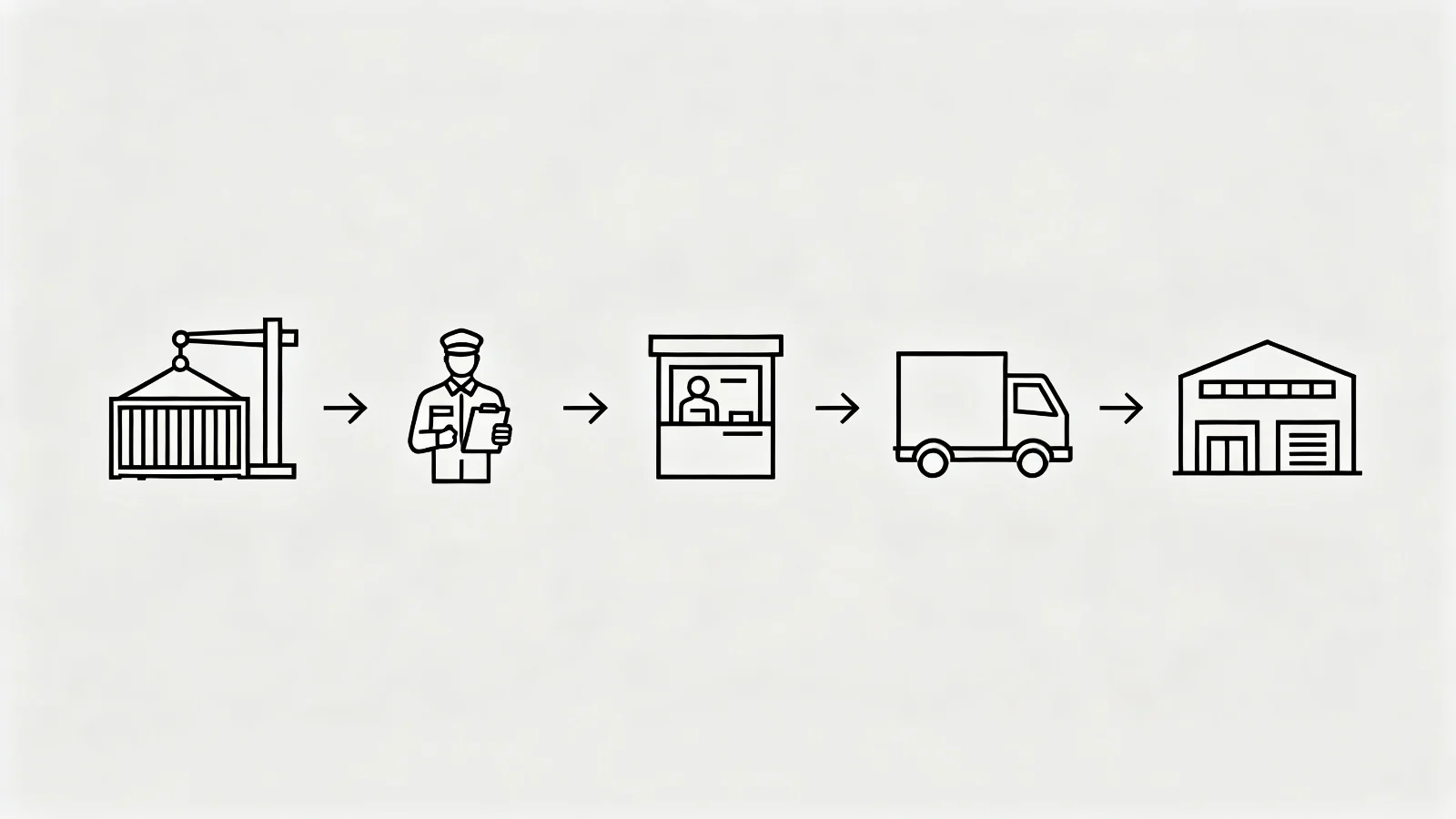
Customs Inspections: What Triggers Them and What They Cost
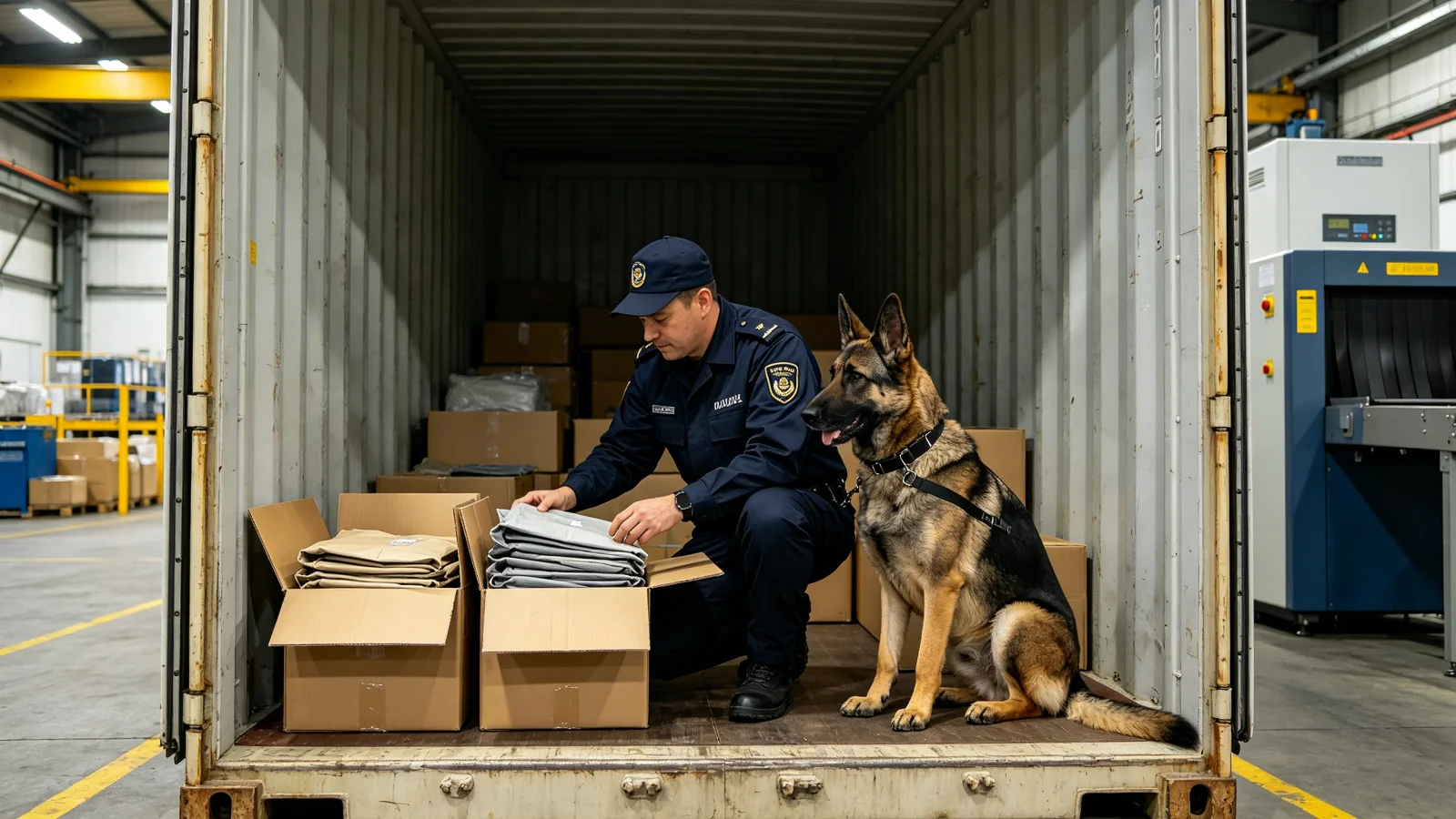
Approximately 5-10% of all imported shipments are selected for customs inspection. For first-time importers, the rate is higher — often 15-20% — because CBP doesn't have a history of compliant imports from your company. Understanding the inspection process can help you avoid delays and unexpected costs.
| Inspection Level | What Happens | Typical Cost | Delay |
|---|---|---|---|
| Level 1: Document check | CBP reviews your paperwork for accuracy. No physical exam. | $0 (included in broker fee) | 0-1 day |
| Level 2: X-ray/VACIS scan | Container goes through an X-ray machine. CBP checks for contraband or misdeclared goods. | $100-$300 (port fee) | 1-3 days |
| Level 3: Physical examination | Container is opened, boxes are unpacked, and goods are physically inspected against your declaration. | $500-$1,500 (labor + storage) | 3-7 days |
Common inspection triggers for bag shipments
- First-time importer — CBP flags new importers for higher inspection rates
- Mismatched documentation — if the commercial invoice, packing list, and bill of lading don't match (quantities, values, descriptions)
- Suspiciously low value — if your declared value seems too low for the goods, CBP may suspect undervaluation
- Targeted countries/commodities — bags from China are sometimes targeted for intellectual property rights (IPR) checks (counterfeit brand names)
- Random selection — CBP uses a random selection algorithm; sometimes you're just unlucky
Real Landed Cost Example: 1,000 Canvas Totes
Let's walk through a complete landed cost calculation for a real order: 1,000 custom canvas tote bags, FOB price $4.00 each, shipped from Shenzhen to Los Angeles via LCL ocean freight. This is the kind of order a first-time bag brand might place for their initial inventory.
| Cost Component | Amount | Per Unit | % of Total |
|---|---|---|---|
| FOB product cost (1,000 × $4.00) | $4,000.00 | $4.00 | 62.1% |
| Ocean freight (LCL, ~3 CBM) | $360.00 | $0.36 | 5.6% |
| Origin port fees (THC, docs, security) | $180.00 | $0.18 | 2.8% |
| Destination port fees (THC, docs, security) | $220.00 | $0.22 | 3.4% |
| Customs brokerage fee | $200.00 | $0.20 | 3.1% |
| Base customs duty (17.6% of FOB) | $704.00 | $0.70 | 10.9% |
| Section 301 tariff (7.5% of FOB) | $300.00 | $0.30 | 4.7% |
| MPF (0.3464%, min $31.67) | $31.67 | $0.03 | 0.5% |
| HMF (0.125%) | $5.00 | $0.01 | 0.1% |
| Cargo insurance (0.6% of CIF value) | $28.00 | $0.03 | 0.4% |
| Inland trucking (port to warehouse, ~50 miles) | $180.00 | $0.18 | 2.8% |
| Warehouse receiving & inspection | $100.00 | $0.10 | 1.6% |
| Total landed cost | $6,308.67 | $6.31 | 100% |
The bag that cost $4.00 at the factory actually costs $6.31 when it arrives at your warehouse — a 58% increase. If you priced your product based on the $4.00 FOB cost, your margins would be completely wiped out by the time the goods arrive. This is why understanding landed cost is the single most important skill for a bag importer.
Cargo Insurance: Protecting Your Shipment
Cargo insurance is one of the most overlooked costs in importing — and one of the most important. Without insurance, if your container is lost at sea, damaged in transit, or stolen from the port, you lose your entire investment. The good news is that cargo insurance is relatively inexpensive.

8 Costly Mistakes First-Time Bag Importers Make
After helping hundreds of brands import their first bag orders, we've seen the same mistakes repeat. Here are the eight most expensive ones — and how to avoid them.
Your 6-Step Import Action Plan
Ready to import your first bag order? Follow this step-by-step plan to avoid surprises and keep costs under control.
Frequently Asked Questions
How much does it cost to import bags from China?
Importing adds $1.50-$3.50 per unit to your FOB price, depending on order size, shipping method, and bag type. For a 1,000-piece canvas tote order at $4.00 FOB, the total landed cost is approximately $6.31 per unit — a 58% increase. Larger orders (FCL) have lower per-unit shipping costs, while small orders (LCL or air freight) have higher per-unit costs.
What is the customs duty rate for bags from China?
Most textile bags (canvas, nylon, polyester) fall under HTS 4202.22.00 with a base duty rate of 17.6%. Leather bags are 8-10%, plastic/PVC bags are 19.3%, and other materials are 14.4%. On top of the base rate, bags from China are subject to a 7.5% Section 301 tariff, bringing the effective rate for textile bags to approximately 25.6% (including MPF and HMF).
Do I need a customs broker to import bags?
For first-time importers, yes. A licensed customs broker ($150-$300 per shipment) handles HTS classification, ISF filing, entry paperwork, duty payment, and communication with CBP. While it is technically possible to self-file, the risk of errors — which can lead to delays, penalties, or seized goods — makes a broker a worthwhile investment for your first few shipments.
How long does it take to import bags from China to the US?
Door-to-door transit takes 25-55 days depending on the shipping method: ocean freight FCL is 25-35 days, ocean freight LCL is 30-40 days (due to consolidation/deconsolidation), air freight is 5-10 days, and express courier is 3-7 days. Add 2-5 days for customs clearance, and 1-7 days if your shipment is selected for inspection.
What is the difference between LCL and FCL shipping?
LCL (Less than Container Load) means your goods share a container with other shippers' cargo. It's suitable for orders under 15 CBM (typically under 1,500 bags) but has higher per-unit costs, longer transit times, and unpredictable destination fees. FCL (Full Container Load) means you rent the entire container. It's cheaper per unit for orders over 15-20 CBM, has faster transit, and more predictable fees.
Is cargo insurance necessary when importing bags?
Yes, always. Cargo insurance costs 0.5-1% of your shipment value ($20-$40 for a $4,000 order) and covers loss or damage from rough handling, water damage, fire, theft, or vessel sinking. Without insurance, carrier liability is typically limited to $500 per package (COGSA) — far less than the value of most bag shipments. The cost is negligible compared to the risk.
Importing Your First Bag Order? We Can Help
MerrisBags has helped 500+ brands manufacture and import custom bags from China. We handle FOB pricing, quality inspection, and shipping documentation — and we can connect you with reliable freight forwarders and customs brokers. Get a free quotation today and know your true landed cost before you commit.
Get a Free Quote & Sample See Our Process