Reduce custom bag cost by fixing the required function, comparing material consumption and operations, and validating the changed construction before production. Judge the full cost, including development, packing and leftover components, rather than the quoted unit price alone.
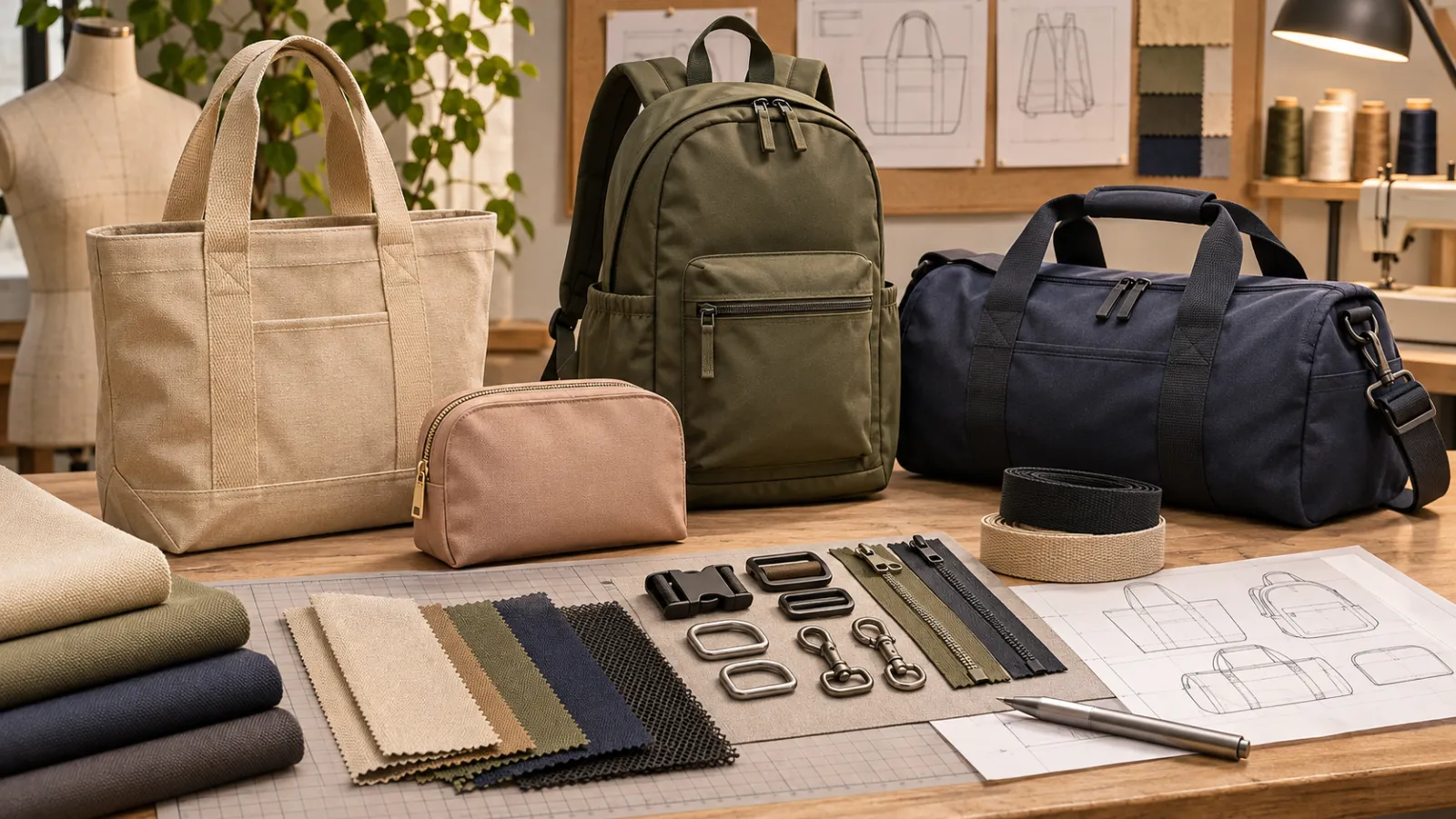
Start with the job the bag must keep doing
A cheaper quote is useful only when the revised bag still does the required job. Before asking a factory to remove cost, list the contents, carry method, opening access, appearance requirements and packing conditions. Identify who can approve a change. A merchandising team may accept a different trim colour while a product team rejects a narrower opening. Neither decision should be left to an unnamed “equivalent material” in the order.
Value engineering means comparing the cost of a construction with the function it must deliver. It can remove unnecessary operations, but it can also move spending to a more important part of the bag. A simpler decorative seam may free budget for a better strap attachment. Reducing fabric weight everywhere is a different decision: it changes the product itself.
Compare quotations on one specification
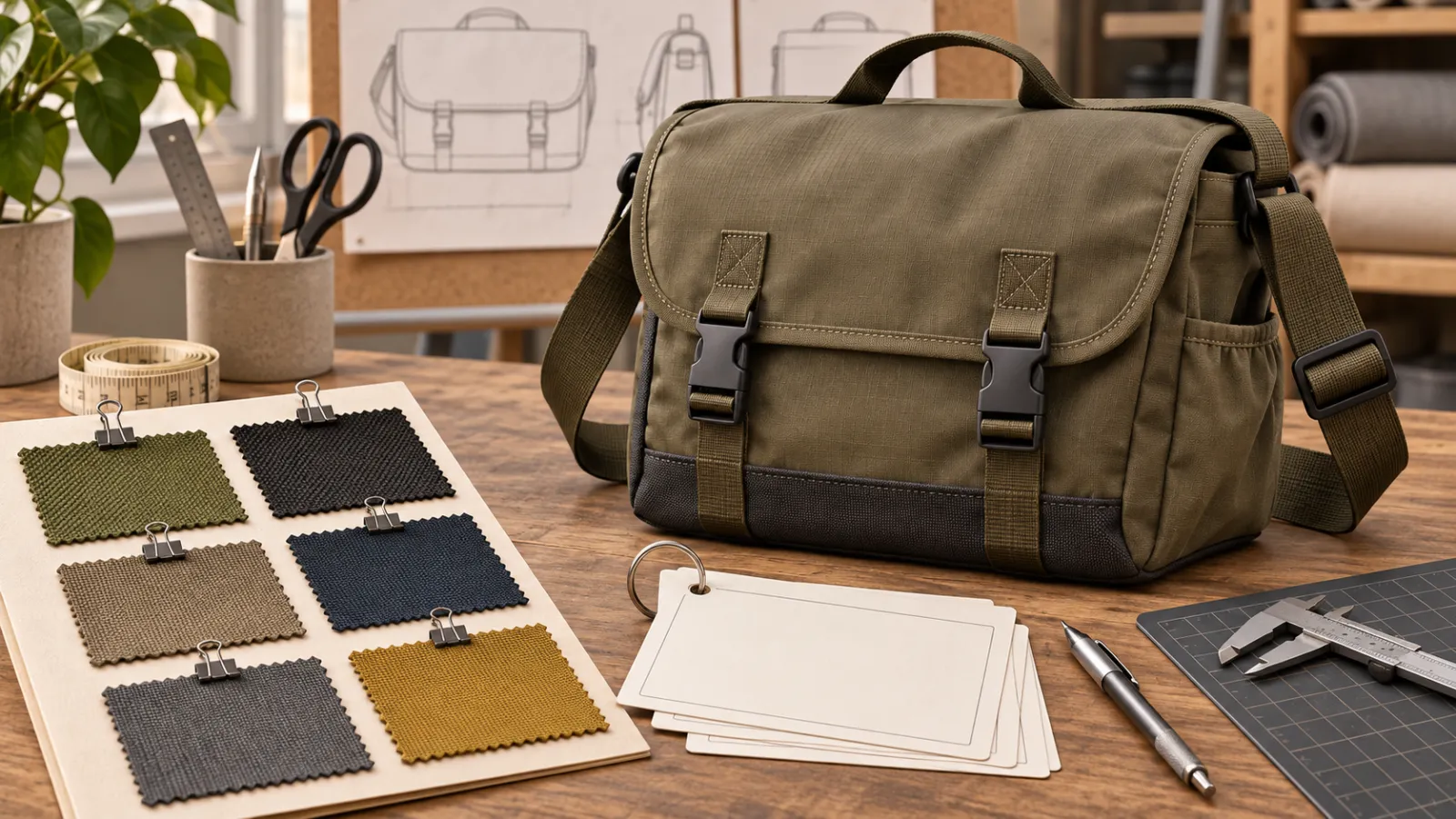
Freeze a baseline bill of materials before comparing revisions. Include outer material, lining, reinforcement, zipper tape and slider, webbing, hardware, decoration, labels and packing. Record consumption as well as component price. A cheaper fabric can require more allowance or a less efficient cutting layout; a cheaper trim can add an assembly step.
Ask the supplier to separate recurring unit cost from pattern development, decoration setup, tooling and testing. Compare the same order quantity, colour split, currency, delivery basis and packing unit. Otherwise a saving can simply be a cost moved outside the quoted unit price. The existing manufacturing cost guide explains cost categories; this article focuses on what to change and how to decide whether the change is worth keeping.
Fabric yield: cheaper per metre can cost more per bag
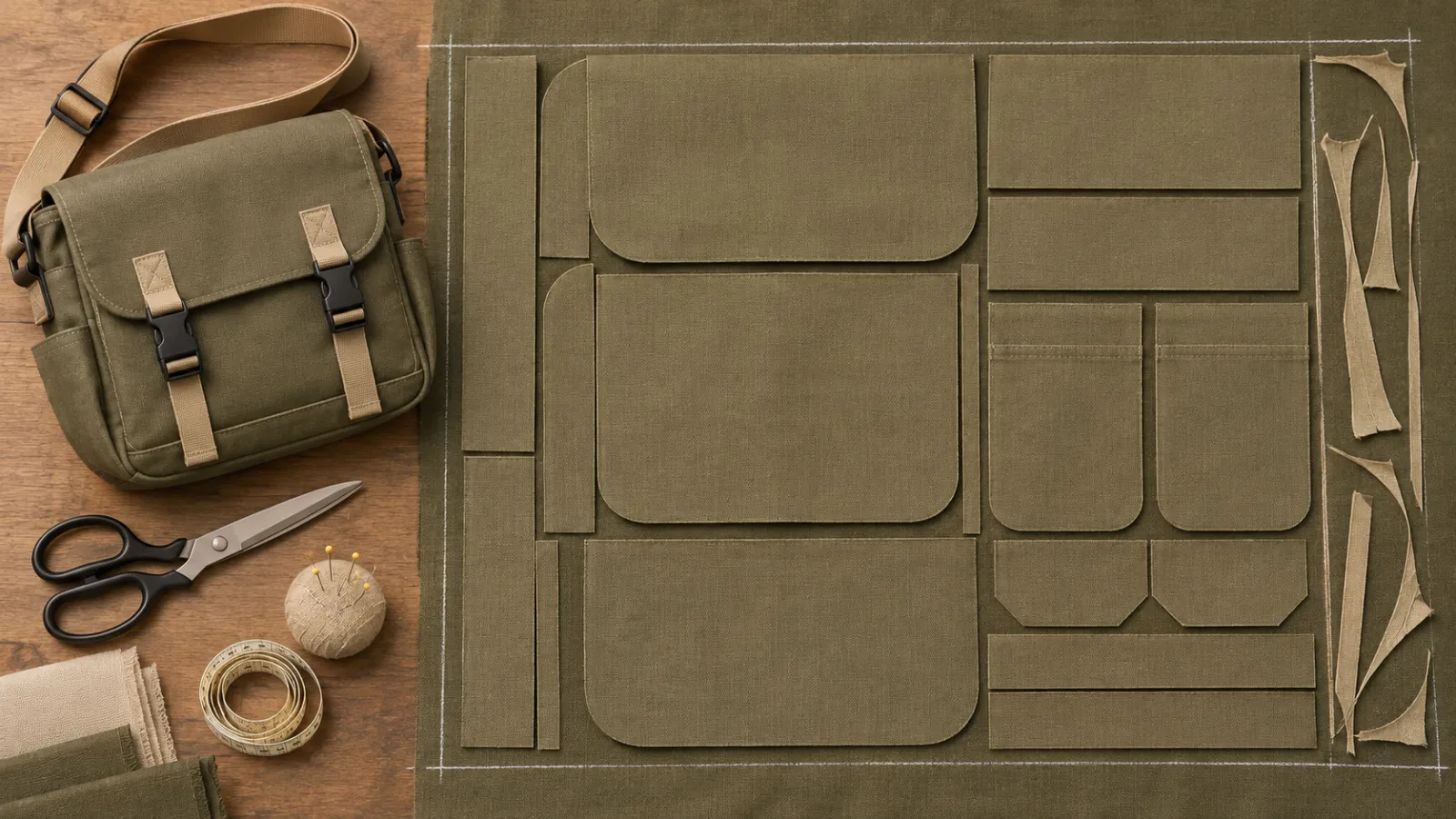
Usable fabric width and panel arrangement can matter more than a small difference in price per metre. Ask for the marker layout using the actual usable width, grain direction and seam allowances. Print registration, nap direction and visible defects can restrict rotation. Do not assume every rectangle can be turned to fill a gap.
Consider a hypothetical calculation, not a MerrisBags quotation: fabric A costs $3.00 per metre and consumes 0.30 metre per bag, giving $0.90. Fabric B costs $2.80 but consumes 0.34 metre, giving $0.952. B is cheaper to buy by the metre and more expensive for this bag. These inputs must use the same allowance basis; do not add waste twice.
A small panel adjustment may improve nesting, but check the loaded bag before approving it. Reducing depth to improve yield can make a bottle sit against the zipper. A tote’s usable capacity and handle placement belong in that review, not just its flat width.
Standardise hidden components before changing the silhouette
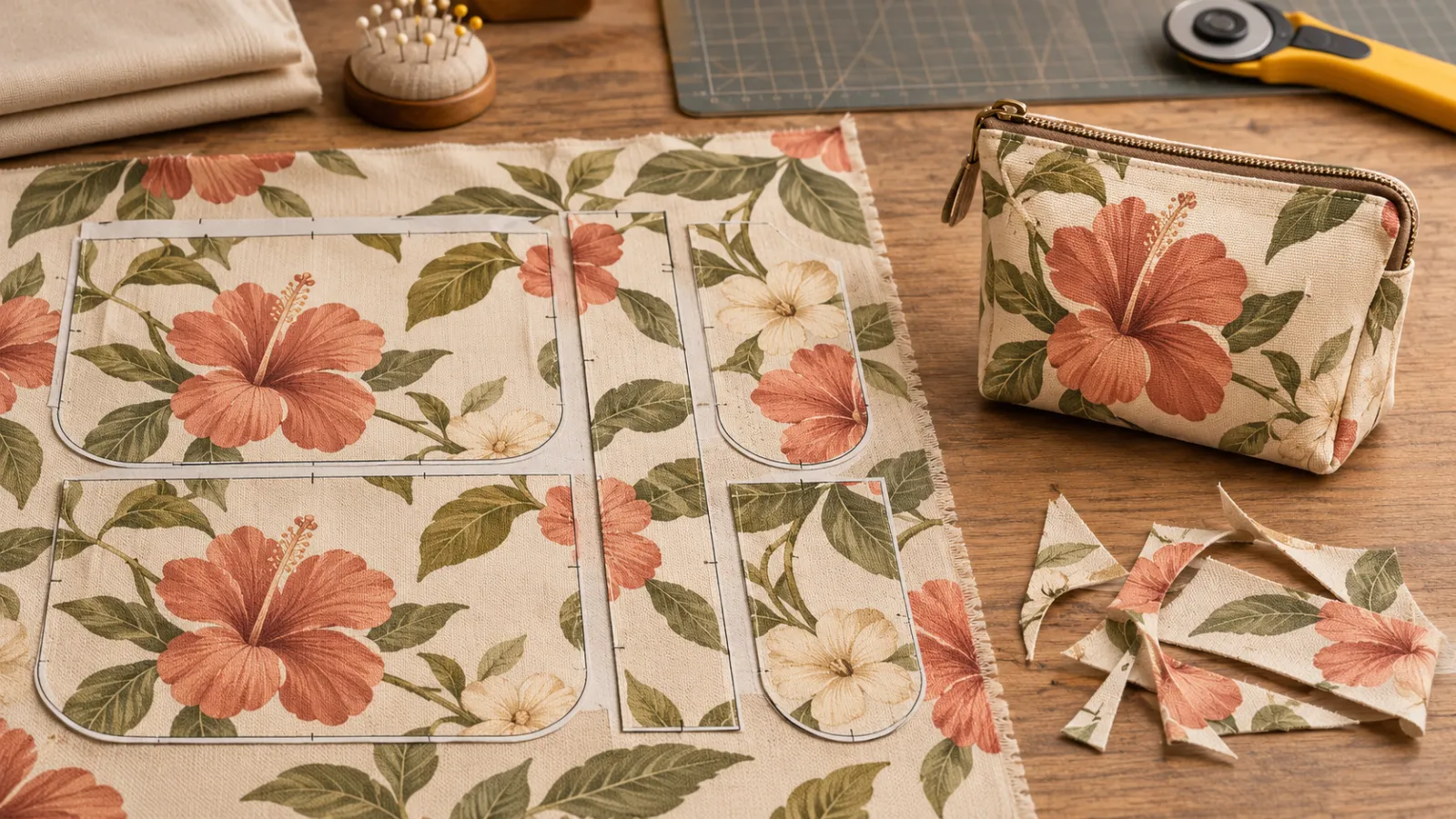
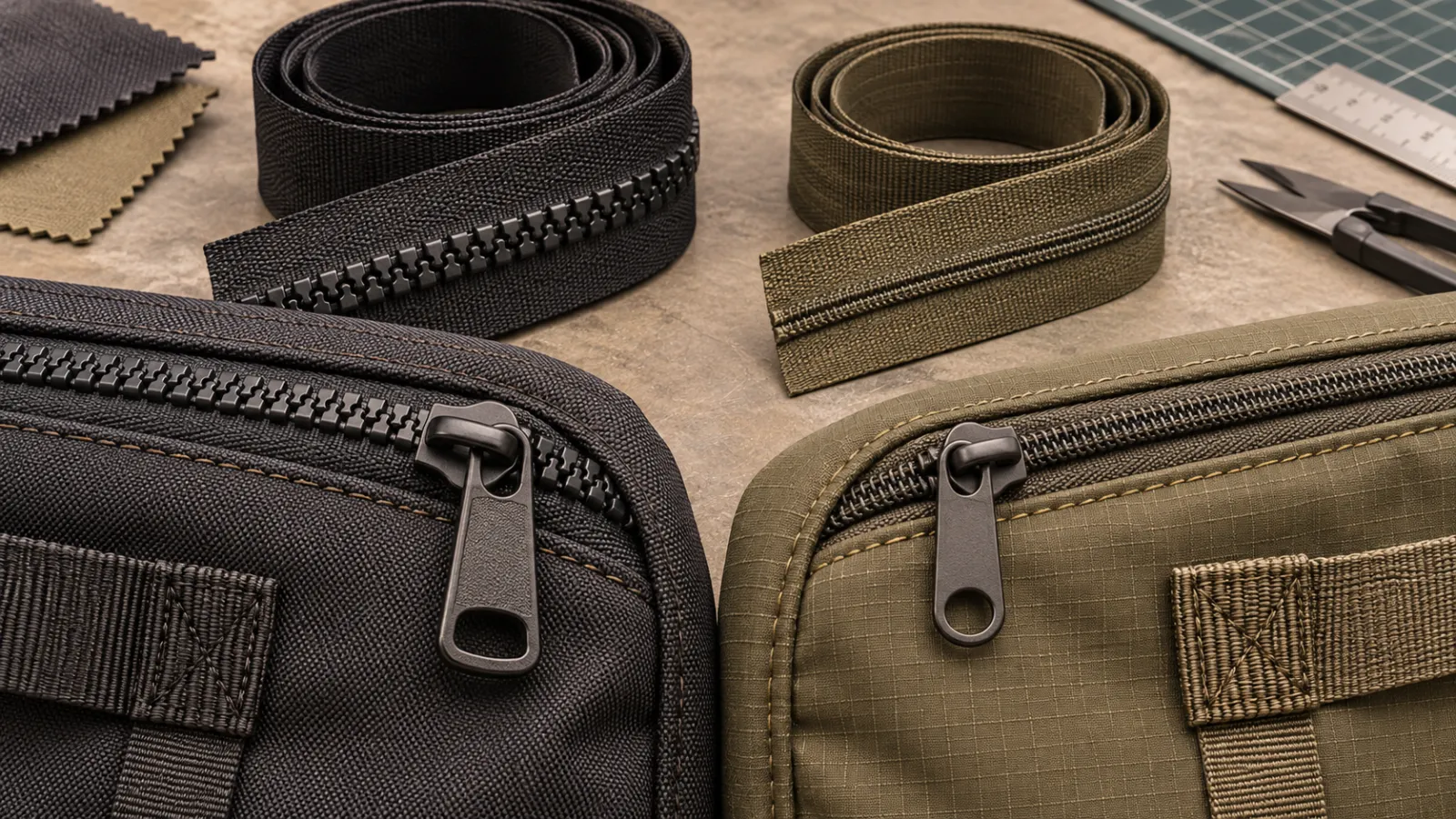
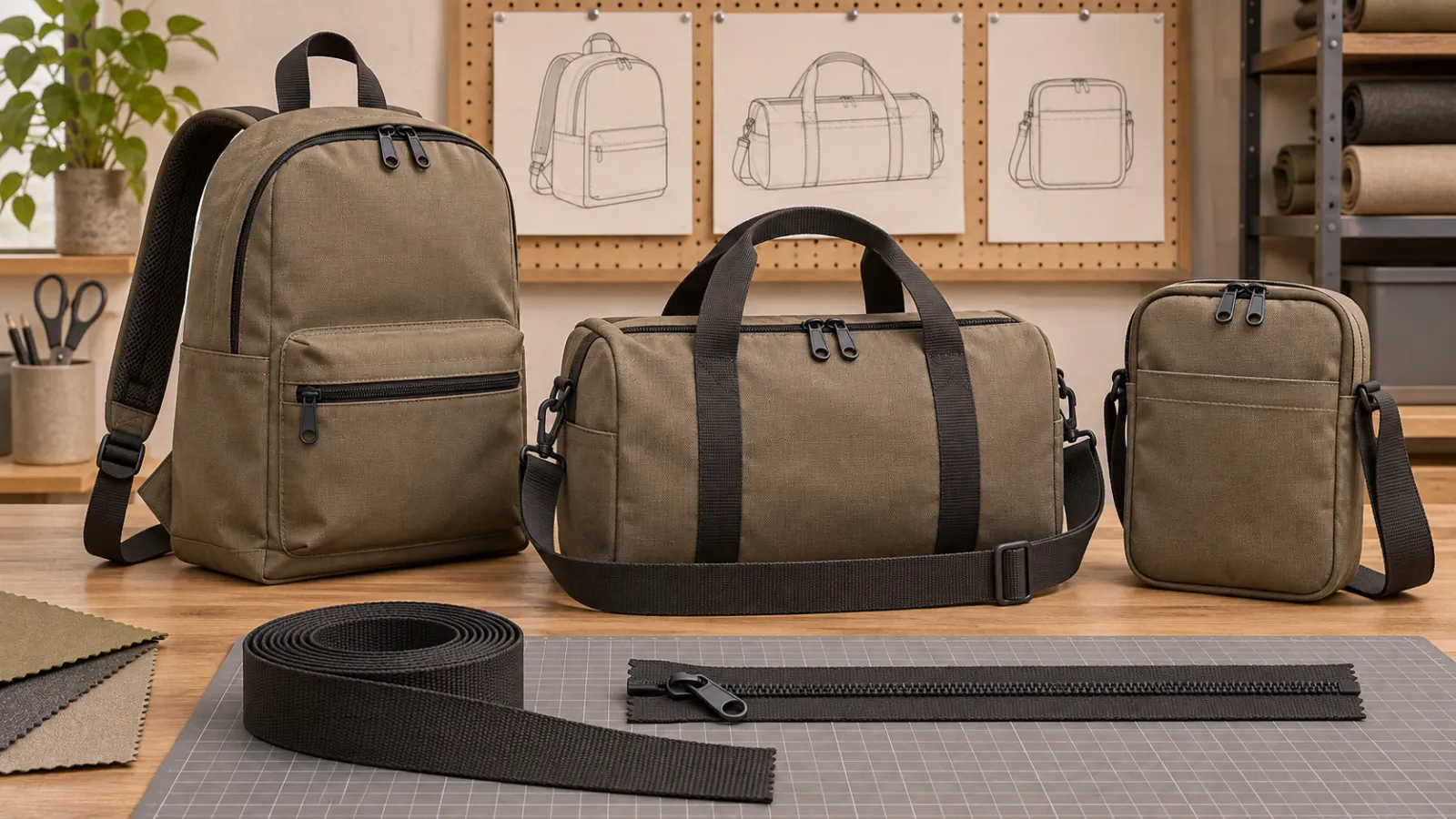
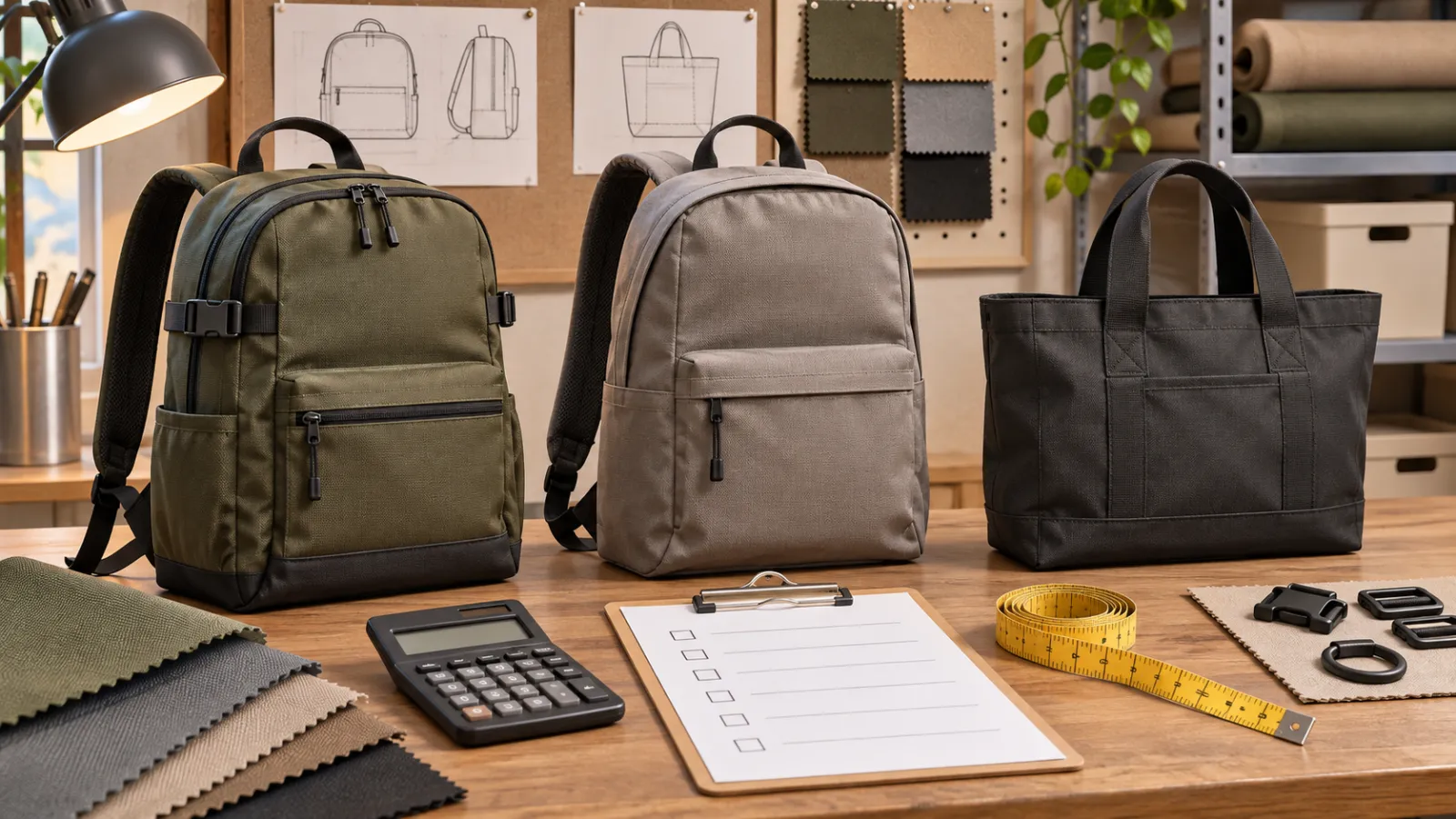
Compare common zipper tape, slider finish, webbing width and lining colour across a collection. Consolidation can reduce separate purchase lots and leftover inventory. It does not automatically reduce finished-bag MOQ: the factory still has cutting, sewing and decoration constraints. Request the quantity assumptions behind the proposal.
A common zipper specification must work on each opening. Tight curves, seam intersections and end tabs can change how a slider travels. Review the assembled pouch rather than approving a loose zipper alone. For a colour-led collection, ask whether a common hidden lining is acceptable while keeping the visible body colours distinct.
Branding needs the same discipline. A woven label, print and metal badge have different attachment and setup needs. Moving a logo onto a panel that can be decorated before assembly may remove awkward handling. But embroidery through a thin finished lining can create a new defect. Approve the branding location and construction sequence together.
Remove an operation, then check what that operation was doing
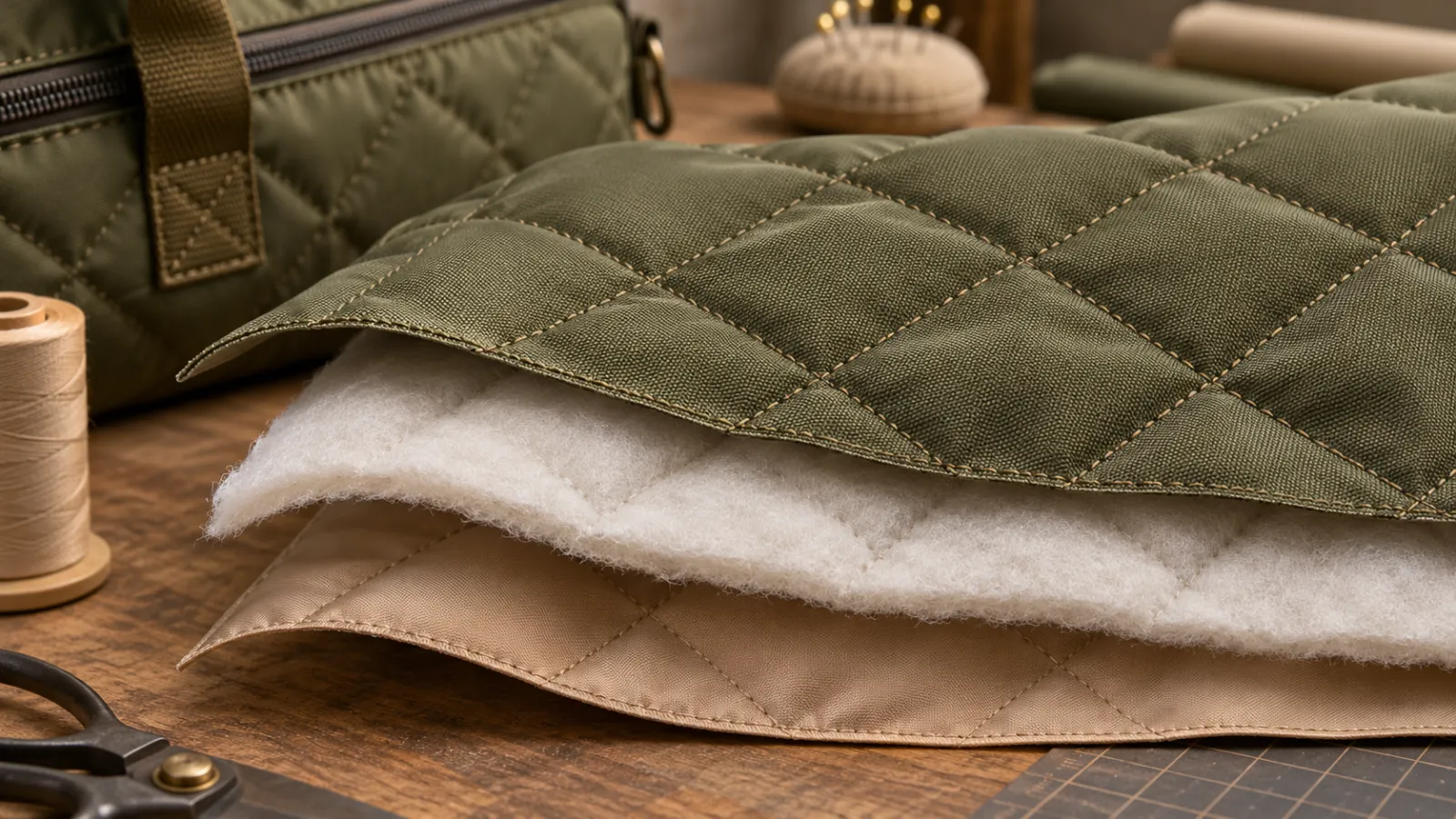
Count handling steps, not just stitches. A decorative panel may require cutting, positioning, sewing and trimming. Replacing it with a simpler panel can be more useful than demanding faster sewing. However, an apparently decorative seam may also secure padding or control how the shell sits. Ask the pattern maker what moves when it is removed.
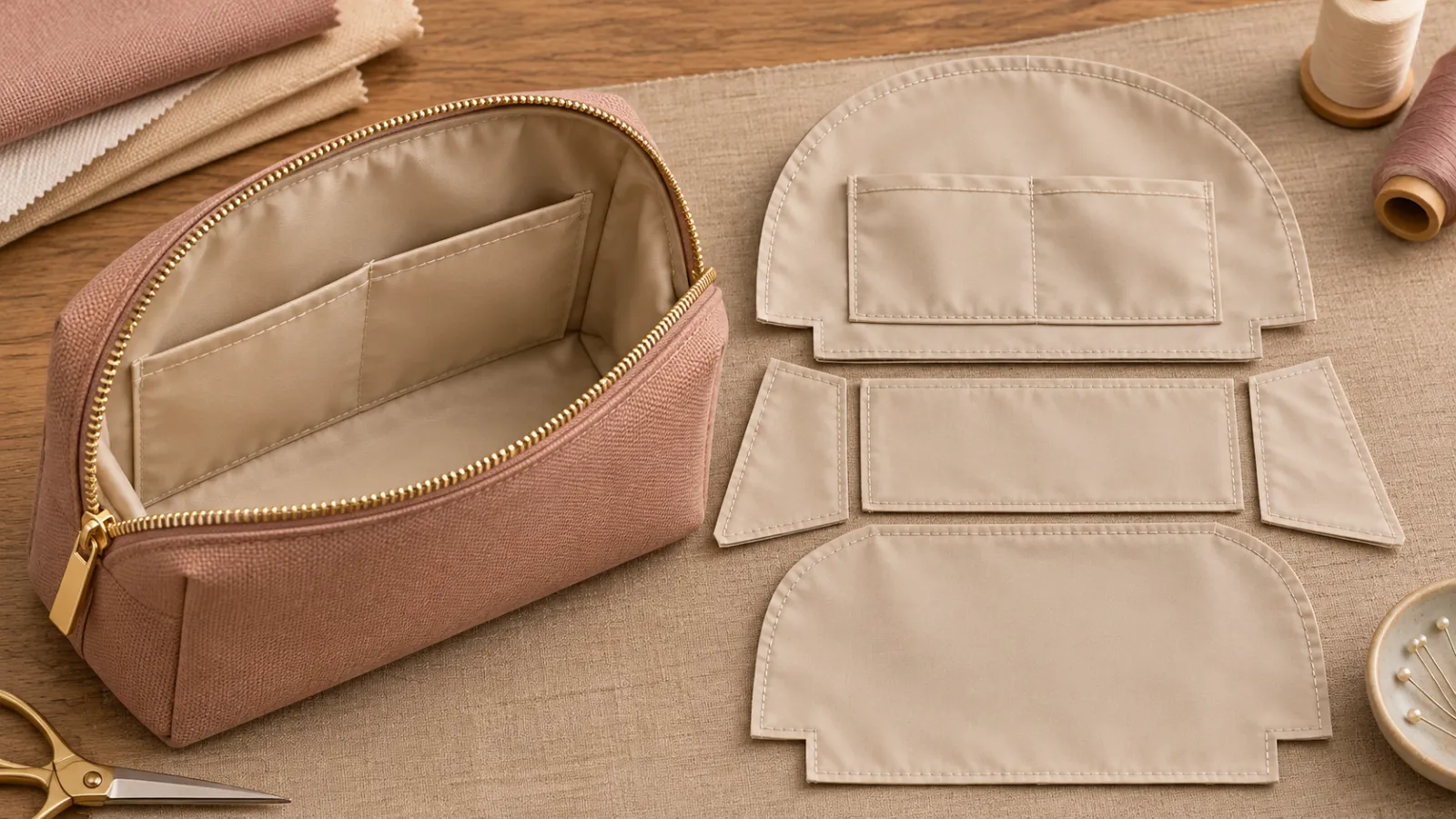
Lining is another common target. Omitting a pocket may be reasonable if users do not need separation. Removing the entire lining can expose seam allowances, decoration backs and reinforcement. That can require a different seam finish and cancel part of the saving. Compare complete constructions, not a material subtraction on paper.
For a backpack, avoid treating strap reinforcement as spare fabric. For a duffel, assess the loaded carry points and detachable strap hardware. An attractive empty sample does not demonstrate a safe loaded carry arrangement. Define the intended contents and an agreed assessment method before reducing a load-bearing detail.
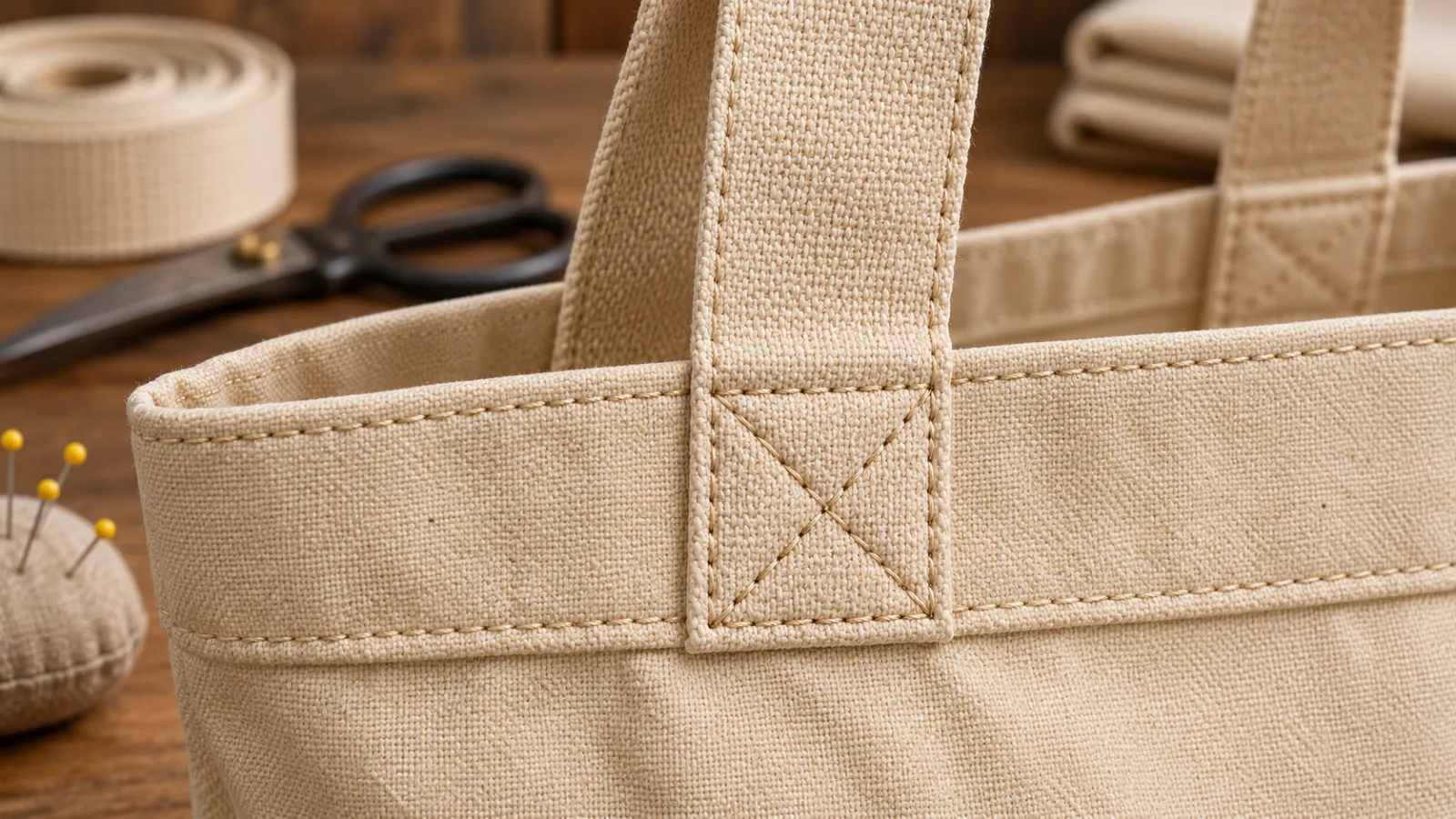
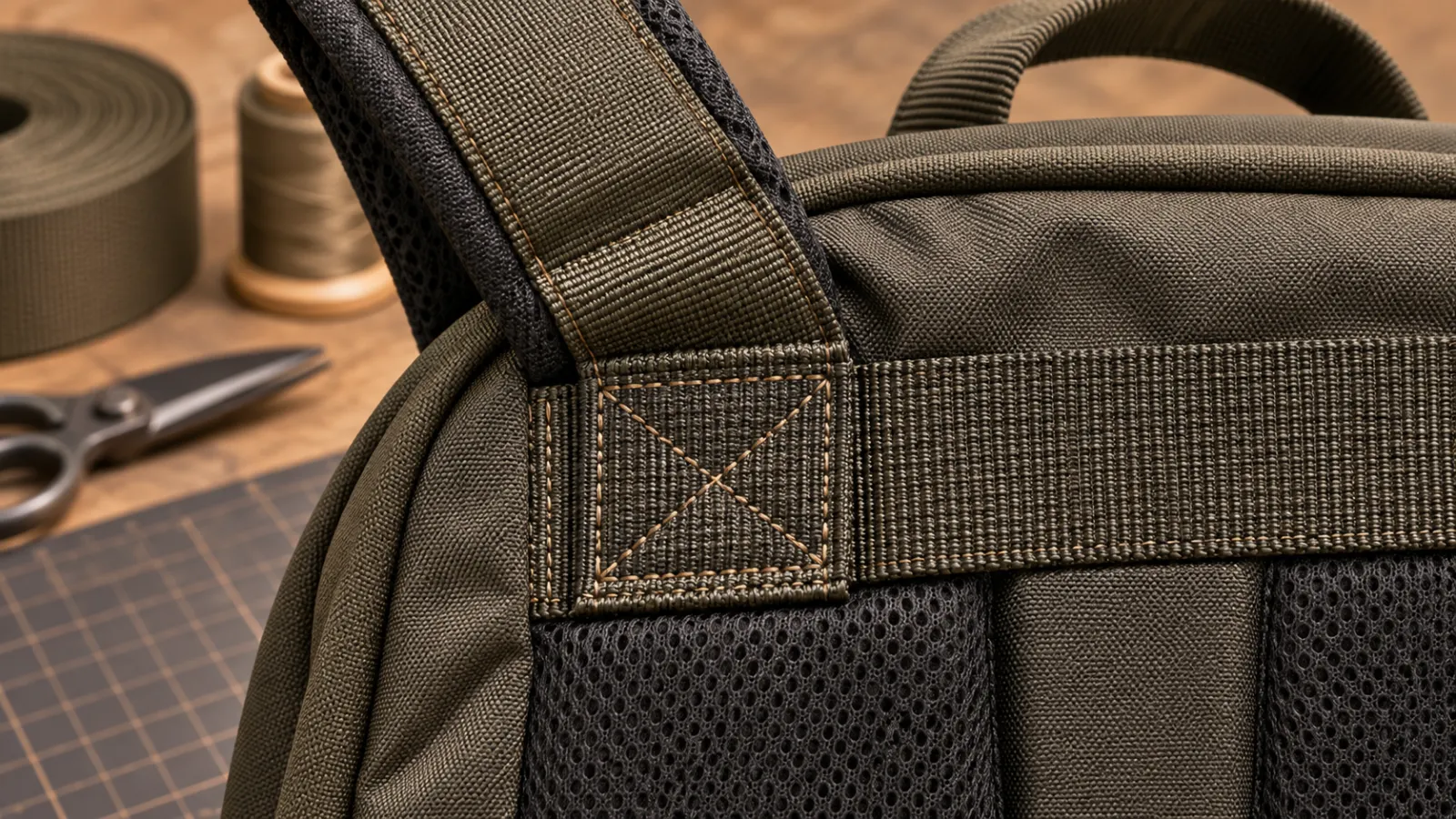
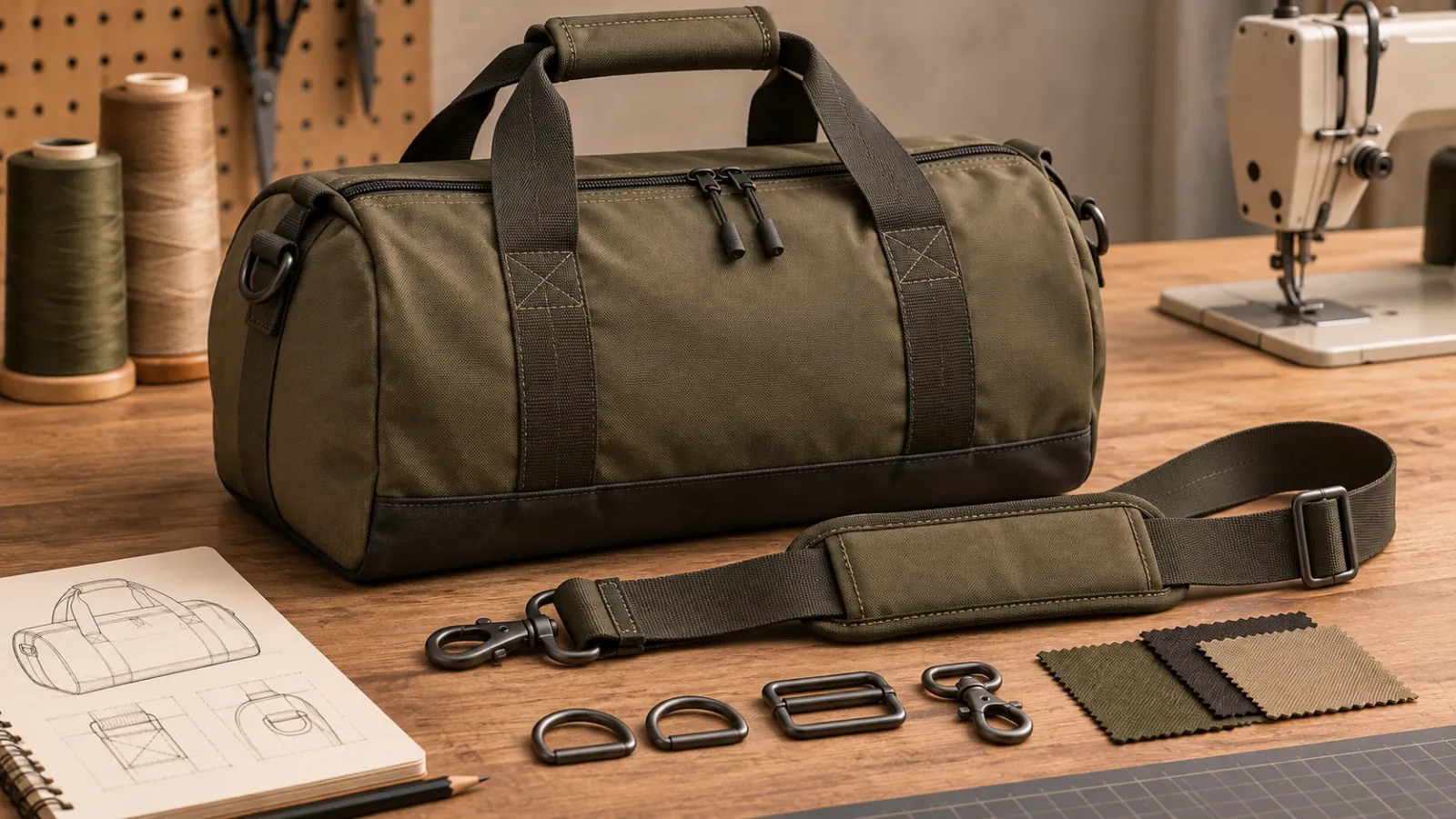
a backpack construction reference · a large-capacity duffel reference — Compare the pictured construction; these links do not establish tested performance.
A worked pouch decision: three revisions, one functional brief
Imagine a cosmetic pouch intended to hold a buyer-supplied brush kit. Its non-negotiable requirements are brush insertion without bending the guards, a zipper that closes without pressure on the contents, and an exterior suitable for the agreed branding. This is a hypothetical development exercise, not a customer case.
Revision A keeps the original construction and offers a baseline. Revision B removes an internal divider and uses a common lining colour. It is worth sampling if the divider is not required to separate the kit. Revision C narrows the body for better fabric yield. It must be rejected if the brush guards catch at the opening, even if the empty pouch looks unchanged.
Suppose the baseline recurring cost is $3.00 and revision B is $2.82 for 2,000 units. The gross recurring saving is $360. If extra development and validation cost $220, the first-order saving is $140 before any other changed costs. Break-even is 220 ÷ 0.18, rounded up to 1,223 units. These are arithmetic inputs only, not prices, MOQ terms or promised savings.
The commercial decision should include what happens next. A new lining reserved only for this small order may leave unused stock. A revised pattern may need new photographs or packing instructions. Ask who owns these costs. Reject a proposal whose apparent saving depends on leaving them out.
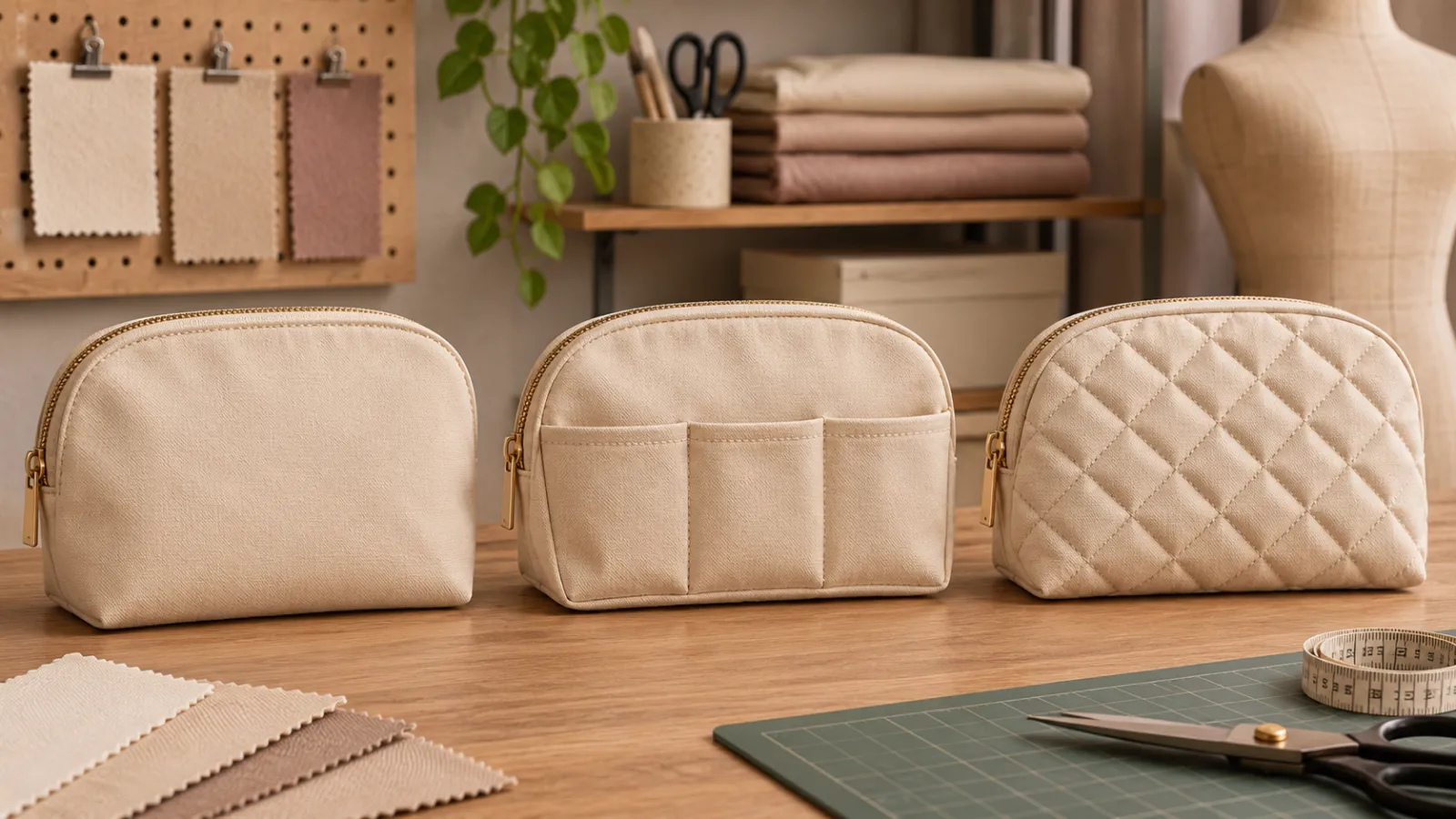
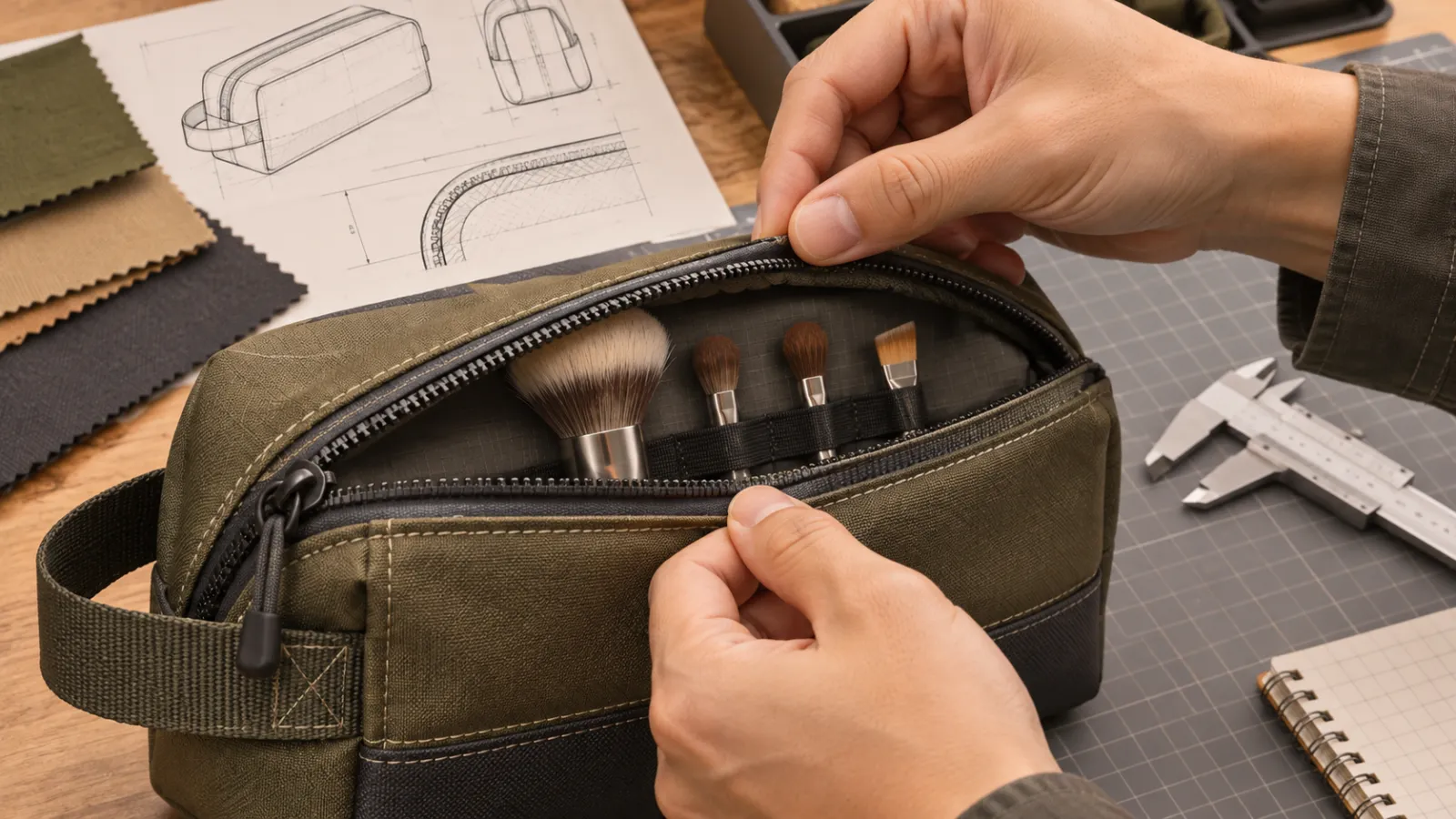
a cylindrical pouch opening · contrast-trim PU pouches — Compare the pictured construction; these links do not establish tested performance.
Packing savings need a recovery check
Packing a soft bag flatter may reduce carton volume, but folded padding, PU panels and structured edges may recover differently. Approve a packing trial using the intended fold, support material and carton arrangement. Assess the product after unpacking under agreed conditions. A photograph taken before packing cannot answer that question.
For comparison, if carton external dimensions change from 60 × 40 × 40 cm to 60 × 40 × 35 cm, calculated external volume falls from 0.096 to 0.084 cubic metre, or 12.5%. This does not establish a 12.5% freight saving. Carton count, chargeable weight, carrier rules and the actual shipment all matter. Have the forwarder calculate both configurations.
Keep labels readable and prevent hardware rubbing against visible surfaces. A smaller carton that produces damaged fronts or requires lengthy unpacking can be a poor trade. Record pieces per carton and packing materials with the approved sample, so production does not improvise a different fold.
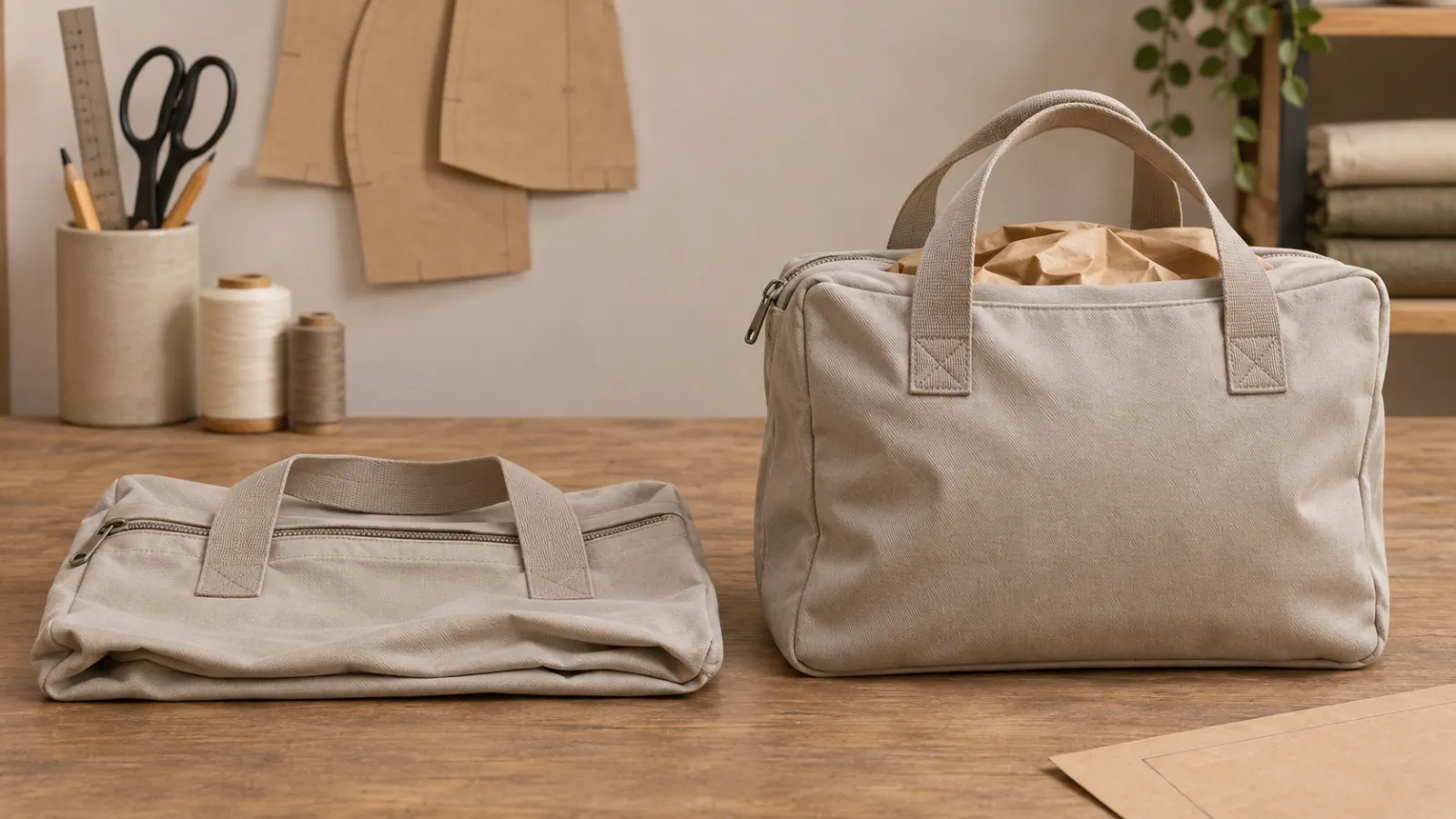
a towel-to-bag conversion · Packing and labelling requirements
Release the approved revision, not a vague cheaper version
Create a change record with baseline specification, proposed change, reason, expected cost effect, affected function, validation result and approval owner. Assign a revision ID to the drawing and material list. Keep an approved physical reference where practical. A purchase order that says “same as sample, lower cost” cannot tell the factory which sample or which substitution was accepted.
Ask the manufacturer to distinguish OEM execution of your approved specification, ODM construction development, private-label branding and component sourcing. These are different responsibilities. If a supplier proposes the revised pattern, identify who confirms fit and appearance before production. If the buyer nominates a zipper, identify who checks compatibility.
During production, check the changed area early enough to correct it. A common lining change may affect label contrast; a revised binding may reduce opening clearance. Recheck the affected function rather than relying on a general visual inspection. Retain the change record for repeat orders so the next run does not quietly revert to the previous construction.
A change approval table buyers can use
| Proposed change | Function to preserve | Approval evidence |
|---|---|---|
| Common lining | Separation and label visibility | Loaded sewn sample |
| Smaller panel | Capacity and opening clearance | Revised drawing and content fit check |
| Remove decorative seam | Padding control and appearance | Finished sample and process review |
| Flatter packing | Surface condition and shape recovery | Packing trial and unpacking record |
Put the revision into a bag tech pack · Control repeat-order changes
Frequently asked questions
Is a lower fabric weight always the best way to reduce bag cost?
No. Compare material consumption, cutting restrictions and the finished function. A lighter material can require reinforcement or change the bag’s appearance and handling.
Can component consolidation reduce MOQ?
It may reduce separate component purchase lots, but finished-product MOQ also depends on cutting, sewing and decoration. Ask for the conditions for the actual construction.
How do buyers calculate whether a revision pays back?
Multiply the recurring unit saving by the order quantity, then deduct additional development, validation and other changed costs. Use the same quotation basis for both versions.
Should packing changes be approved separately?
Yes. Check carton quantity, surface protection and recovery after unpacking. Reduced carton volume does not by itself establish the freight saving.
What should an OEM factory receive for a cost-reduction review?
Send the baseline drawing and material list, contents, mandatory functions, target quantities and proposed changes. Identify the approval owner and request separate recurring and one-time costs.
Bring the baseline to a factory review
Share the drawing, material list, intended contents, required functions and order quantities. Request a construction review with the cost and validation implications of each proposed change.
Discuss an OEM construction review