How do you maintain quality in repeat bag orders?
To keep repeat bag orders consistent, freeze the approved component list and construction, compare proposed substitutions before use, verify their effect on a finished loaded sample, and release the order against a documented revision. A matching model name, colour code or exterior dimension is not enough.
Worked example: the cloud pouch that closes differently
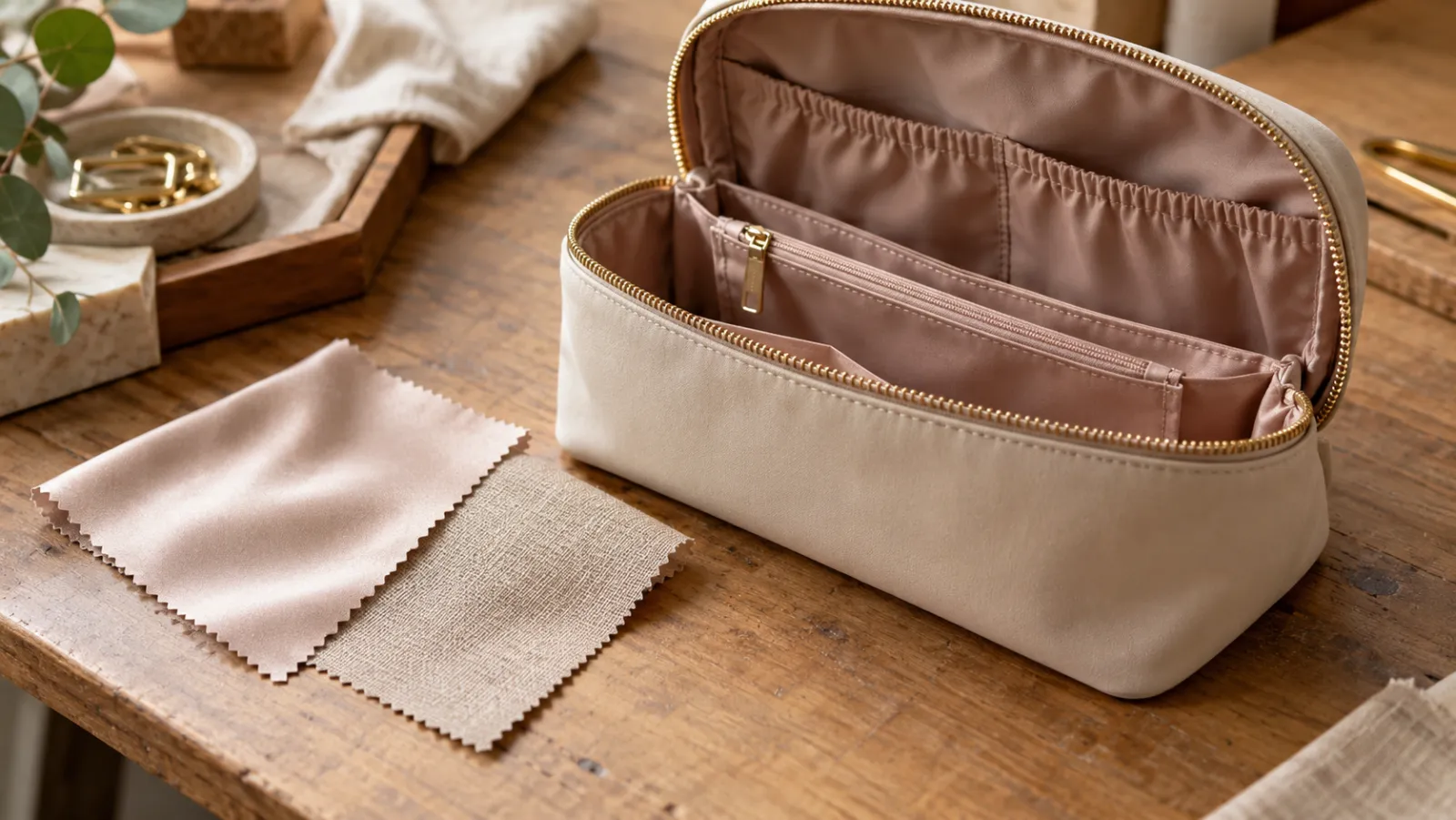
Illustrative scenario, not a customer case: a buyer reorders a lilac quilted cosmetic pouch. The shell colour and external measurements appear unchanged, but the new sample feels firmer and the zipper presses against the tallest bottle. The buyer’s first reaction is to reject the size. That diagnosis is premature: several variables can reduce usable room without changing the outside pattern.
1. Contain the decision before diagnosing the cause
Ask the factory to hold use of the proposed component for the affected order and identify which materials have already been bought, cut or assembled. Keep the disputed sample and approved reference under the same comparison conditions. Do not immediately change the pattern to compensate: that could hide a material substitution and create a second uncontrolled revision.
2. Trace one variable at a time
Compare the old and proposed filling, backing, lining and seam construction with the approved bill of materials. Ask for the material references and change explanation. Repack the same bottle and compact arrangement in both samples. If the firmer filling is the suspected cause, ask for a sample using the approved filling with the current shell and lining. The purpose is to isolate the change; the photographs alone cannot prove causation.
3. Offer three explicit commercial choices
The buyer can request the original construction, evaluate the replacement, or approve a revised design. These are different decisions. For the original build, confirm component availability and schedule. For a substitute, review closure, hand feel and recovery after representative packing. For a redesign, issue a new pattern revision and repeat the relevant fit checks. A lower unit price does not settle which choice meets the product brief.
4. Release a bounded approval
An approval should state the component reference, affected colour and order, sample identifier, checks completed and remaining limitations. If approval covers only this order, say so. The factory then updates the production documents and segregates the original and substitute components. If the change is rejected, record the rejection and the required disposition of affected work. Never turn a one-time concession into the new default silently.
Use an impact-based review, not a blanket “equivalent material” approval
The following is a proposed decision framework for buyer and factory agreement, not a certified inspection standard. Classify the impact on the product, not the size of the price difference.
| Impact | Example | Evidence before release | Who decides |
|---|---|---|---|
| Appearance only, subject to agreed limits | A proposed shade or decorative thread change | Physical comparison under agreed conditions; confirm no functional change | Named buyer appearance approver |
| Fit or function | Different filling, lining thickness, zipper or pocket pattern | Assembled loaded sample, revised drawing and relevant agreed assessments | Buyer product owner with factory technical review |
| Claim, market requirement or composition | New shell composition or a change affecting a stated performance claim | Updated specification and relevant supporting evidence; specialist review where needed | Authorised buyer compliance/product decision-maker |
| Identity or packing | Logo revision, barcode, assortment or carton change | Artwork proof, affected SKU list and representative packed sample | Buyer brand/operations approver |
A change request a purchasing manager can actually release
Copy these fields into the purchase-order attachment or your own change system. Every field should have an owner; “to be confirmed” is an open issue, not approval.
- Change ID and scope
- Unique request ID; affected style, colour, order and production stage.
- Old and proposed build
- Component references, supplier references where agreed, drawing/BOM revisions and a plain explanation of the difference.
- Reason and alternatives
- Availability, cost, design or process reason; original-build option and proposed schedule implications.
- Evidence
- Swatches, photographs, sample ID, loaded-fit record, packing review and any relevant assessment reports.
- Decision
- Approved, rejected or held; named authority, date, conditions, effective order and whether the approval is temporary.
- Implementation and verification
- Person updating documents; component segregation; first-piece confirmation; inspection reference and disposition of affected work.
Example decision wording: “Approved for the identified order and lilac colourway only, against the referenced assembled sample. No change to lining, pocket layout or packing is included. Future orders require confirmation of the selected filling reference.” This is illustrative wording to adapt, not a substitute for your contract or acceptance plan.
Where the factory should stop and hand the decision back
A useful control has a stop point. Before cutting, confirm the released revision and incoming components. Before applying labels or embroidery throughout production, check the first assembled result. Before packing, compare the loaded sample and agreed pack method. At each point, identify the person who can release the next operation. A final inspection cannot reconstruct an undocumented material approval.
The buyer owns the intended use, approved appearance, claims and commercial decision. The factory provides the proposed construction, sourcing status, manufacturing feasibility and change evidence. Agree responsibilities explicitly when agents, label vendors or separate material suppliers are involved. If no one can identify who authorised a substitution, the record is incomplete even when the finished bag looks acceptable.
For a rush reorder, ask what is genuinely unchanged, what needs review and which operations can proceed independently. Do not present urgency as approval to substitute materials. Agree the schedule effect of pending approval rather than promising a universal reorder lead time.
What this guide can and cannot prove
This is an editorial purchasing workflow illustrated with conceptual generated images and catalogue product references. It is not a factory audit, laboratory report or measured customer case. No universal colour tolerance, load rating, recovery time or inspection sample size is specified here. Those decisions belong to the selected construction, intended use, market and written order agreement. Product links illustrate different control points; they do not certify a performance claim.
A good first batch does not automatically define the next one. Reorder consistency depends on controlling the approved construction and its changes, not merely repeating a model name.
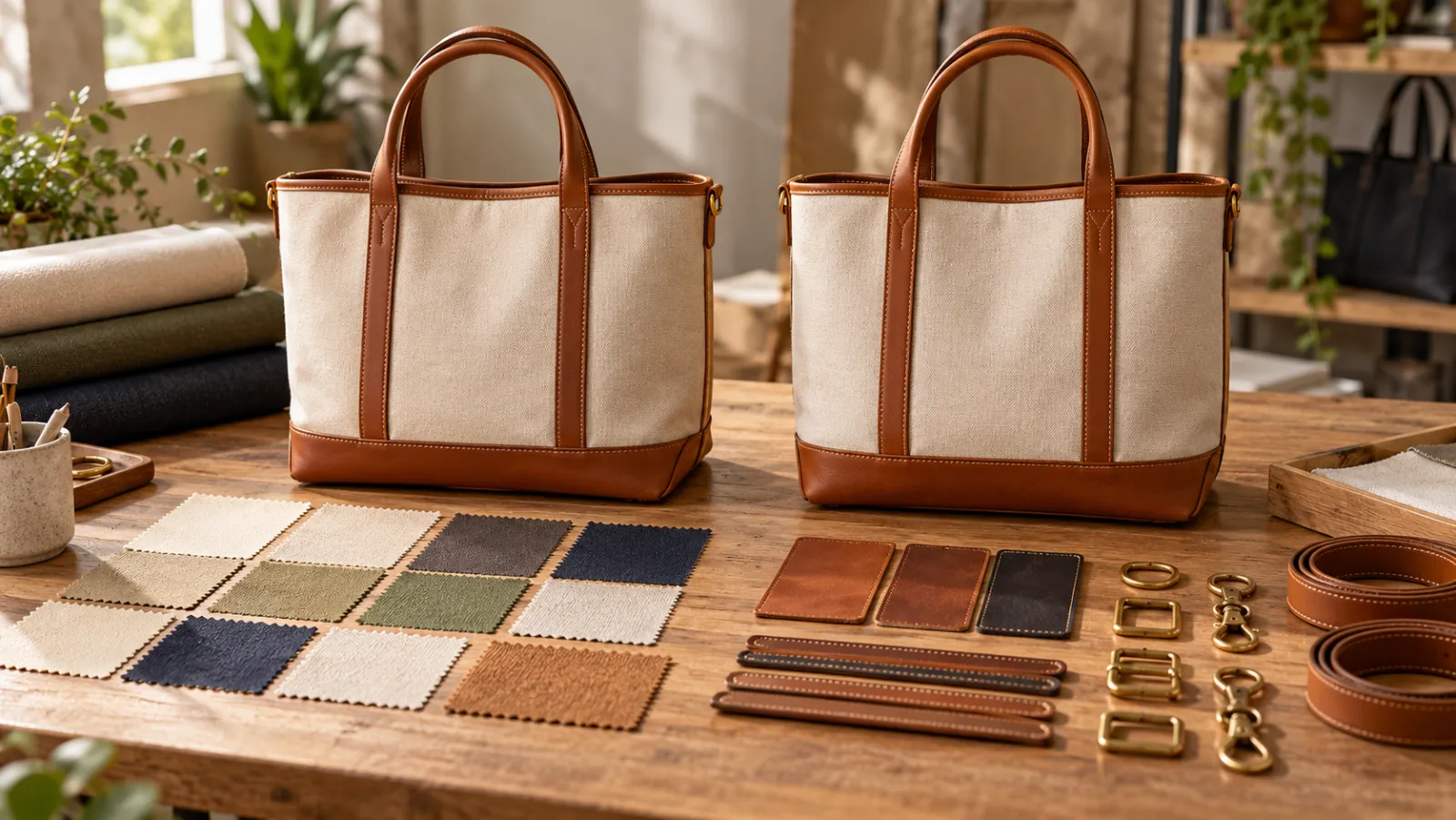
The approval baseline and material batches
Why a matching model name is not a specification
A reorder can keep the same silhouette and still feel different. Fabric backing, filling, lining and hardware may change independently. Before asking the factory to make it “the same as last time”, identify the approved build and the first-order records that define it. This guide concerns changes after the first order, rather than initial supplier selection or sample approval. The scenarios below are illustrative, not reports of MerrisBags customer orders.
Keep a finished sample on both sides
Retain a buyer sample and a factory sample tied to the same specification revision. Record the order, colourway, approval date and approved exceptions. A showroom sample may have different hardware or a development lining. Store the reference away from prolonged light and compression, and record its condition before using it to judge a later batch. The sample and written specification should support each other; neither replaces missing measurements.
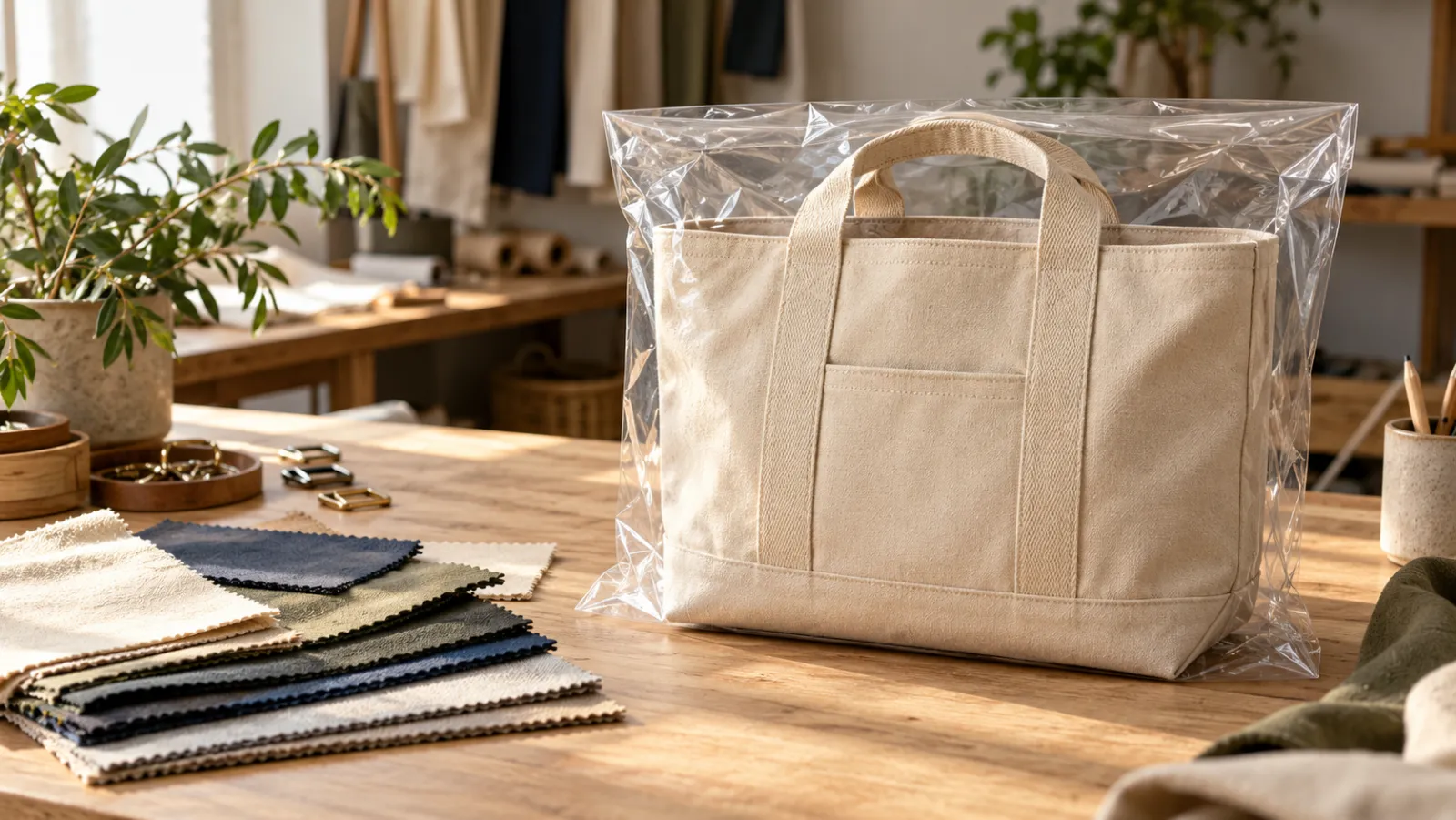
Fabric density is only one part of equivalence
A fabric with a similar colour and quoted weight can have a different weave, backing or finish. Ask the supplier to identify the actual construction and proposed difference, not simply call it an equivalent. Compare drape, seam behaviour and the finished corner on a sewn panel. Where performance matters, agree the relevant assessment before approval. Never treat a matching commercial fabric name as proof of the same composition.

Pile and filling variation
Corduroy needs a cutting-direction record
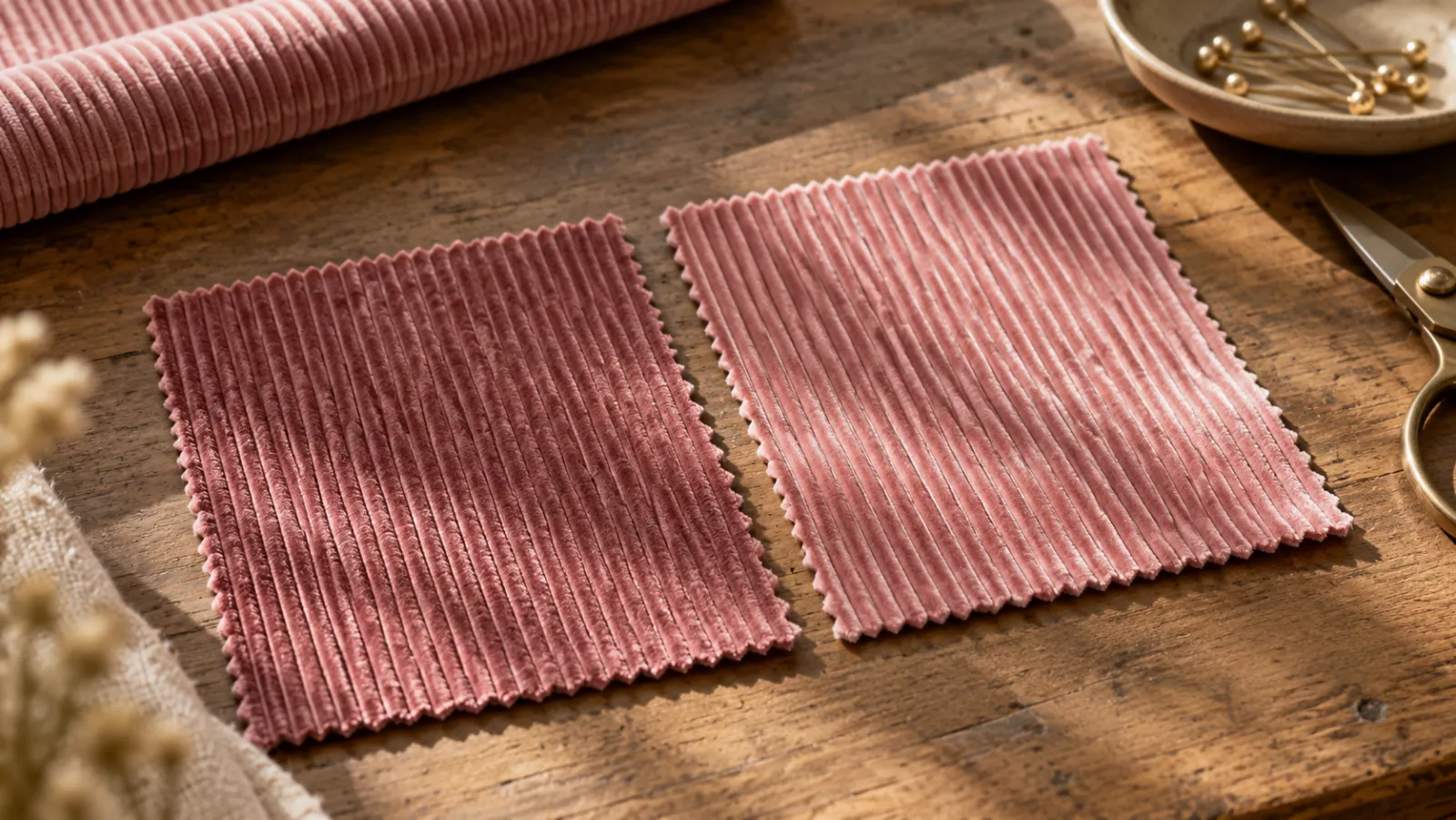
On a pink corduroy pouch, opposite pile directions can look like two shades even within one fabric lot. Mark the nap direction on the pattern and keep a sewn front panel with the label attached. Compare under the same lighting and orientation before rejecting the dye lot. Then inspect rib distortion near the label and zipper. A colour-only approval would miss these construction effects.

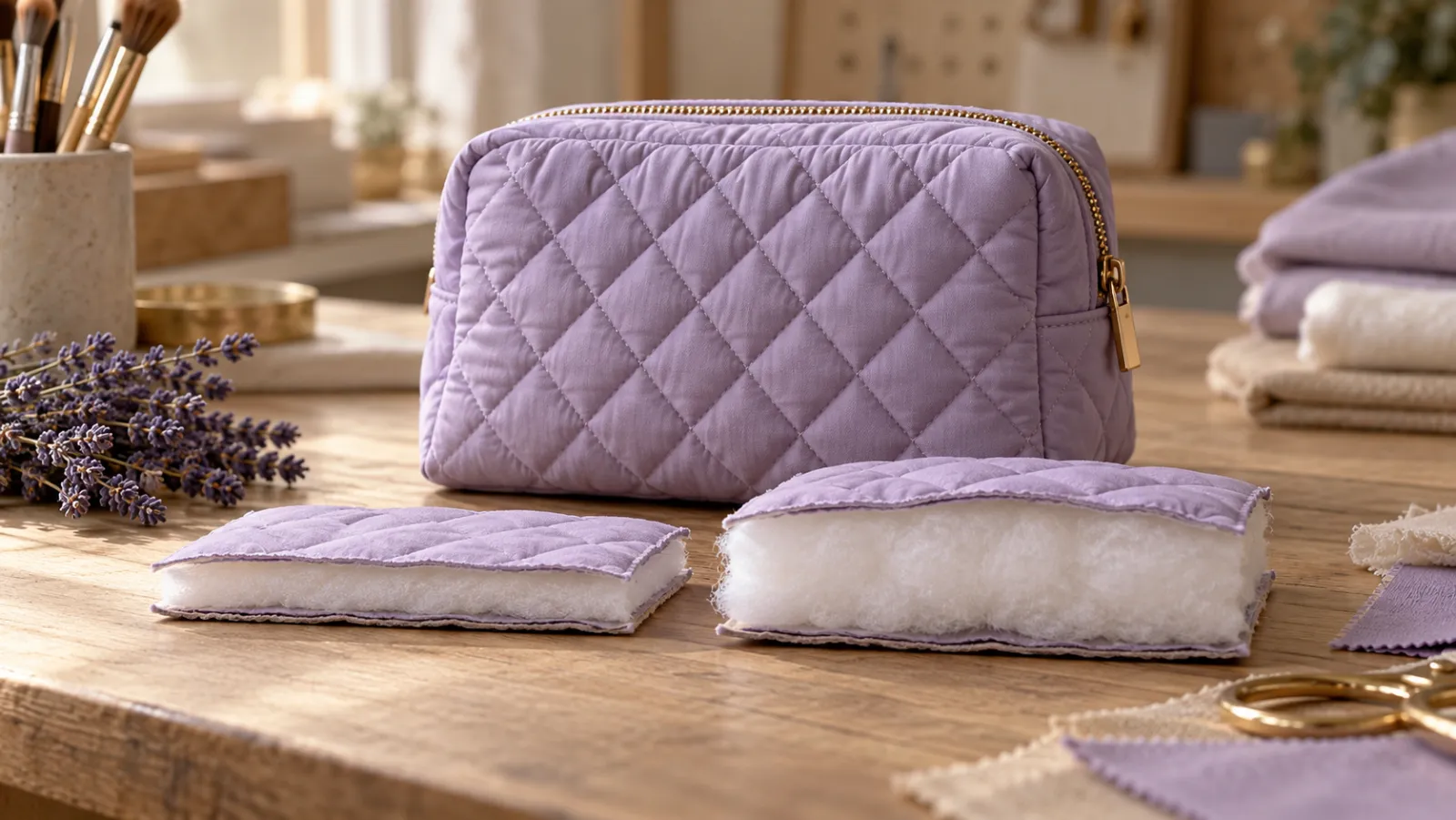
A filling substitution changes more than softness
Consider a grid-quilted cloud pouch. A replacement filling might recover differently after packing and take more room beside the zipper. Keep the filling specification, quilt spacing and finished loft reference together. Compare the filled pouch with the same makeup kit and packing conditions. This example does not imply that any particular filling is better; it shows why a hand-feel approval alone is incomplete.

Hardware, embroidery and labels
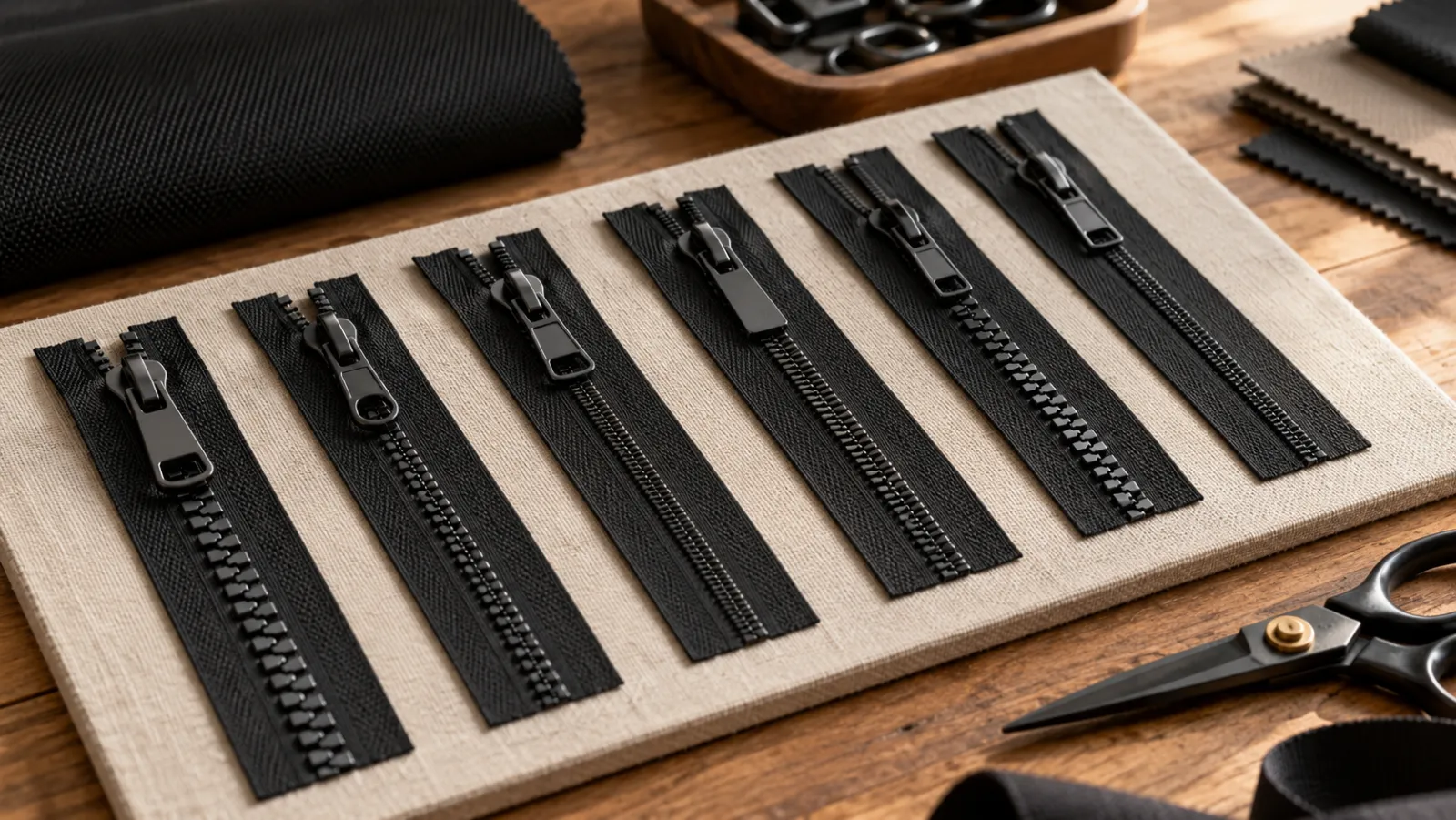
A zipper is an assembly, not just a colour
List the chain or teeth, slider, pull, tape and attachment. A replacement pull may fit the slider yet catch the lining or strike a nearby handle. Inspect the full opening path on a loaded bag and record any agreed operating assessment. Do not assume that the same finish name means the same zipper construction or that a branded pull proves the identity of every component.
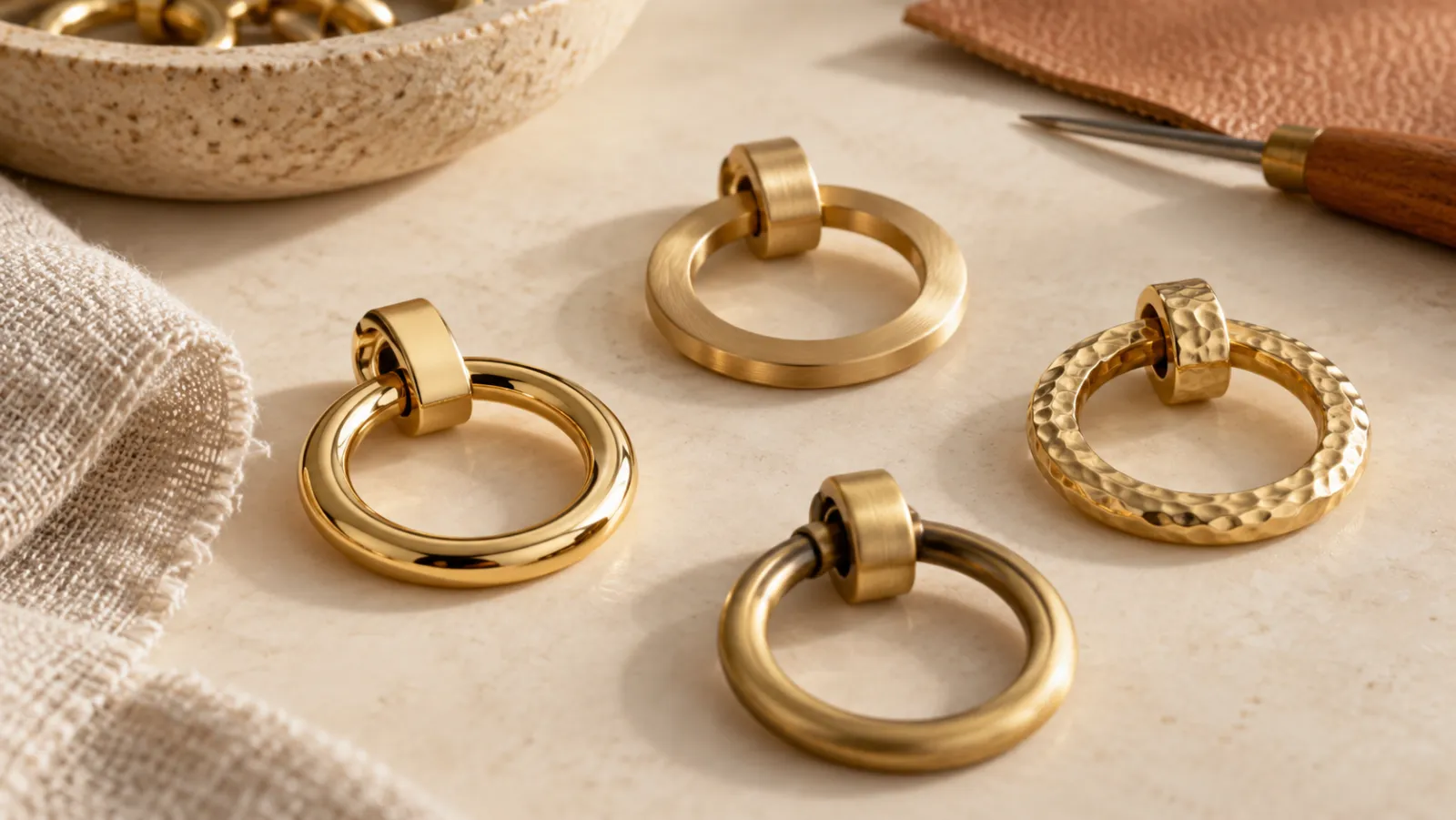
Match hardware as a package
“Gold-tone” can describe visibly different finishes. Approve the ring, clip, buckle and zipper pull together under agreed lighting. If a supplier proposes a finish or base-material change, request the supporting specification and any required market assessment. Keep appearance approval separate from claims about corrosion resistance or strength; photographs cannot establish those properties.
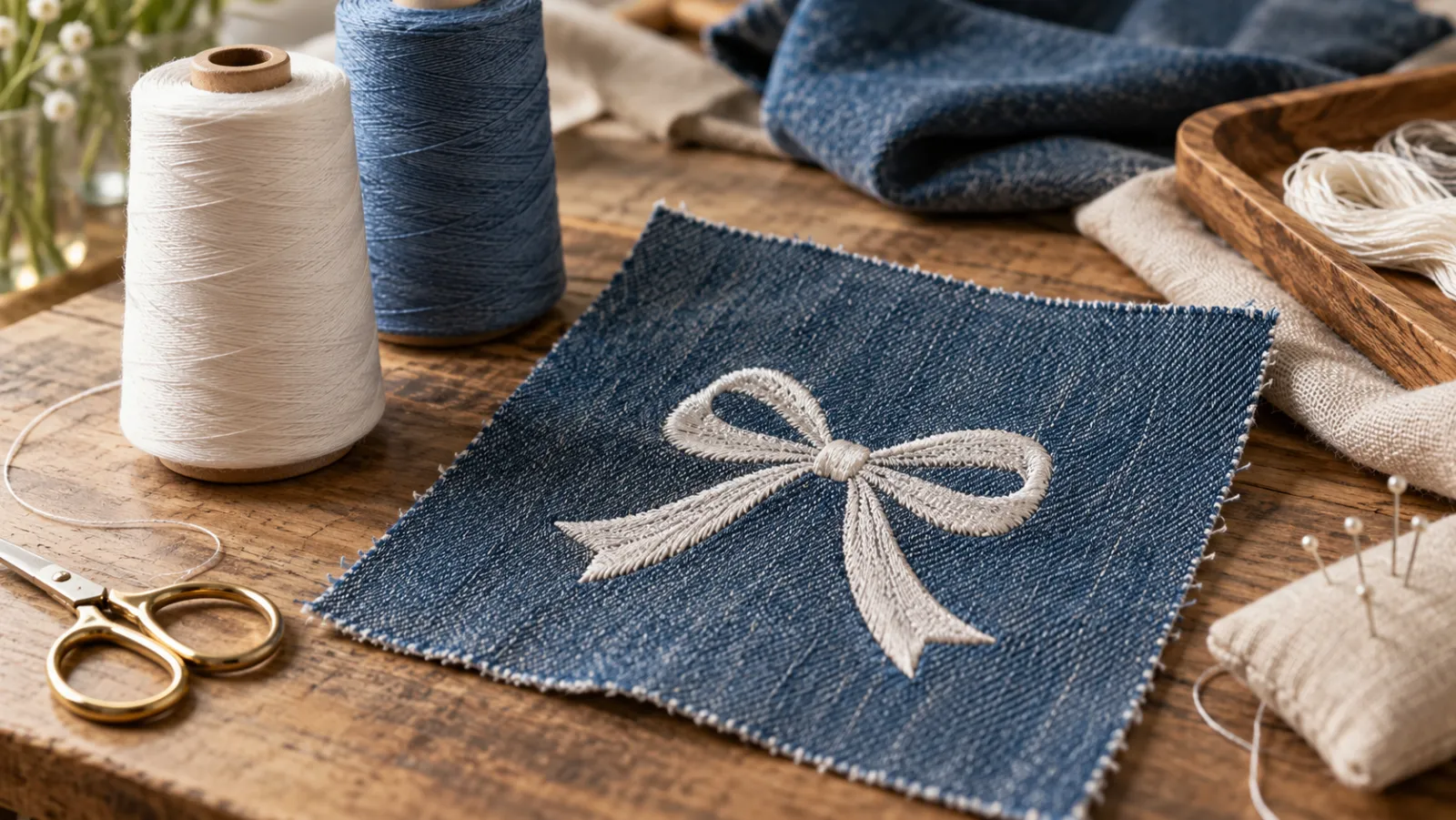
Freeze the embroidery file and the sewn result
A bow-embroidered denim laptop bag can change when artwork is re-digitised or backing is replaced. Retain the file version, thread reference, placement drawing and stitched panel. Review loop openings, puckering and the reverse side, not just the motif outline. A new bag size may need a revised placement map instead of automatically scaling every bow.

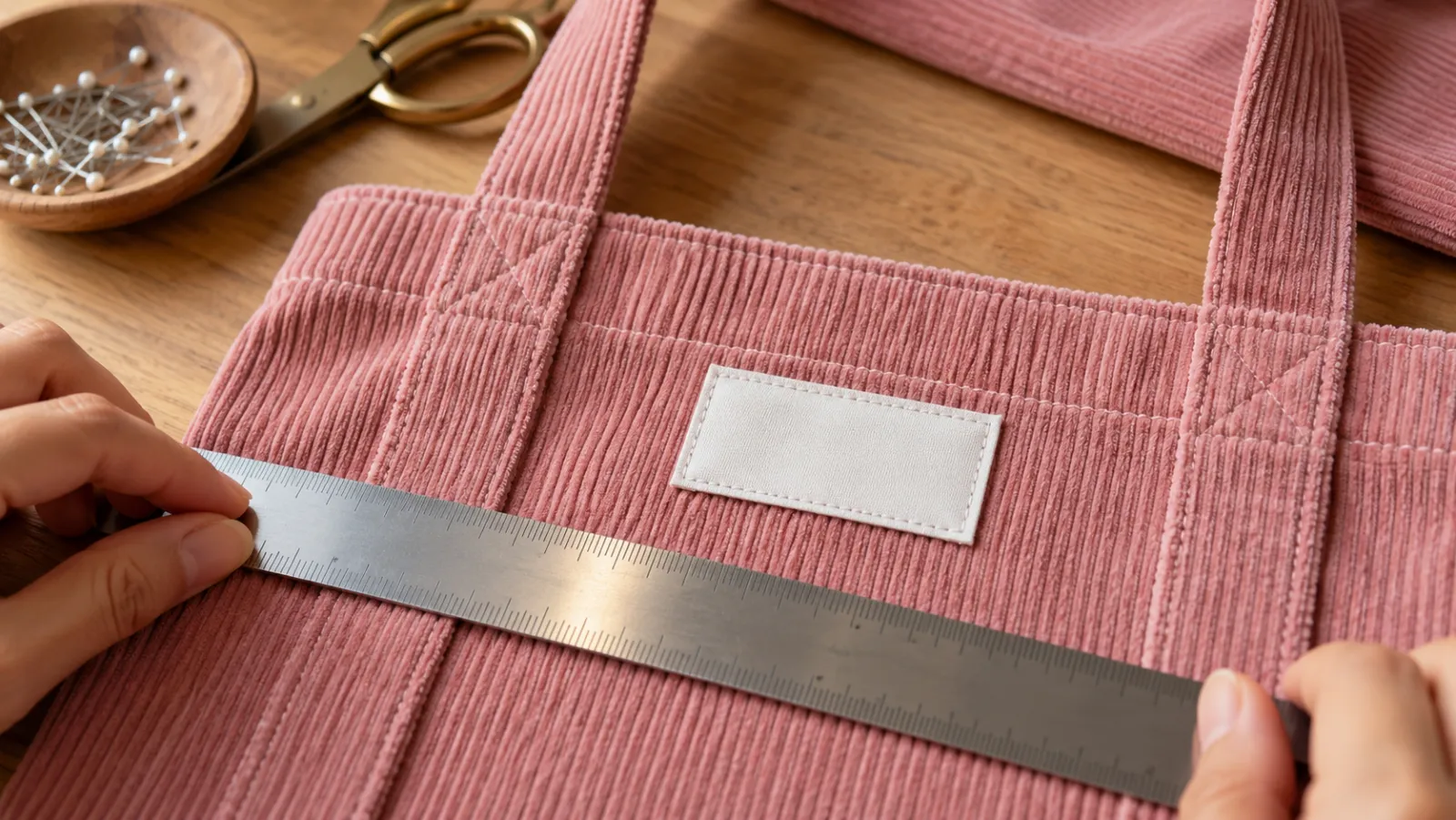
Labels need their own revision control
Keep artwork, finished dimensions, material, edge treatment and sewing position. A new label lot can alter stiffness or fold under differently on ribbed fabric. If the buyer changes the logo, separate that intentional revision from unintended shell variation. Check the first assembled piece before labels are applied throughout production. A reference brand in a photograph is not the buyer’s approved artwork.
Interior and revision records
Do not replace a lining by its name alone
A lining change can affect cleaning, pocket access and the space left inside. Specify the actual sheet or textile, backing, attachment and care requirements. A catalogue graphic saying wipe-clean is not evidence that the whole bag contains liquid. Recheck pocket mouths, seam bulk and zipper clearance on the proposed lining. Record which colourways share that build.
Use one change log, not scattered messages
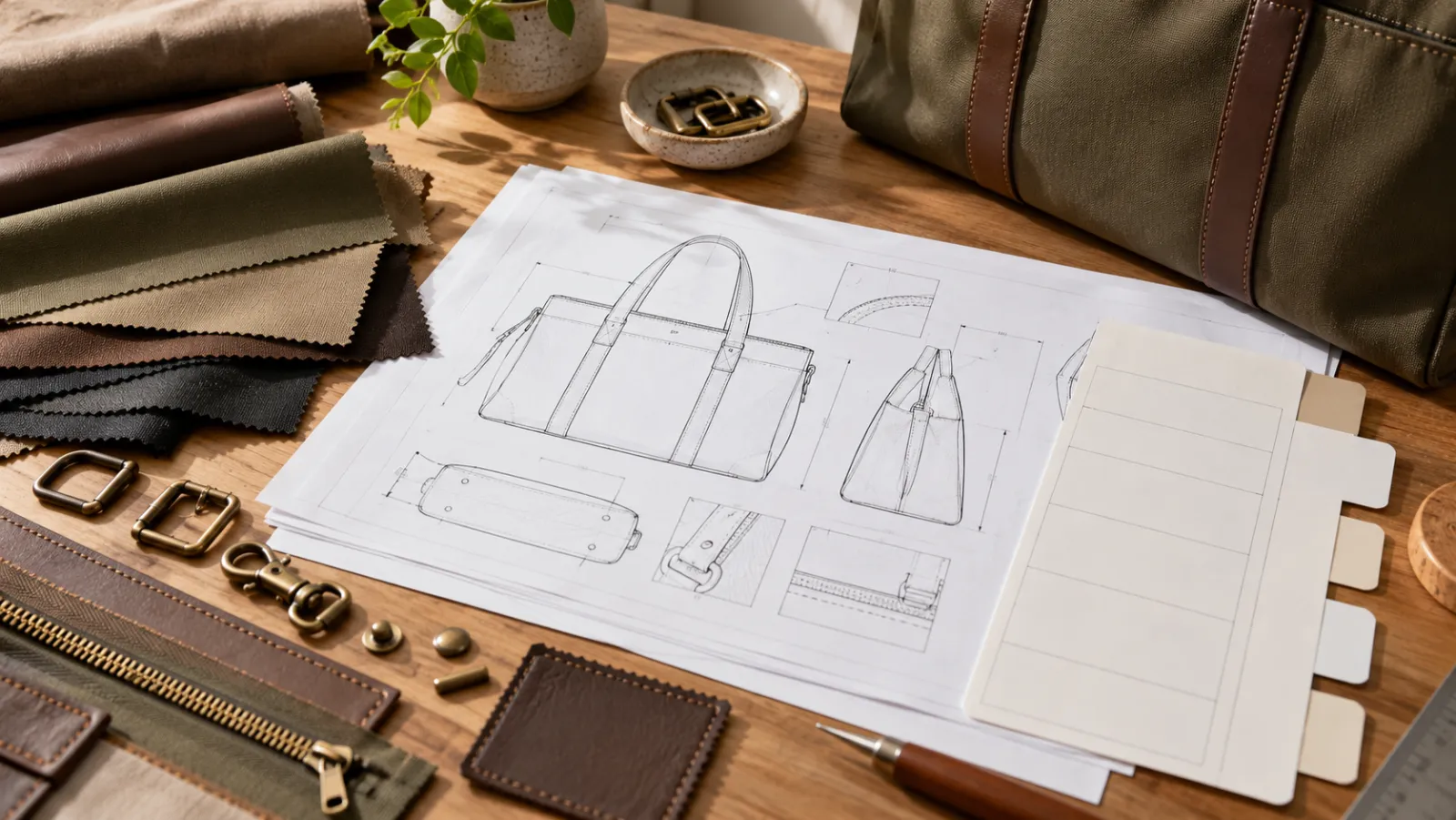
A chat approval is easy to detach from its component context. Give every requested change an identifier, old and proposed specification, affected SKUs, evidence, approver and effective order. Link the approval to the updated drawing and bill of materials. If the request is rejected, retain that decision too so the rejected component does not return during a later shortage.
Attachments and device fit
Inspect the attachment behind the stronger clip
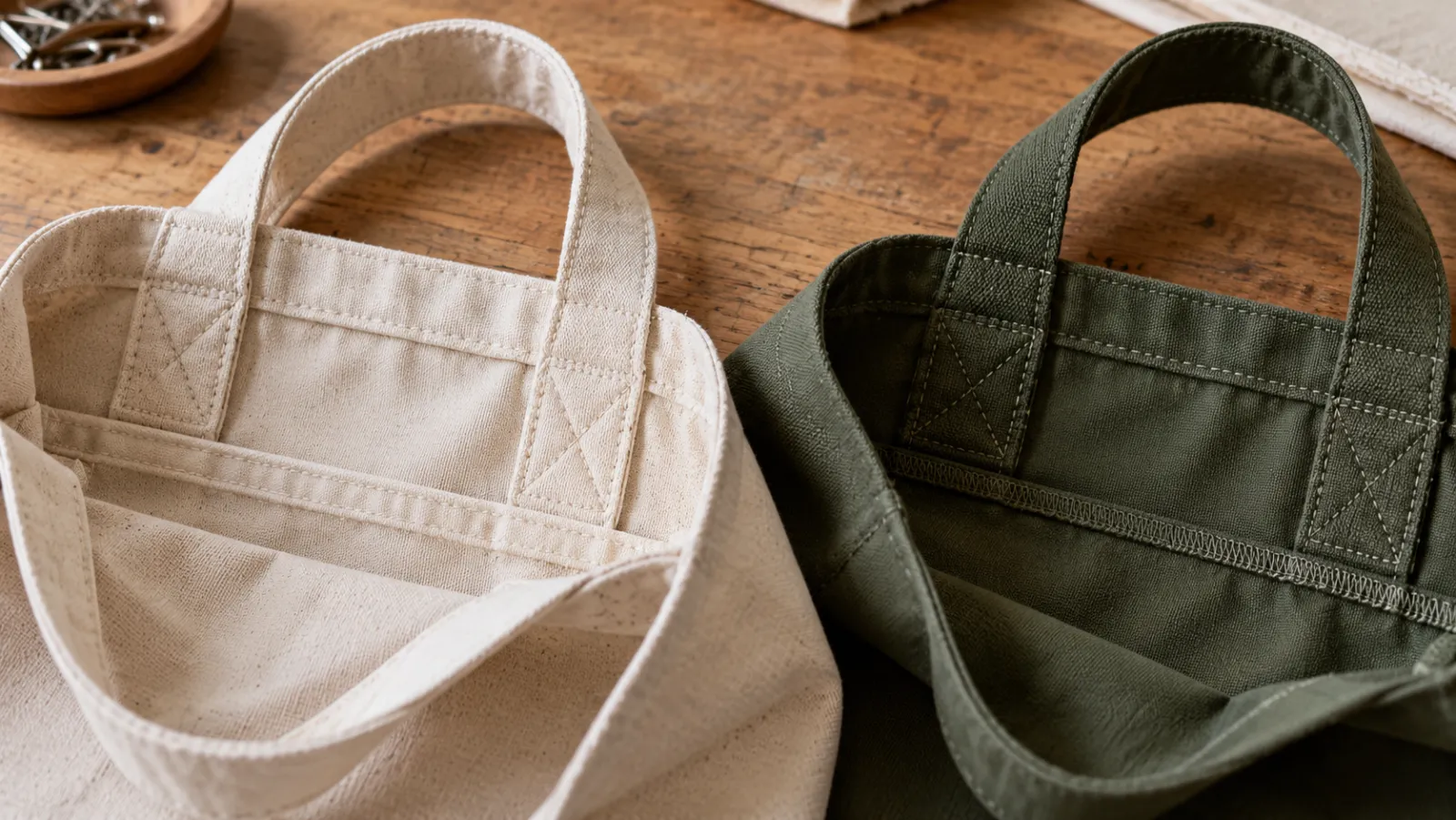
For a commuter laptop bag, replacing a clip does not verify the webbing anchor or backing. Record the whole load path: clip, ring, webbing, stitching and reinforcement. Approve the assembled carry system for the intended contents with agreed assessment conditions. An unapproved thread or reinforcement substitution can matter even when the visible hardware looks unchanged.

Recheck fit after a material change
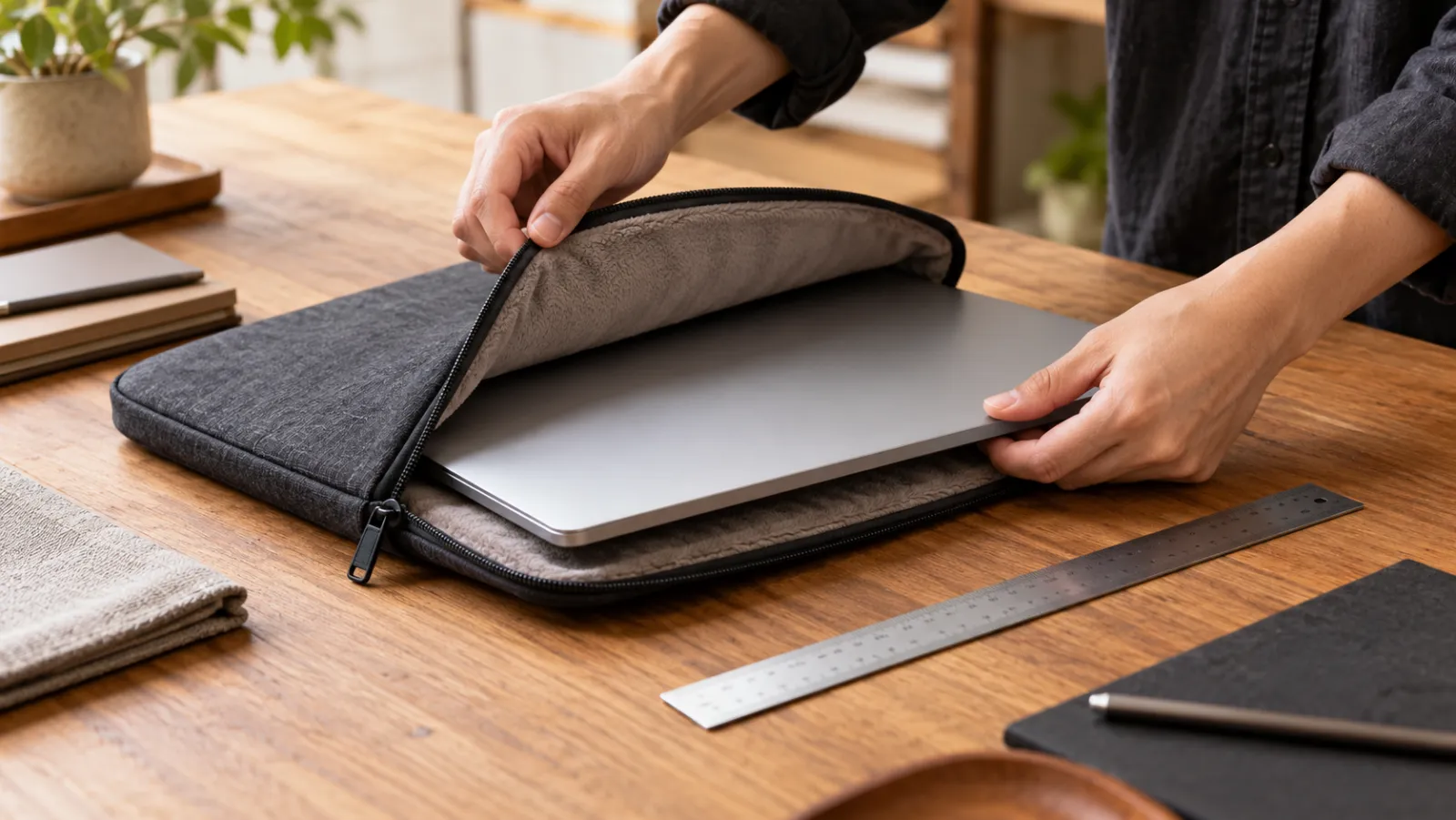
A laptop sleeve with unchanged external dimensions may lose usable room when padding or seam allowance changes. Keep a device dummy or the actual case-inclusive dimensions and repeat insertion and closure checks. Screen diagonal is not a fit specification. The same principle applies to a cosmetic pouch: use the real bottle or compact format, not a guessed litre capacity.
Colour and packing control
Separate shade variation from a changed build
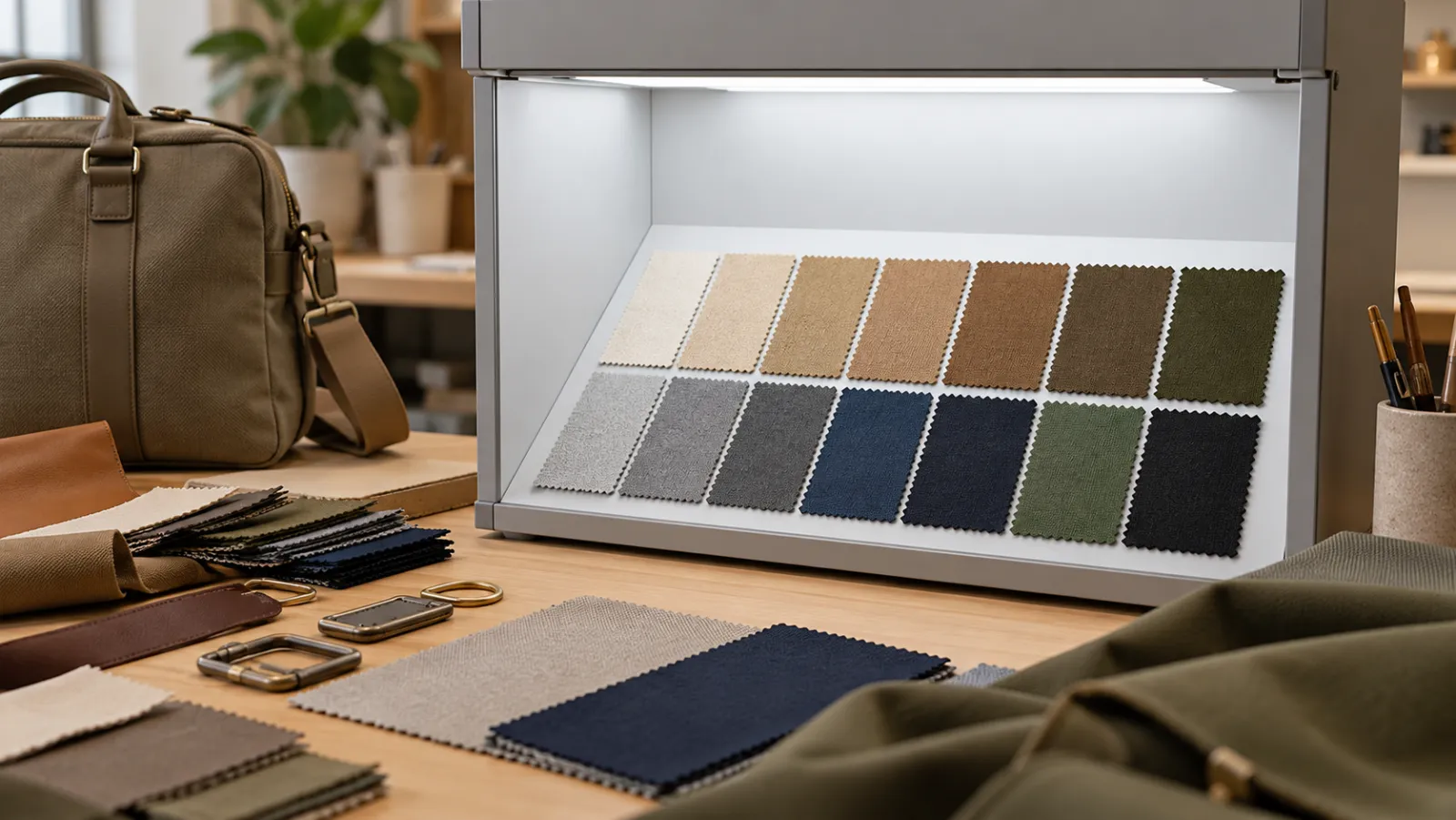
First compare samples in the same lighting and orientation. Then establish whether the change is within the agreed shade boundary, a new dye lot needing review, or a different material altogether. A Pantone reference is useful communication, but the approved physical standard and assessment conditions must be clear. Do not invent a universal colour tolerance for all fabrics and finishes.
Check recovery after representative packing
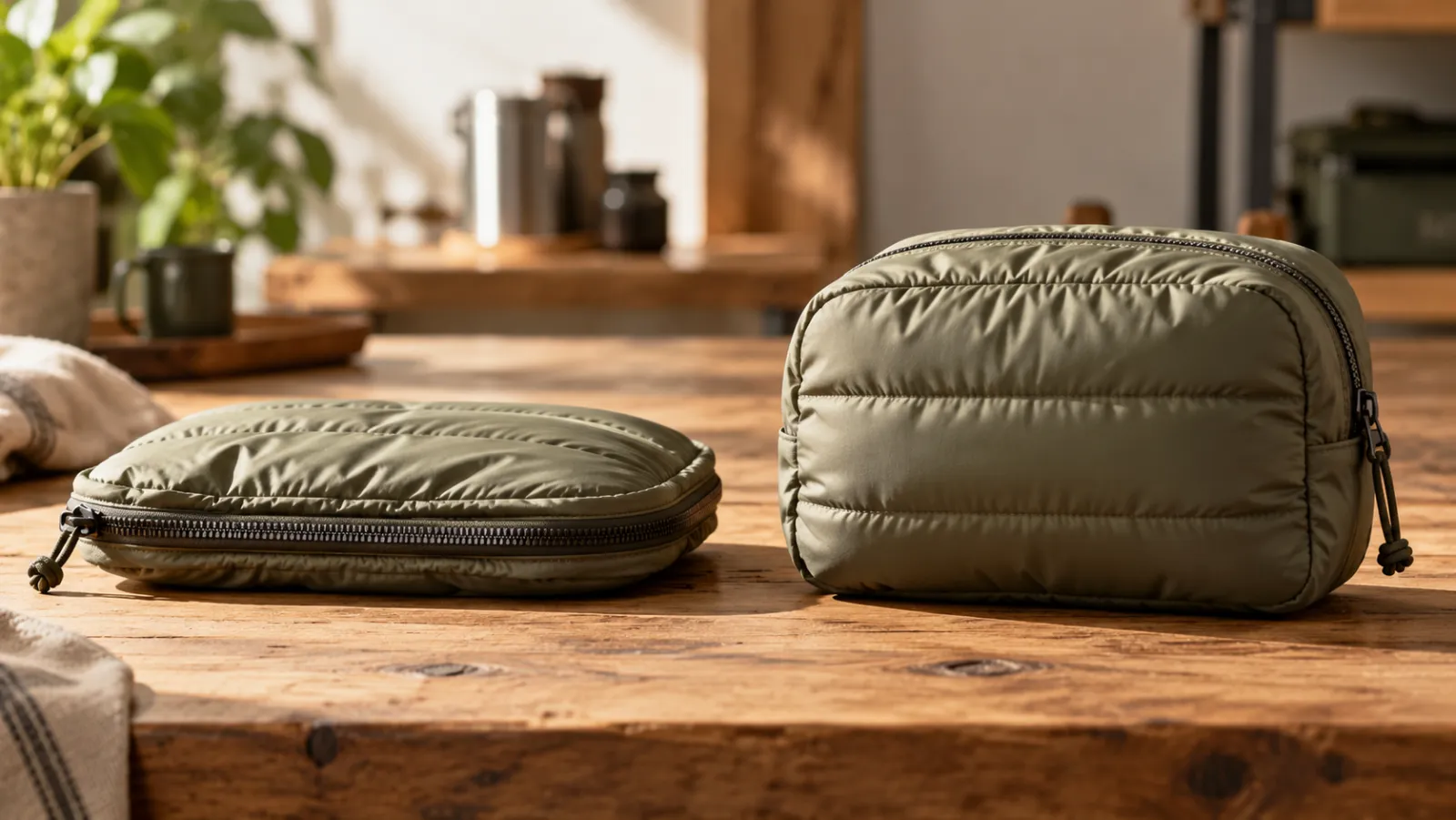
For puffer constructions, agree how the representative packed sample is stored and when it is inspected after opening. Record the recovery interval, loft appearance and corner shape. If the bulk pack method changes, repeat the check. This concerns delivered appearance; it does not establish drop protection or promise that every foam or fibre recovers equally.
Keep hardware from marking the face
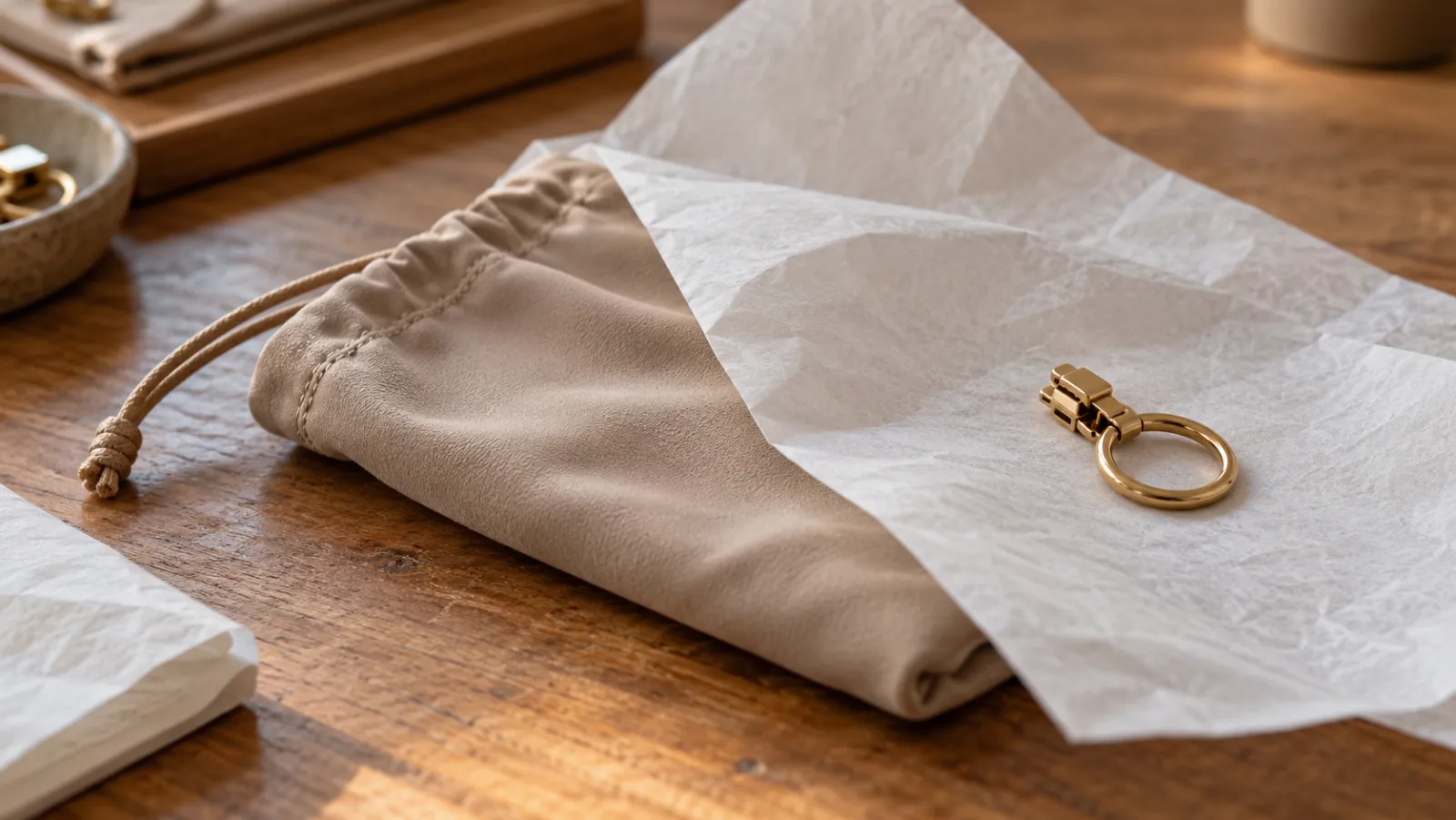
A ring pull can leave an impression on a soft shell during transit. Approve its resting position, protective layer and how the pouch is folded. Check the unpacked face as well as the packing diagram. A new carton arrangement can change pressure even when the individual polybag is unchanged. Include packing revisions in the same change process as product components.
Buy colour assortments as traceable order lines
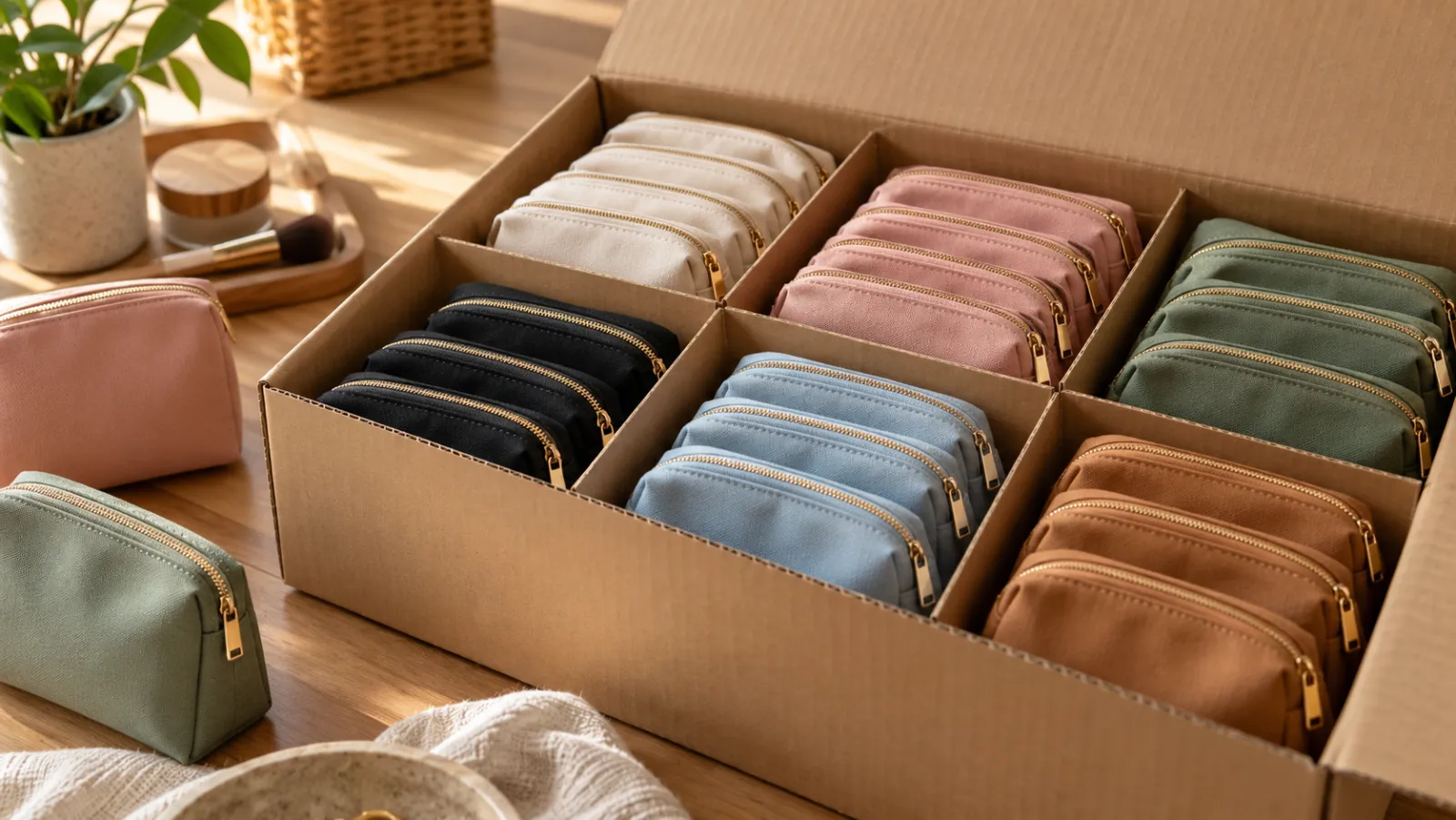
Give each shell, trim, lining and hardware combination a SKU or clear variant reference. Specify quantities and mixed-carton identification. A group photograph does not define a retail set or guarantee every colour remains available. Ask which components are shared and which need separate replenishment minima. Do not quietly move quantities into another colour without buyer approval.

Inspection and reorder release
Use inspection to verify the approved change
Inspection should reference the current revision, retained sample and order-specific acceptance plan. Separate appearance, function and documentation checks. Finding a discrepancy at final inspection is later than controlling the component before cutting or assembly. Ask for the relevant incoming and in-process records where agreed. Do not claim that a final visual check validates every performance requirement.
For the shipment-release stage, the related MerrisCustomBags site explains pre-shipment inspection and defect classification, including how inspection requirements can be documented in the purchase order. Inspection verifies the approved build; it does not retrospectively authorise an unapproved component substitution.
Decide which changes need a new sample
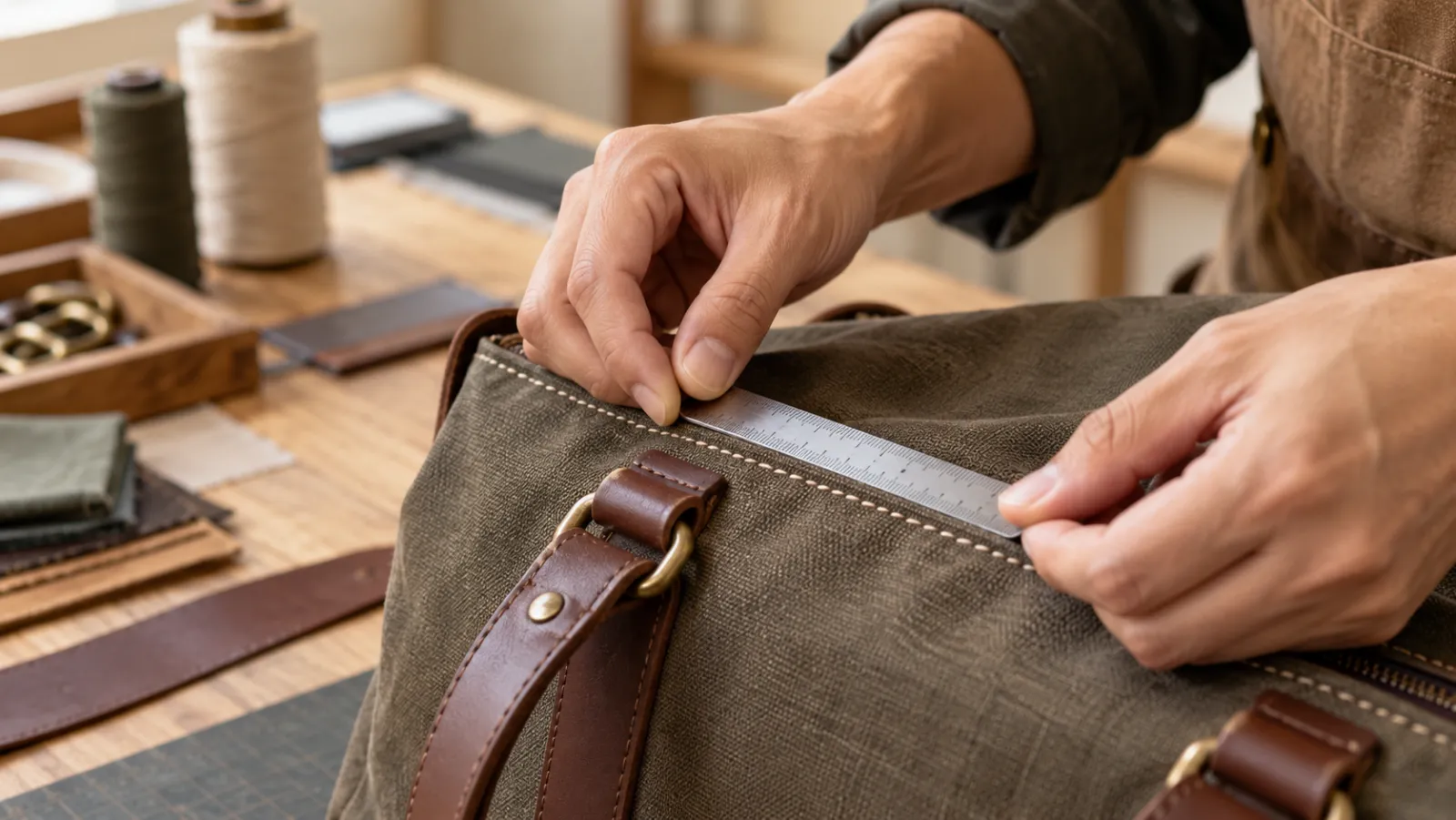
Use the approval table below as a starting point, not a universal acceptance rule. A new closure or padding recipe generally needs an assembled functional review; a drawing-only review cannot show interference or fit. The buyer and factory should agree who can approve each change and what happens to the schedule while approval is pending. Silence should never be recorded as consent.
Send the factory a reorder release pack
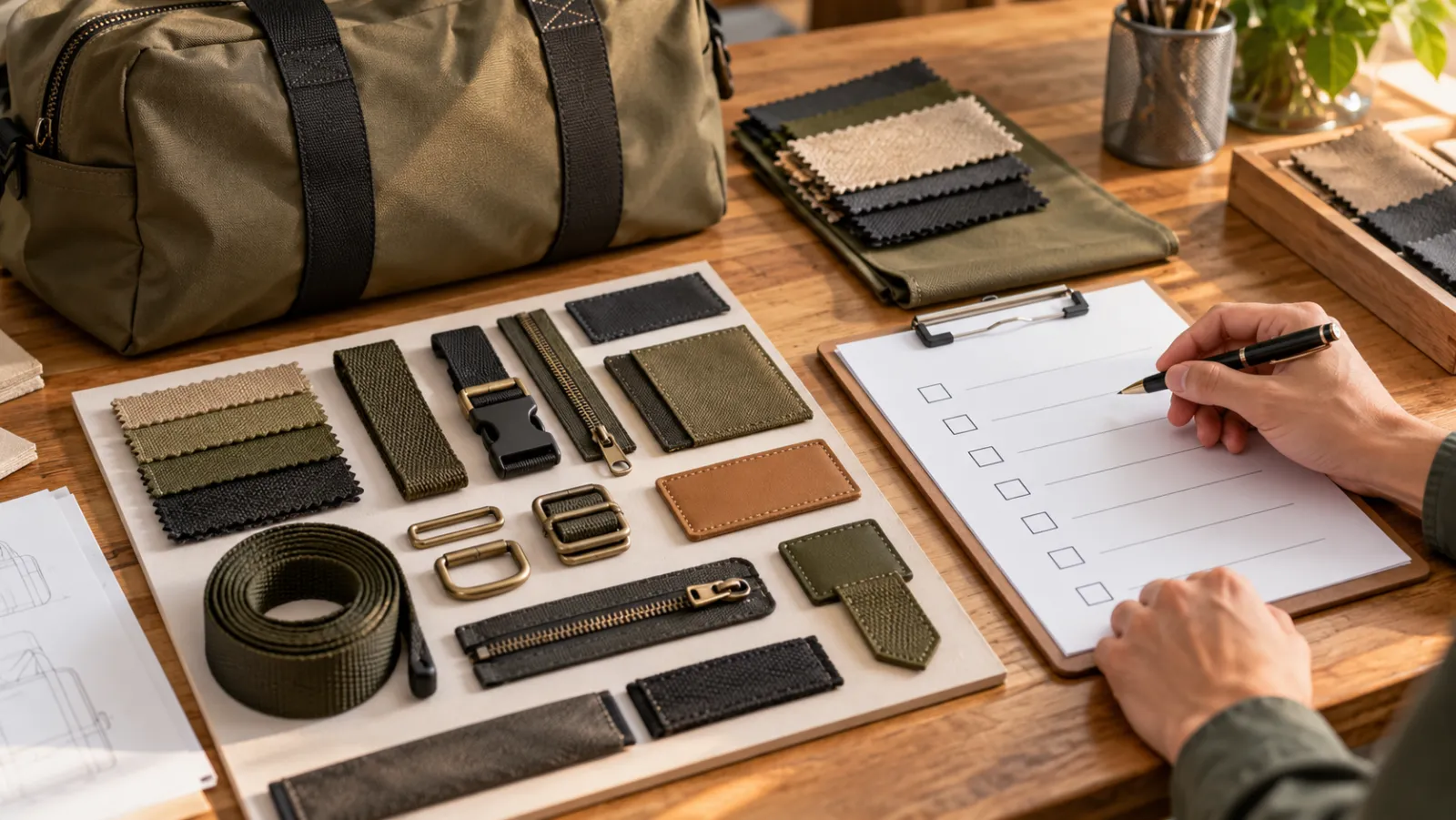
Before releasing a custom bag repeat order, confirm the revision, colour quantities, approved exceptions, component availability, packing and delivery basis. MerrisBags can discuss OEM revisions and ODM development, coordinated material sourcing, labels and packing against that brief. Ask for written confirmation of unresolved points; do not substitute a sales promise for an approved build. This workflow supports consistency but does not guarantee zero variation.
Reorder change approval table
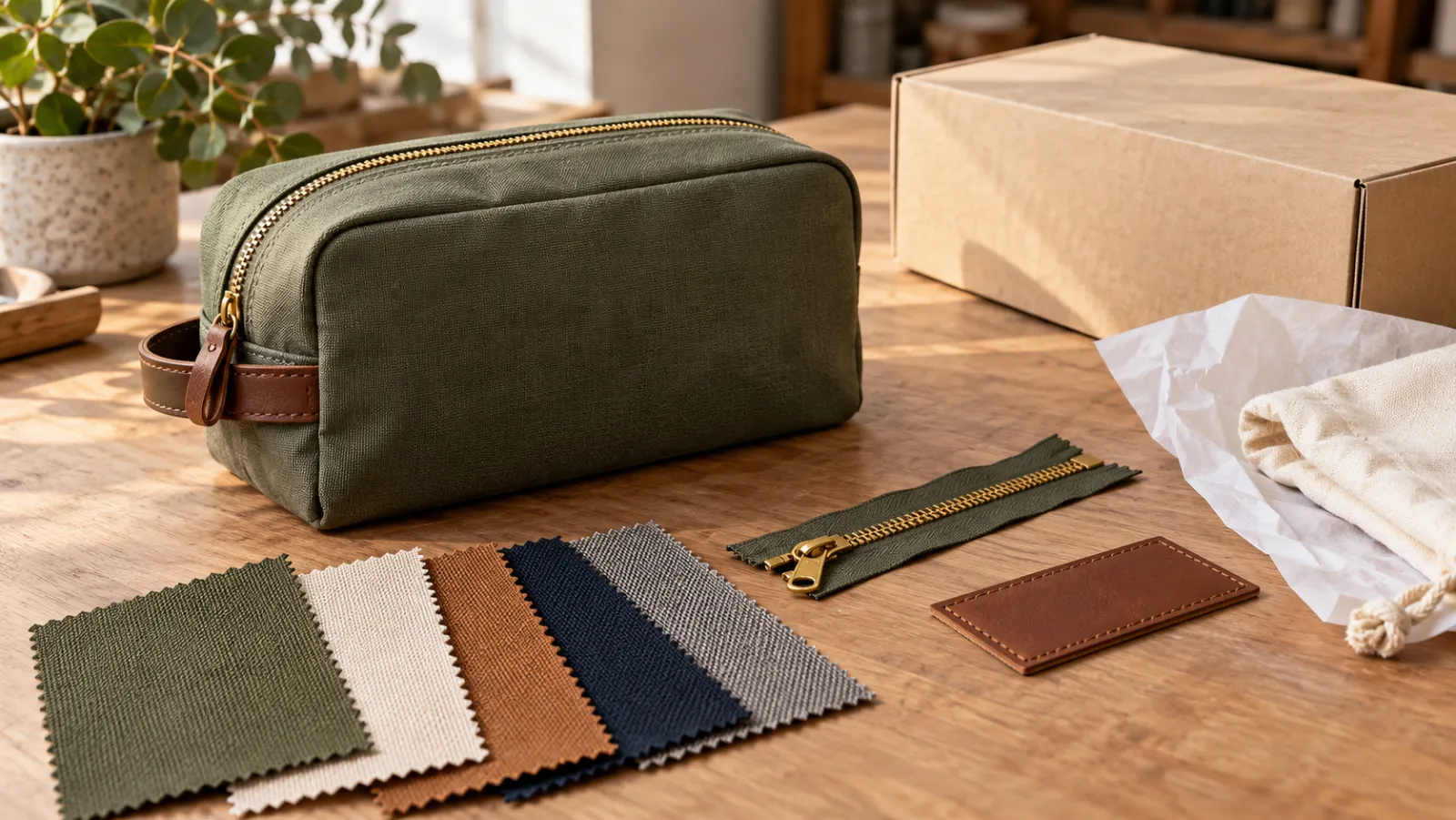
| Change | Evidence | Review before release |
|---|---|---|
| Shell | Swatch, construction, shade | Sewn panel and agreed material assessment |
| Padding | Filling and loft reference | Loaded fit and packing recovery |
| Hardware | Full assembly and finish | Connection and interference |
| Artwork | File revision and placement | Stitched or applied sample |
| Packing | Method and carton arrangement | Unpacked appearance |
Record: change ID, affected SKUs, old/proposed specification, reason, evidence, approver, decision date, effective order and schedule impact.
Related buyer references
Colour matching · Sample approval · Quality control · Tech pack
Review factory OEM/ODM development · Discuss a repeat-order specification
FAQ
Does every reorder need a new sample?
Agree a sample review when materials, interior, attachments or openings change according to their impact. Even an unchanged order needs confirmation of the approved revision and components.
Does the same colour code guarantee a match?
A code alone does not control material, pile direction or finish. Agree a physical standard and assessment conditions.
How should component substitutions be approved?
Record old and proposed specifications, affected SKUs, evidence, approver and effective order. Obtain explicit approval before use.
Can this process guarantee zero variation?
It helps prevent and detect differences but does not guarantee zero variation. Agree order-specific acceptance and inspection conditions.