Choose the contents before choosing the tote
Start with the objects the bag must carry, choose a finished size around them, then select fabric weight and handles together. GSM alone does not tell you whether a tote is comfortable or strong enough. A slightly lighter bag with a usable opening and properly supported handles can be a better purchase than a heavy canvas bag that is awkward to carry.
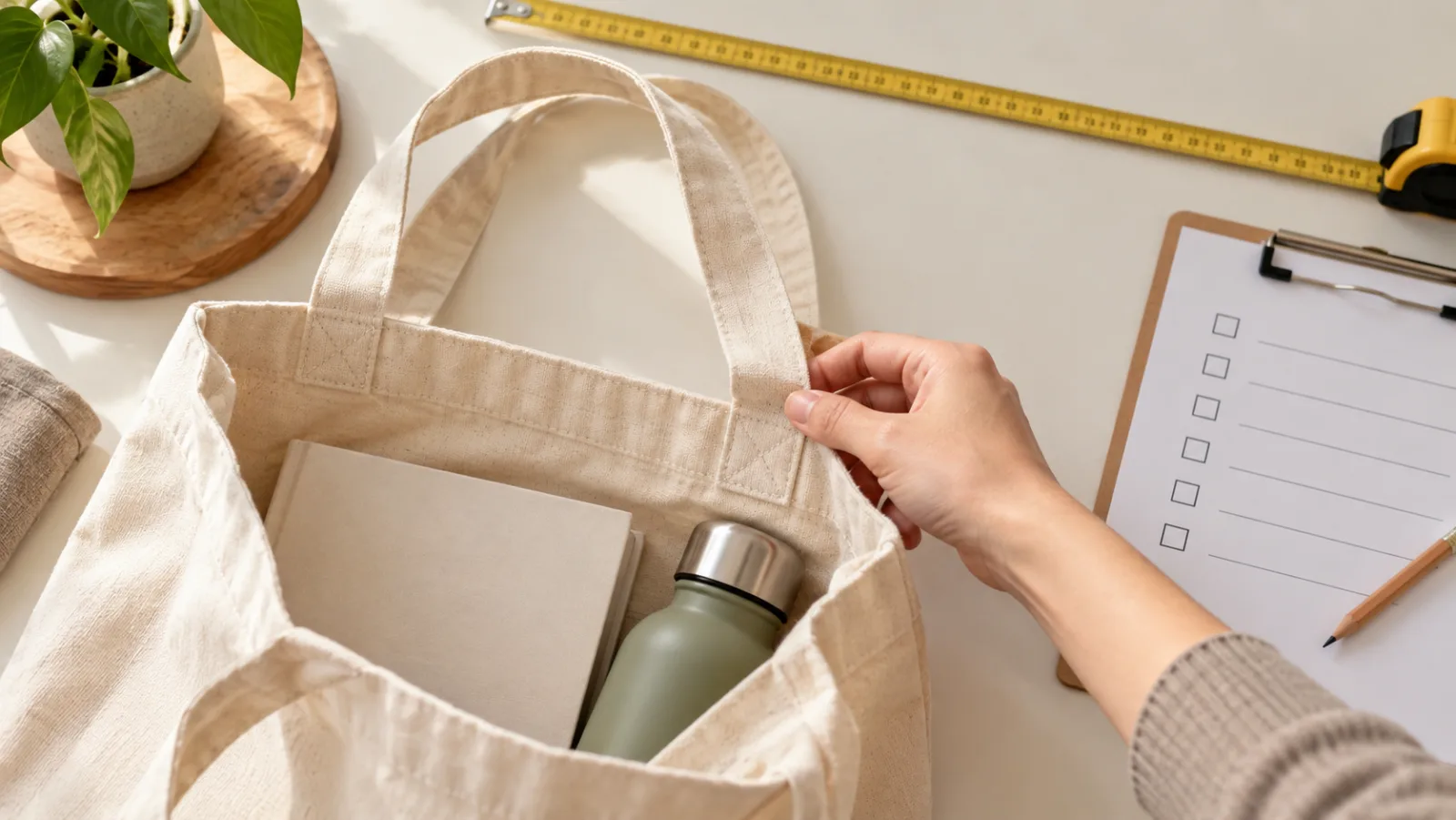
Put the actual contents on a table: the product box, bottle, brochure, laptop sleeve or grocery items. Record the largest rigid object and the expected total load. Add the conditions that change the design: a winter coat, a wet umbrella, daily train travel or a folded bag inside a parcel. Those details belong in the first enquiry, before the logo artwork.
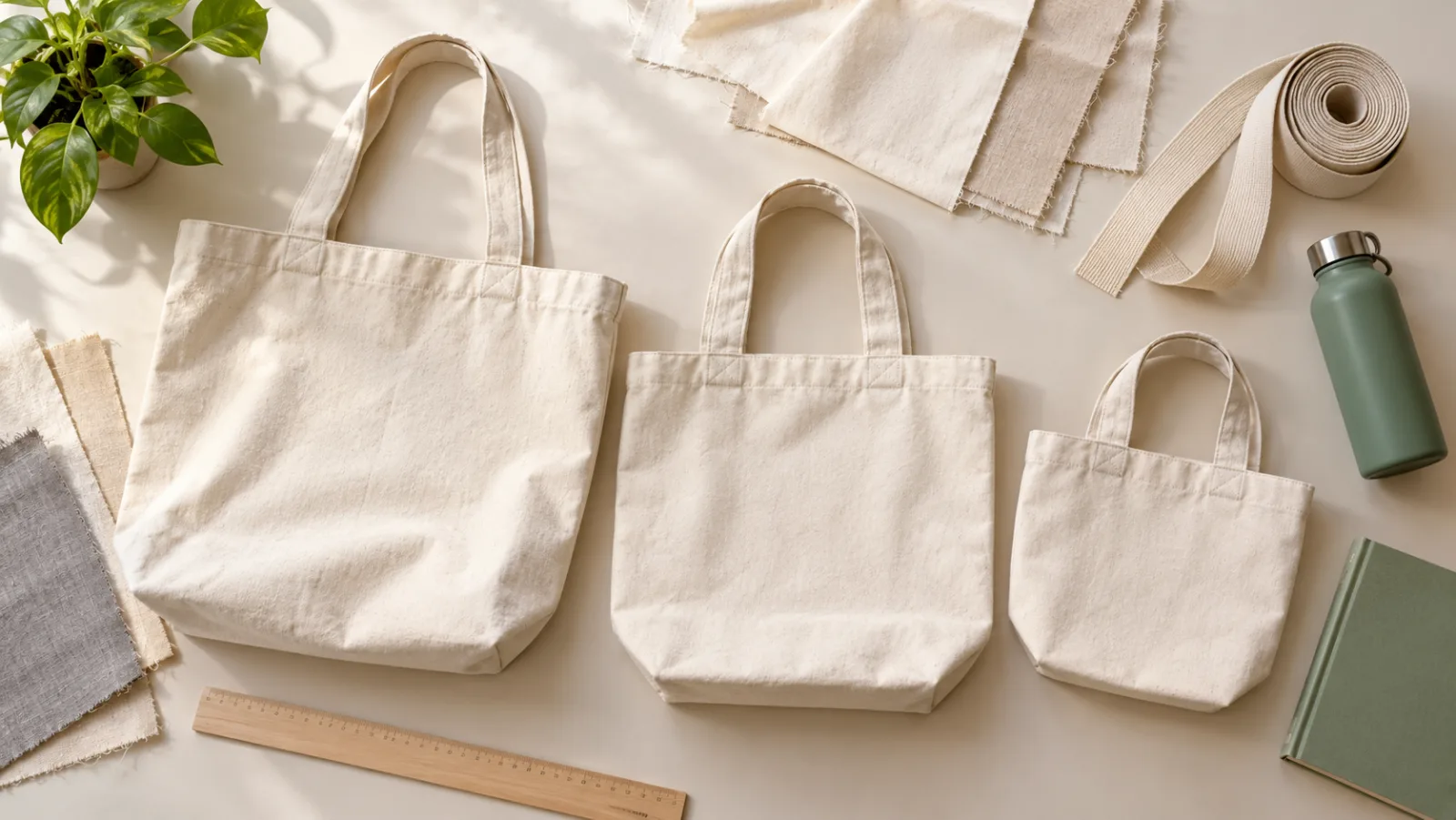
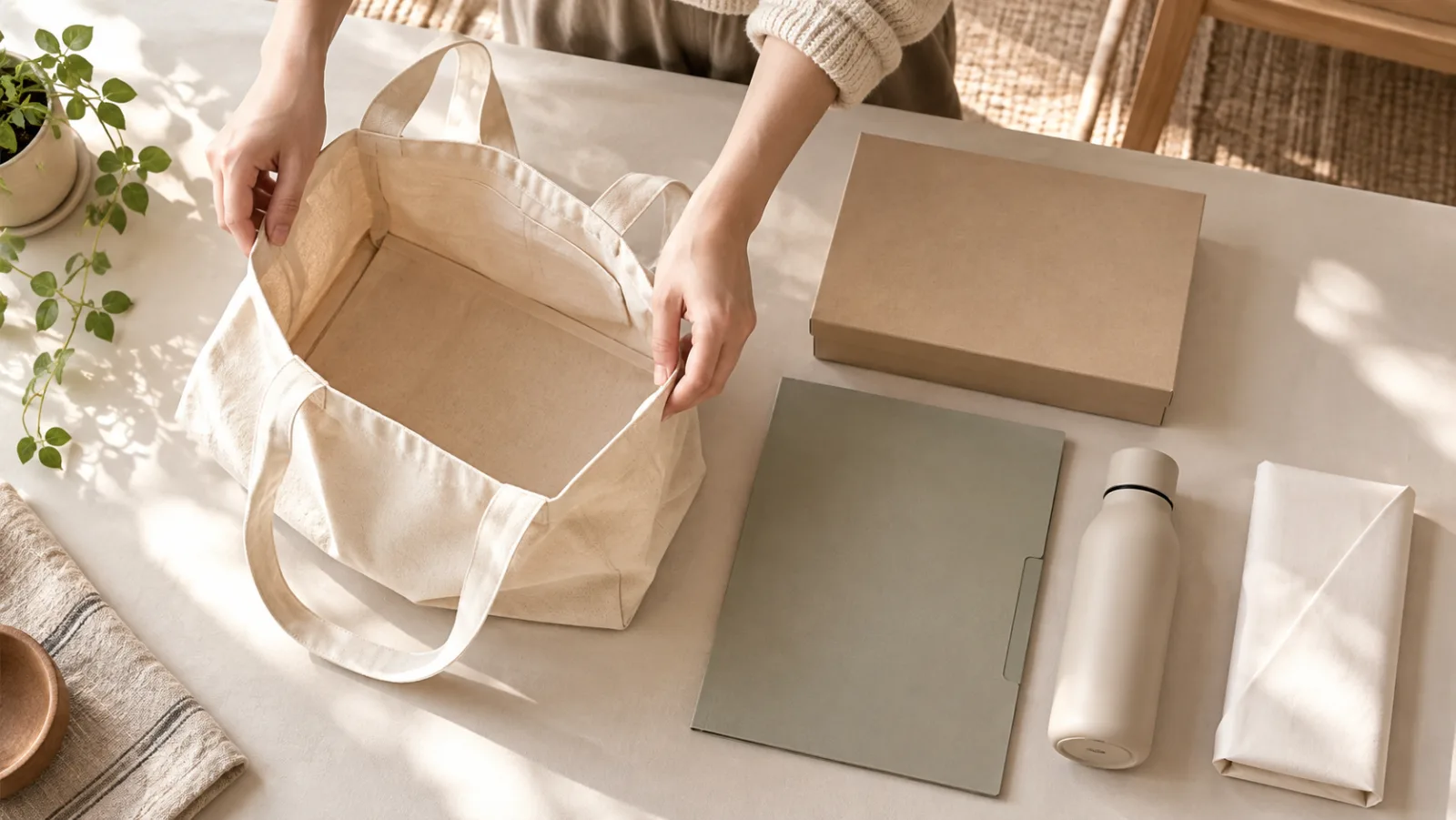
This guide combines linked MerrisBags catalogue product photographs with generated illustrations of the selection process. Each caption identifies the image type. Illustrations explain a decision; they are not factory records or proof of fabric weight, dimensions or load rating. Browse the tote and shopping bag range to find a starting shape.
A useful size starts with a packing trial
Choose the smallest shape that carries the intended contents without forcing the closure or distorting the mouth. An oversized tote may photograph well when empty but let a small retail box roll around inside. A narrow tote may fit an A4 sheet yet fail when that sheet sits inside a rigid folder.
For a first mock-up, use paper or spare cloth and pack the actual goods. Check insertion, removal and how the bag sits against the body. The following dimensions are design examples for discussion, not stock sizes or guarantees of fit.
| Example brief | Finished W × H × D | What to check |
|---|---|---|
| Flat document giveaway | 35 × 40 × 0 cm | Folder corners and opening clearance |
| Everyday shopper | 38 × 35 × 10 cm | Box footprint, bottle height and closure |
| Roomier leisure tote | 45 × 35 × 15 cm | Loaded width, carry comfort and storage |
What tote bag size works for A4 documents?
An A4 sheet measures 21 × 29.7 cm, but the folder, sleeve or binder around it needs more room. For an upright document tote, measure the actual folder, then check usable internal width, height and opening separately. A 35 × 40 cm flat body is one mock-up to try, not an A4 fit guarantee. Insert and remove the folder with your hand around it; then repeat with the bottle or other items that will travel beside it.
There is no single set of standard tote bag dimensions that fits every brief. For product packaging, use the external box measurements rather than the product dimensions, and test the wrapped box if tissue or protective packaging will be included.
Write down what width, height and depth mean
Specify finished external dimensions and the measuring method on the same drawing. A pattern measurement, a laid-flat top width and a packed base width are different numbers. “Large tote” leaves all three open to interpretation.
On a tapered bag, show both top and base width. Measure body height without the handles. State whether depth means the base panel, a side gusset or the opened bottom fold. Add a separate usable internal dimension when the bag must contain a rigid box. Lining, bound seams and a zipper can reduce that space.
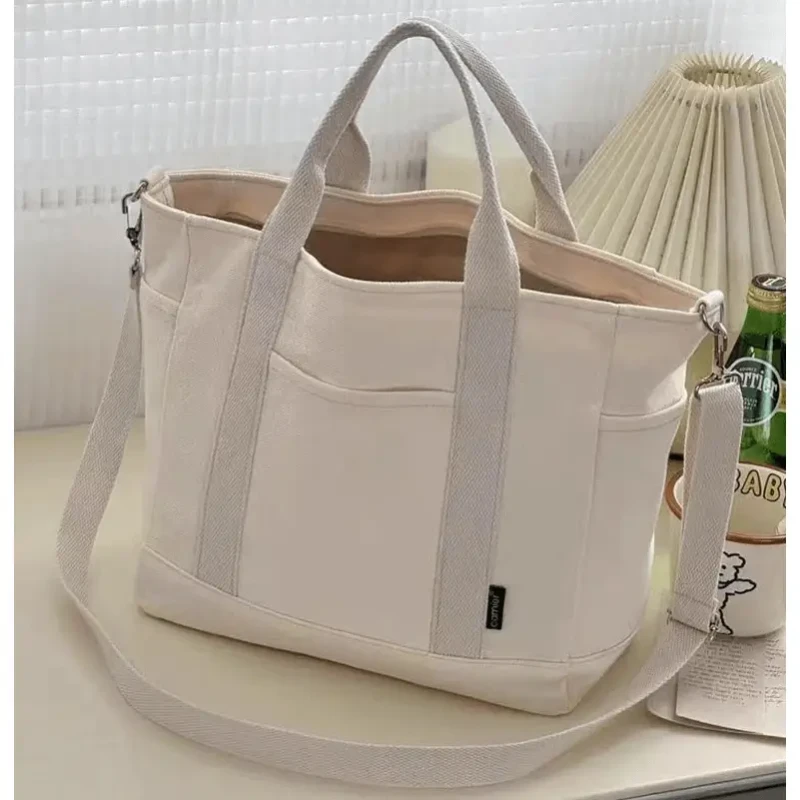
The canvas tote with an additional shoulder strap is a useful reference for discussing separate body, handle and strap measurements. Copy its general construction only after checking the current product photographs and agreeing your own specification.
A gusset creates space, but changes the silhouette
Add depth when the contents have a footprint. A flat bag is economical in shape, but a lunch box or a stack of cartons forces its front and back panels apart. The bag then becomes shorter and narrower in use than its laid-flat outline suggests.
For an illustrative rectangular volume, 38 × 35 × 10 cm gives 13.3 litres by simple multiplication. That is not a measured usable capacity: seam shape, soft walls, taper and the closure reduce or change the packing space. Do not publish it as a tested capacity.
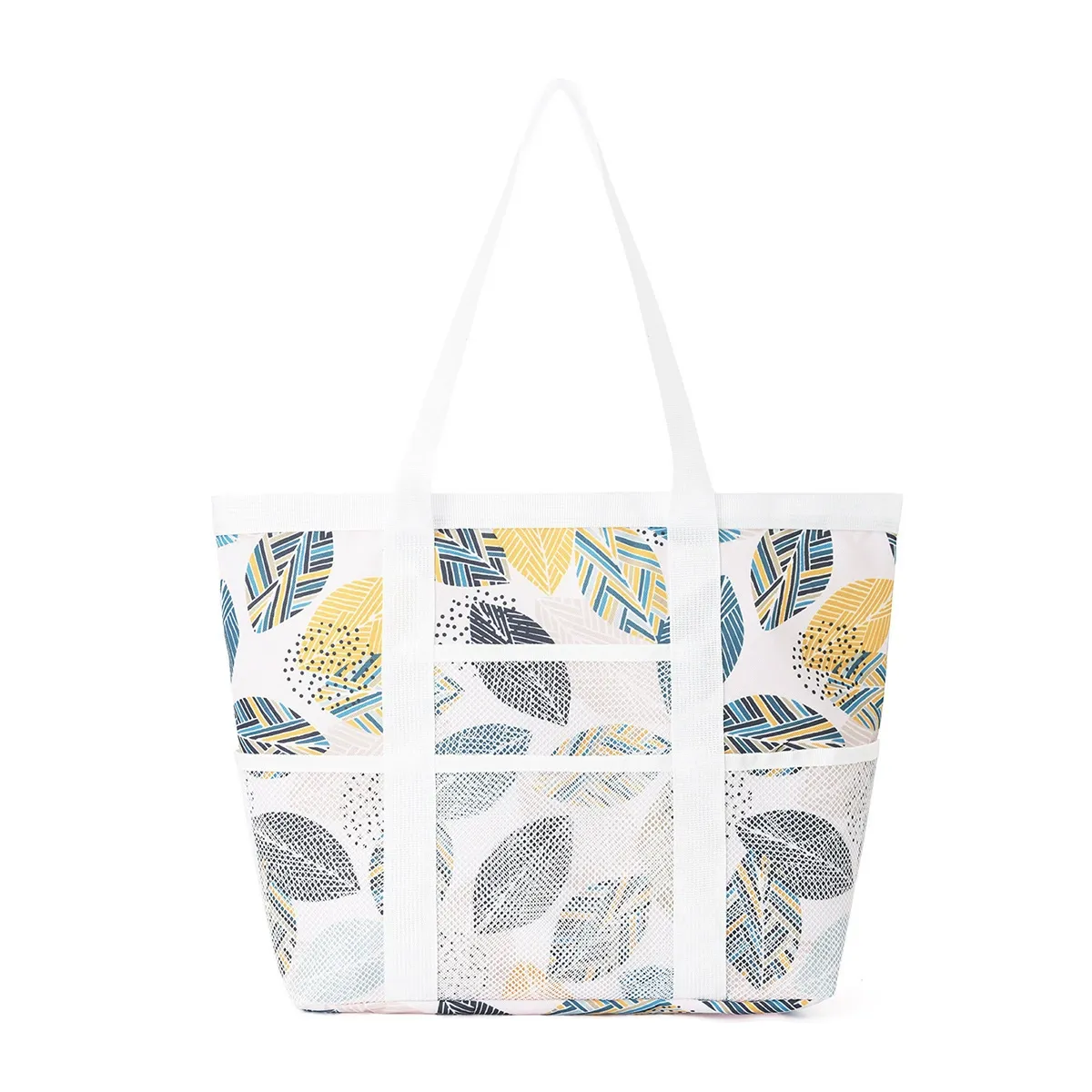
Use the mesh beach tote with exterior pockets to discuss a wider, deeper format. A pocket arrangement that works for towels may be unnecessary for a flat promotional tote.
Flat tote vs gusseted tote: which shape fits the job?
A flat tote suits thin contents and folds with less bulk. A gusseted tote gives boxes, groceries or a lunch container a defined base, but adds material and changes the loaded outline. Choose the gusset depth to accommodate the footprint of the contents; a wider mouth does not compensate for a base that is too narrow.
| Shape | Useful starting point | Check on the sample |
|---|---|---|
| Flat tote | Documents, light flat merchandise, compact storage | How much width and height are lost when filled |
| Gusseted tote | Boxed products, groceries, mixed contents | Usable base footprint, corner seams and loaded balance |
Test the opening with your hand around the product
The opening needs clearance for the product and the hand holding it. A box that fits the base can still catch under a zip end or a narrow mouth. Test the loaded opening rather than checking only the nominal body width.
An open top is quick to access. A zipper adds containment, but needs usable clearance and changes where artwork or handles can sit. A snap is simpler, though it does not close the full opening. The zip-top canvas tote gives buyers a concrete reference when discussing that trade-off.
If a laptop is part of the brief, specify the actual device or sleeve dimensions. Do not rely on the screen diagonal. A general tote should not be described as protective laptop storage unless its construction and tests support that claim.
GSM describes fabric mass, not a finished bag rating
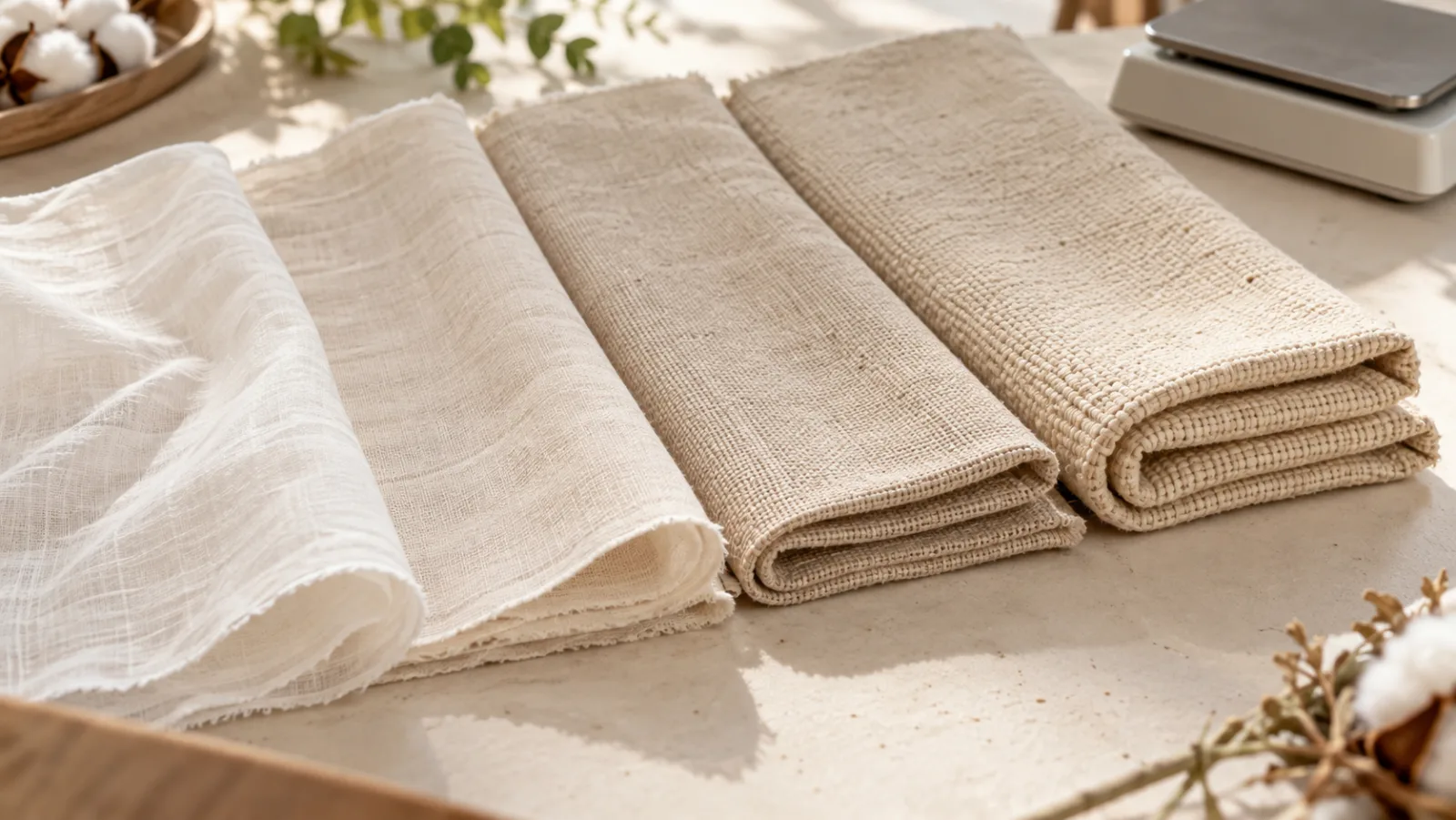
GSM means grams per square metre: the mass of a unit area of fabric. It does not measure seam strength, abrasion resistance or the load a finished tote can carry. Compare weights within a defined material and construction, then handle the samples.
The ranges below are starting points for cotton-fabric sampling, not universal grades. Weave, yarn, finishing, colour, lining and reinforcement can change the result substantially.
| Sampling range | Possible direction | Compromise to examine |
|---|---|---|
| 140–200 GSM | Compact, light cotton giveaway | Opacity, creasing and print appearance |
| 220–300 GSM | Soft everyday cotton tote | Drape versus body |
| 340–410 GSM | More substantial canvas format | Empty weight and seam bulk |
| Above 410 GSM | Heavier canvas construction | Foldability, sewing bulk and carry comfort |
Check what “12 oz canvas” actually means
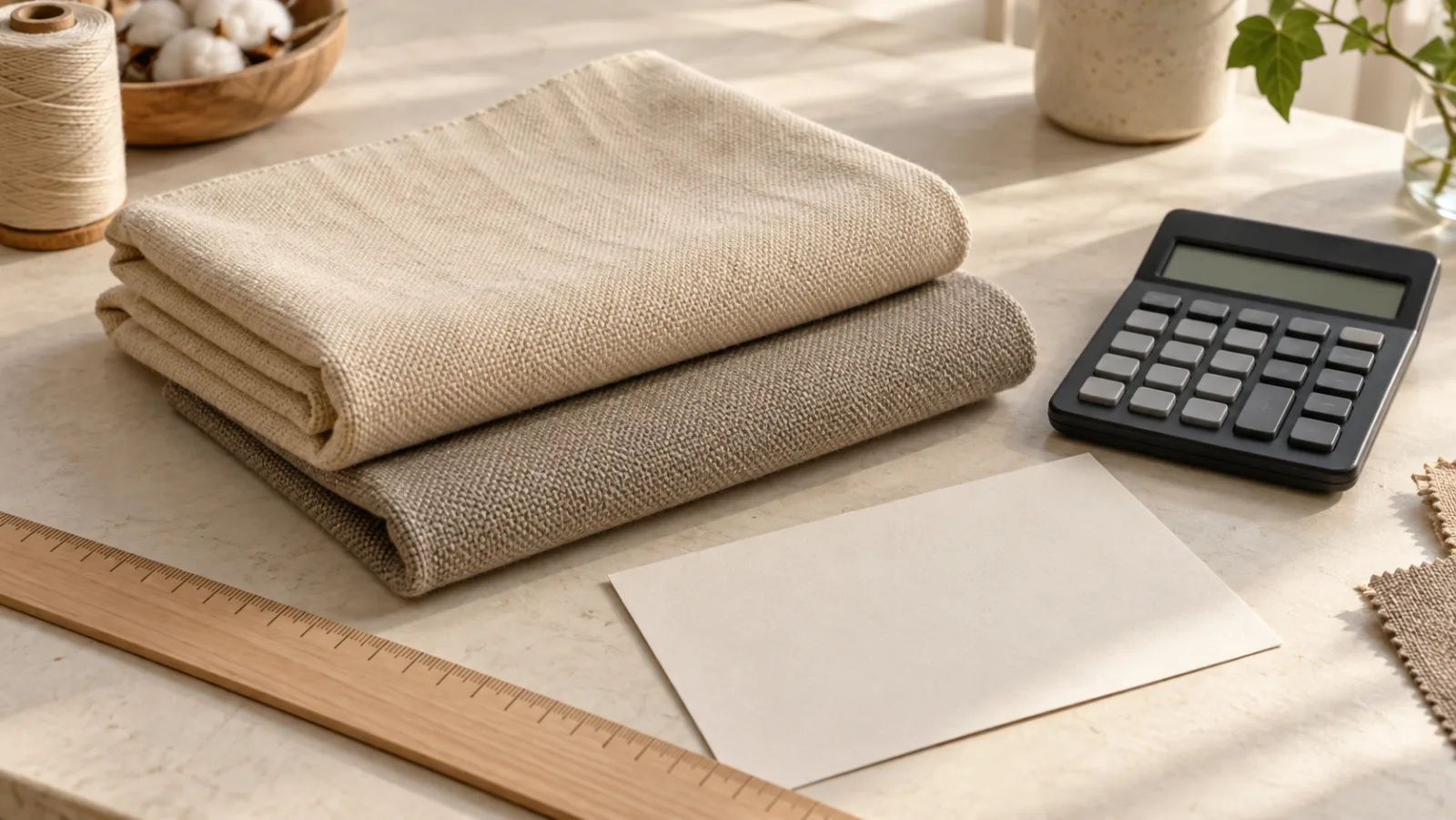
Convert ounces only after confirming that the quote means ounces per square yard. An ounce per linear yard depends on fabric width and cannot use the same direct conversion. The rounded area-weight conversion is 1 oz/yd² = 33.906 GSM.
For example, 12 oz/yd² is about 407 GSM and 16 oz/yd² about 542 GSM. A quote pairing 16 oz/yd² with roughly 450 GSM needs clarification; the two figures do not express the same area weight. Ask which specification is binding rather than quietly choosing the more favourable number.
| Area weight | Approximate GSM |
|---|---|
| 6 oz/yd² | 203 |
| 8 oz/yd² | 271 |
| 10 oz/yd² | 339 |
| 12 oz/yd² | 407 |
| 16 oz/yd² | 542 |
A fabric supplier’s canvas specification reference also separates weight from weave and construction. Use the conversion as arithmetic, not proof that two fabrics will feel alike.
8 oz vs 12 oz canvas tote bags
When both weights are expressed in ounces per square yard, 8 oz/yd² is about 271 GSM and 12 oz/yd² about 407 GSM. The latter has 50% more fabric mass per unit area; that does not mean a finished bag can carry 50% more weight. Keep the fibre, weave and finish comparable before judging how the two fabrics feel.
For a tote that must fold small, start by handling the 8 oz candidate. If a more substantial body matters, include the 12 oz candidate in sampling. Neither is automatically the best GSM for cotton tote bags: lining, opacity, print detail and the handle attachment can change the choice. Compare finished samples with the same contents before selecting the fabric weight.
Heavier fabric can make the wrong bag
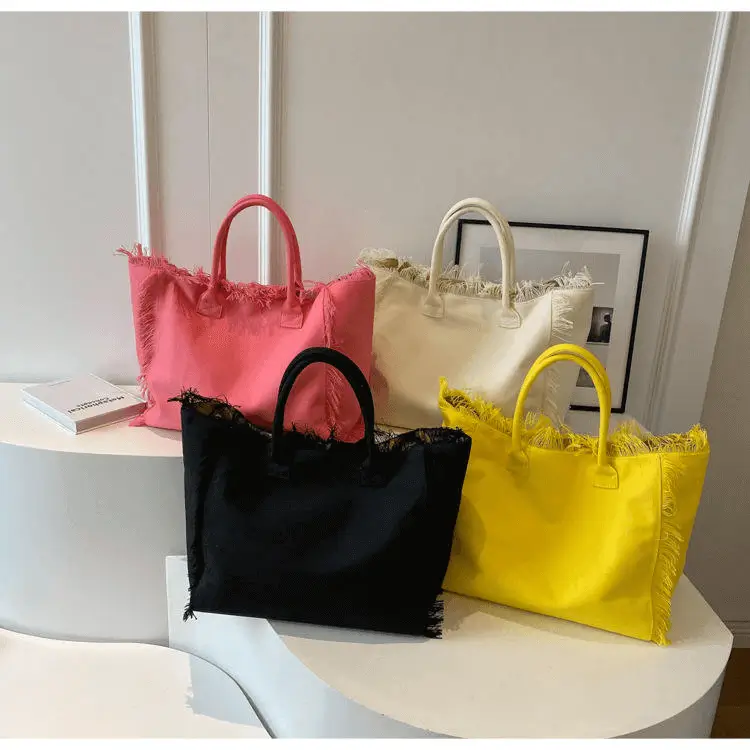
Choose the hand and structure you want before paying for extra weight. A soft tote intended to fold into a handbag can become bulky when the fabric is upgraded simply to make it sound more premium. Stiff canvas can also crowd the seam where a folded handle is attached.
Ask for comparable swatches with the same colour and finish, then a finished sample. A lining can change opacity and structure without making the outer cloth thicker. It also adds seams, material and empty weight. Mesh or synthetic cloth needs its own comparison; a cotton GSM table is not a universal selection chart.
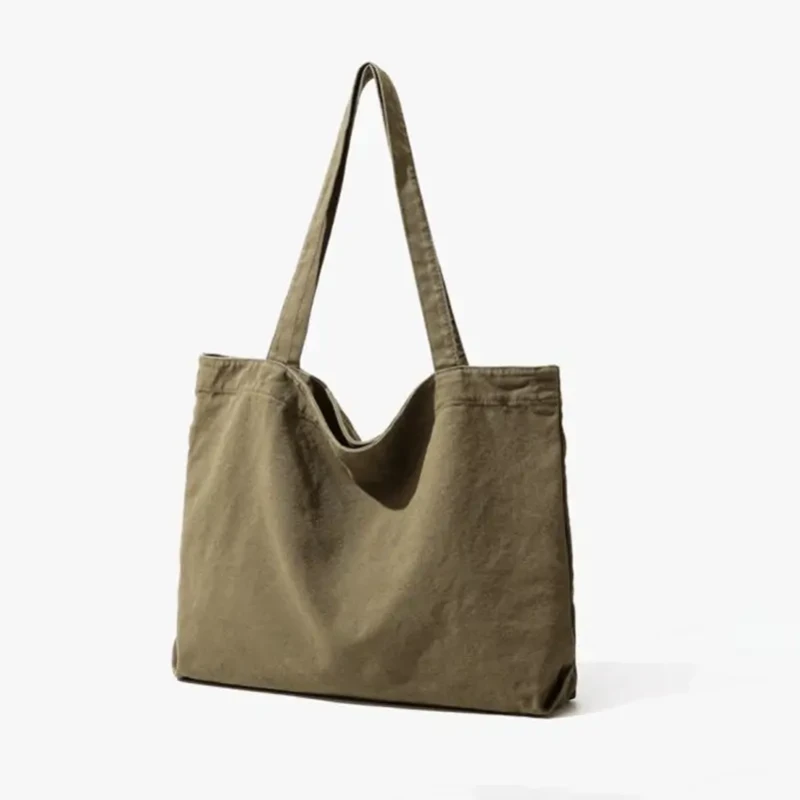
The single-shoulder canvas tote offers another silhouette to compare. Judge how the body hangs when loaded, rather than assuming that every canvas tote should stand upright by itself.
Handle drop matters more than total strap length
Handle drop is the vertical distance from the top edge of the bag to the inside apex of the handle, measured using an agreed method. It is not the full strip length before sewing. Attachment depth and handle shape consume part of that strip.
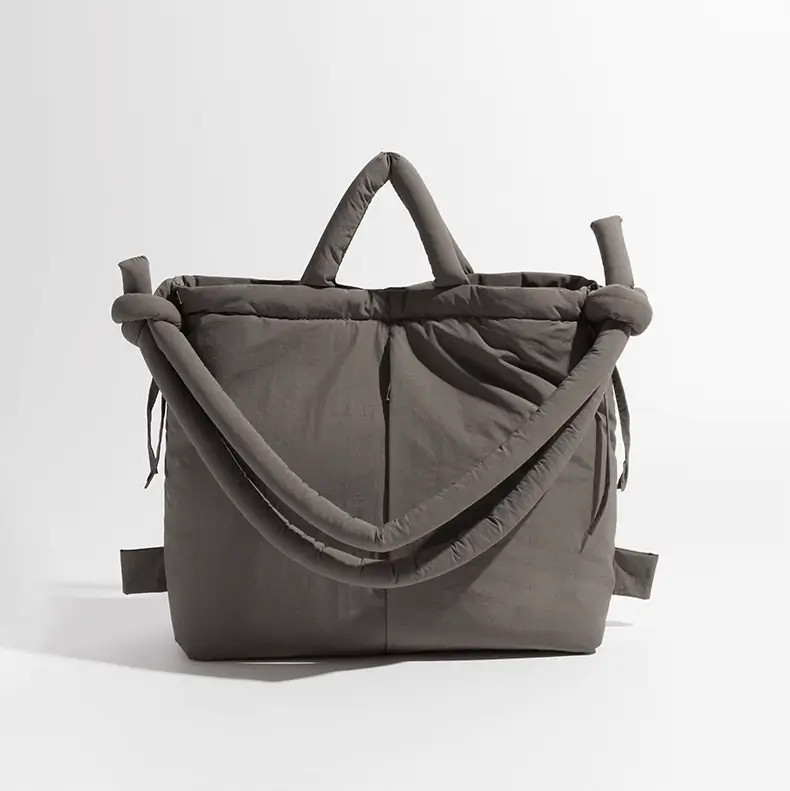
As prototype starting points, try a 12–15 cm drop for hand carry and 25–30 cm for shoulder carry. These are fit-trial examples, not ergonomic standards. Test with intended users and the clothing they will wear. A coat can turn an acceptable shoulder opening into a tight one.
Put the loaded bag on the shoulder. Check whether the top edge presses into the armpit, whether the bag hits the hip awkwardly and whether it can be lifted off one-handed. The simple shoulder tote can anchor that conversation visually.
How do you specify tote bag handle length for shoulder carry?
Give the supplier the finished handle drop, finished handle width and attachment position. If a cut length is also required, let the pattern account for the sewn-in ends and folded construction. Do not double the handle drop and treat that number as the full strap length: the opening spans a width and the handle follows a curve.
Use the 25–30 cm drop examples for a fit trial, then adjust for the intended person, clothing and loaded body height. Longer handles give more clearance but can make a tall tote hang too low. Check shoulder carry and hand carry on the same sample before approving the length.
Wider handles can help, but edges still matter
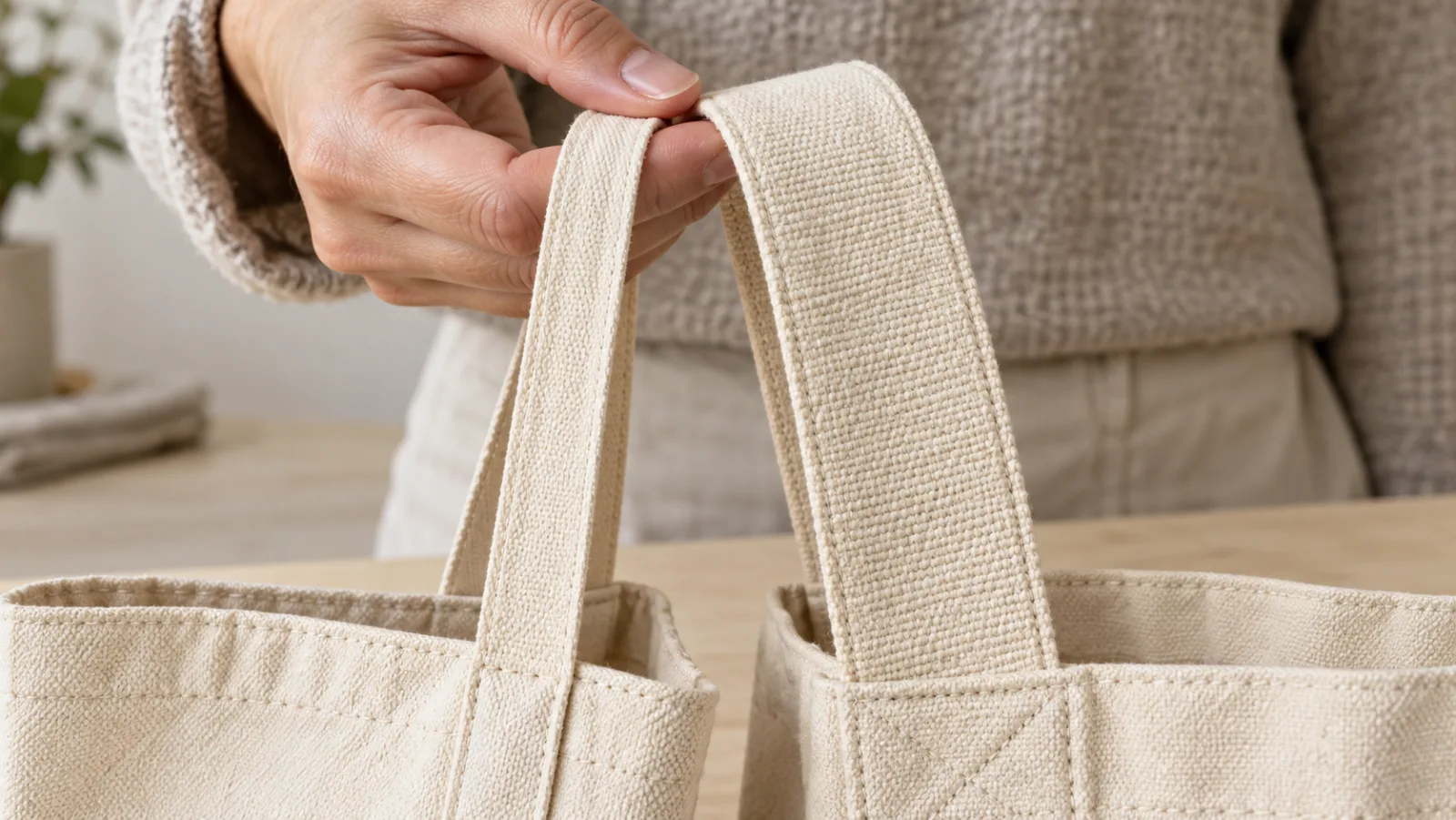
Compare handle width under the same load. A wider strip can spread contact, yet a stiff edge or a rolled seam may still dig into the hand. Softness, surface texture and how the handle folds are part of the decision.
Handles in 25 mm and 35 mm widths make useful side-by-side prototypes; neither width establishes a safe load rating. Try both with the contents and carry duration in your brief. Check for slipping on clothing, twisting at the attachment and whether both handles sit together in the hand.
Webbing, folded self-fabric and padded handles feel different. If the outer cloth is mesh, the attachment needs particular attention: the force enters an open textile structure, not a continuous canvas panel.
Look at the attachment from inside the bag
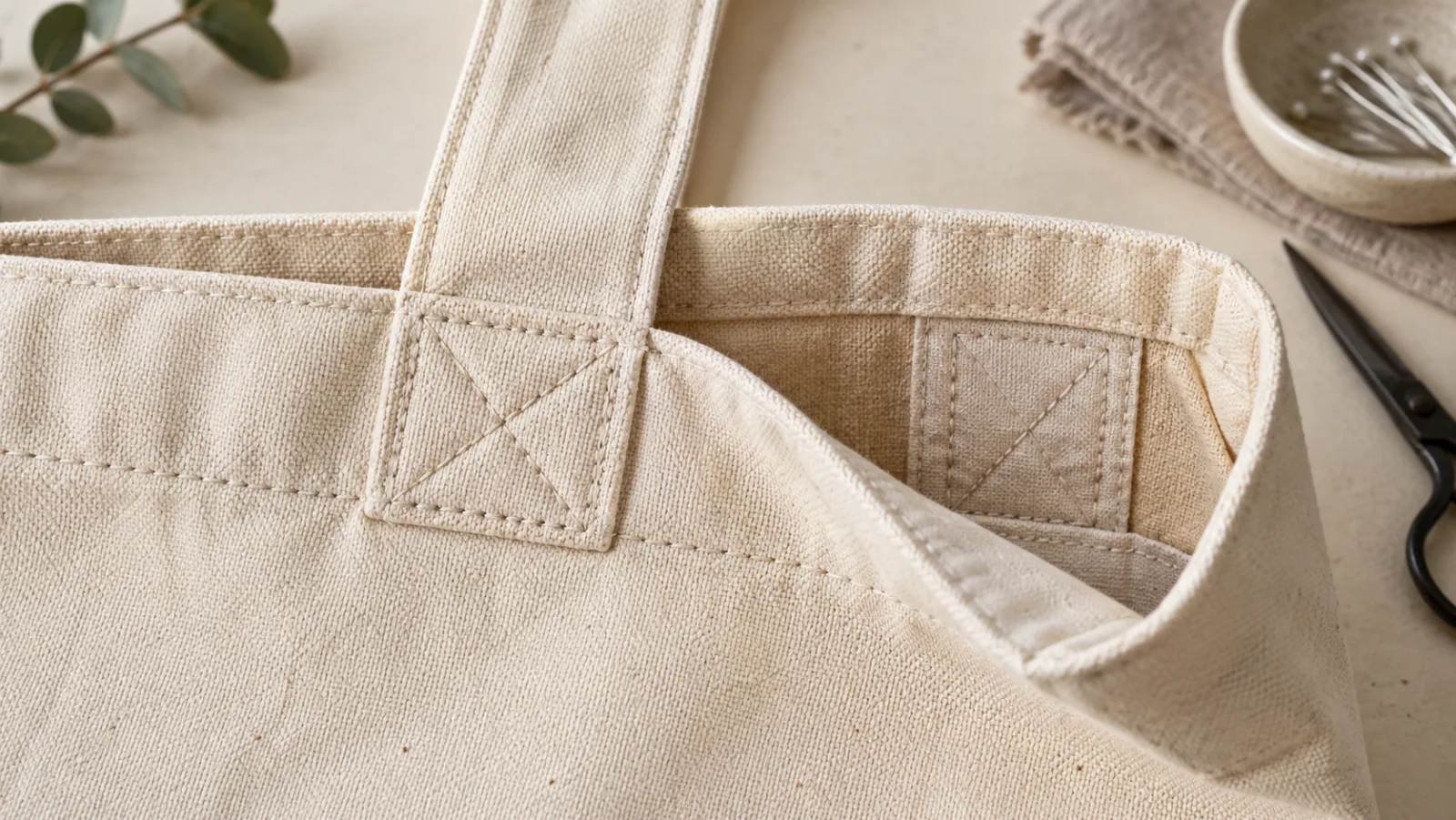
Agree the load path, not just the visible stitch pattern. A neat box-and-cross can still fail if the surrounding cloth tears. Stitch density, thread, backing, seam allowance and the fabric under the attachment must work together.
Turn the sample inside out. Check whether the handle is sewn only to the facing or carried into a supported body area. Ask where reinforcement sits and whether it will remain in the production version. A full-length webbing treatment may distribute force differently, but it also changes the look and material use.
For broader construction questions, the production quality-control guide explains where sample approval fits. Do not infer a load rating from a photograph or from the presence of an X-shaped stitch.
Place the artwork after handles and seams are fixed
Reserve a clear print area on the finished panel before sizing the logo. Long handle attachments, pockets, side seams and a zipper facing can interrupt an otherwise large-looking surface. Enlarging the body does not always create a wider uninterrupted print field.
Supply artwork dimensions and its distance from a defined edge. Test the intended ink or decoration on the actual colour and finish: a smooth fabric proof cannot predict the edge detail on a coarse canvas weave. Small reversed lettering deserves special attention.
The logo craft comparison covers the decoration choices in more detail. Here, the approval question is narrower: can this artwork be reproduced in this position on this finished bag?

Check the folded bag before approving the order
Review how the tote will be folded, packed and reopened. Heavier cloth, thick handles, rigid bases and layered pockets can increase the packed volume even when the finished body dimensions stay the same.
Ask for the proposed fold and a packed sample. Look for creases across the artwork, pressure marks from hardware and a fold that makes the product awkward to display. If the tote is shipped inside another product, trial the complete pack rather than estimating from an empty bag photograph.
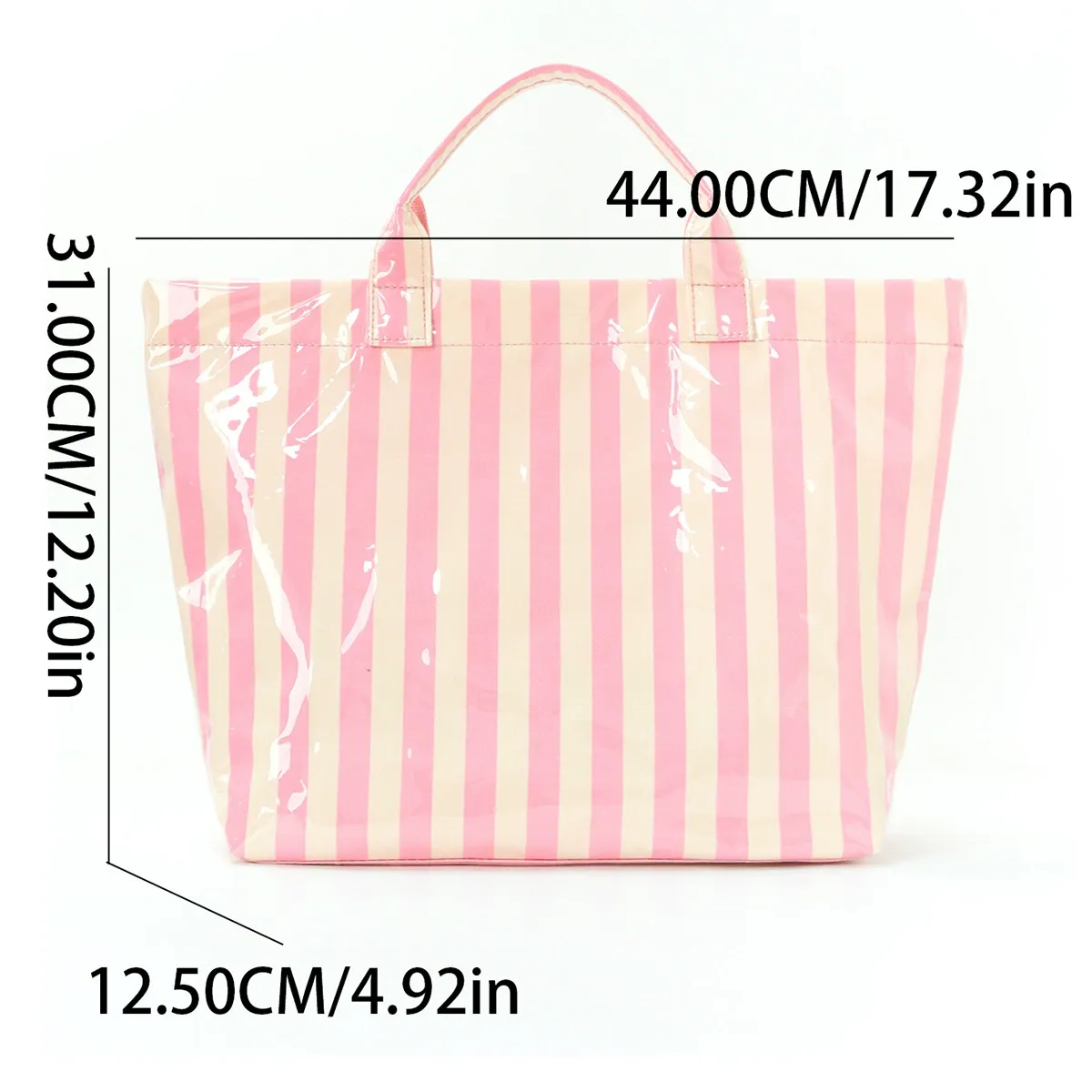
The striped travel tote is a useful alternative shape reference when portability matters. Its catalogue photo does not establish a carton count; request pack-out measurements for the approved custom sample.
Approve the sample while it is loaded
A sample approval should include the intended contents and a written check record. Measuring an empty bag is only one part of that record. Repeat the packing trial, carry trial and closure check on the same construction proposed for production.
Define any load test with the supplier or laboratory: contents or load mass, distribution, duration, lifting cycles, environment and failure criteria. A static hanging check and repeated carrying answer different questions. Avoid treating an informal demonstration as a certified maximum load.
Record finished dimensions, fabric identification, handle drop, handle width, artwork position and the agreed tolerance for each measurement. The sample approval checklist helps organise that sign-off. No photograph in this article substitutes for it.
Send a brief that a sample maker can use
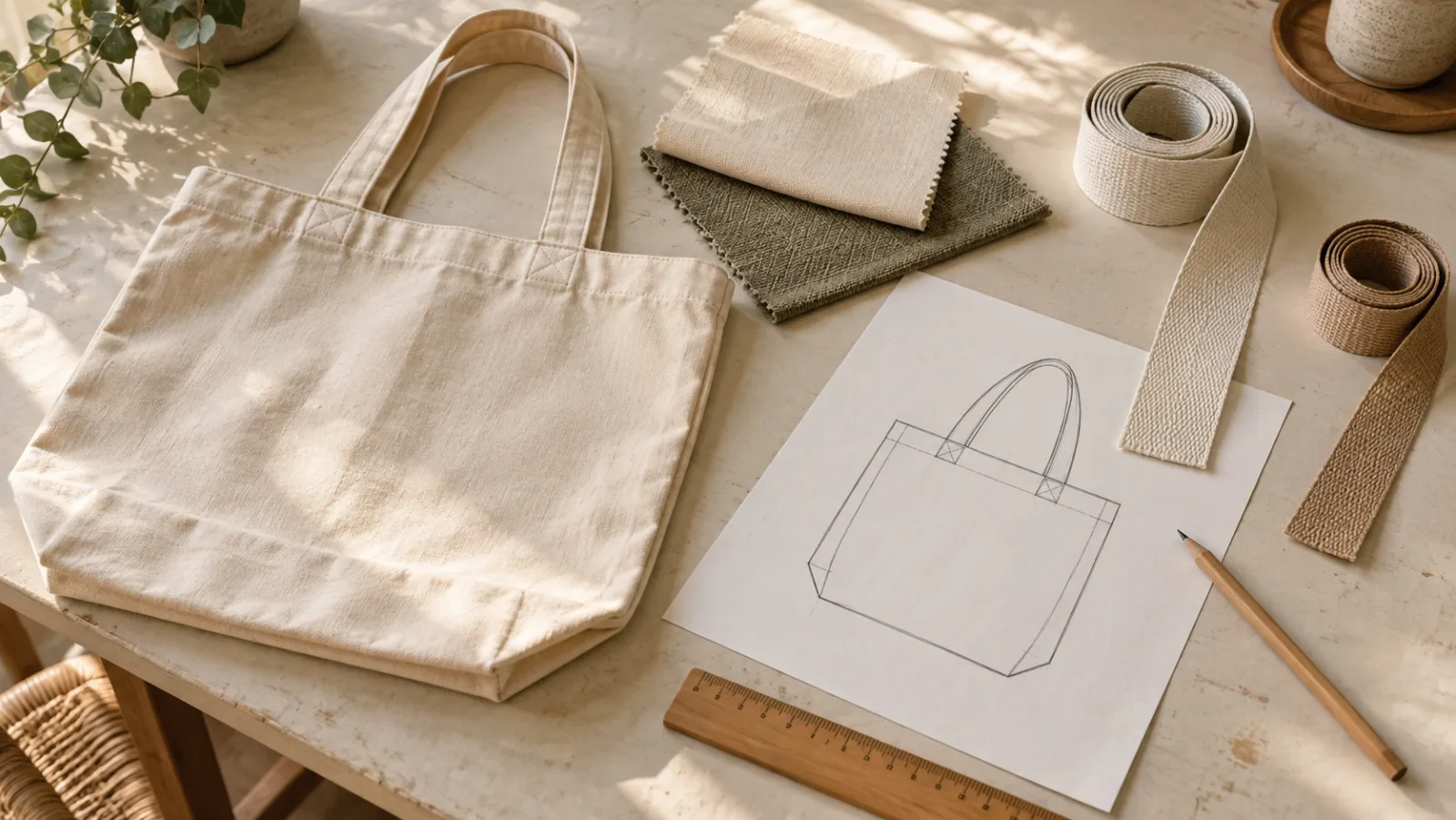
Send the intended contents, a measured sketch and the carry method together. That gives the sample maker something more useful than “premium canvas tote with long handles.” Include the destination market and any required test method so those requirements can be assessed before the design is fixed.
A practical brief reads: “Everyday shopper; prototype body 38 × 35 × 10 cm; compare 280 and 340 GSM cotton fabrics; compare handle drop on a winter coat; carry the attached list of contents; confirm print area after handle placement.” These are proposed design choices, not a quotation or a promise of performance.
List order quantity, colour split, packaging and required delivery date separately for quotation. Price, MOQ and timing depend on the confirmed construction and need written confirmation. Send your tote brief
Questions to settle before sampling
What tote bag size fits A4 documents?
A4 paper measures 21 × 29.7 cm, but measure the actual folder or sleeve around it. A 35 × 40 cm flat tote is one prototype to try; verify the internal space, opening clearance and other contents before approving the size.
What GSM is best for a cotton tote?
There is no single best weight. Compare cotton samples in the 220–300 GSM range for a softer everyday direction and 340–410 GSM for a more substantial canvas direction, then assess the finished construction.
What is the difference between 8 oz and 12 oz canvas tote bags?
Using ounces per square yard, 8 oz is about 271 GSM and 12 oz about 407 GSM. The difference is fabric mass per area, not a finished-bag load rating; compare weave, finish and the same loaded construction.
How long should shoulder tote handles be?
Specify handle drop rather than just the cut length. A 25–30 cm drop is a prototype starting point to test with the intended user and clothing, not a fit guarantee.
Can GSM tell me how much weight the tote holds?
No. Fabric construction, seams and handle attachments all matter. Agree a finished-bag test with defined load, distribution, duration, cycles and failure criteria before making a load claim.