The best small cosmetic pouch is not the most fashionable shape. It is the simplest structure that gives the intended products clear access, provides a usable branding panel and reaches production in the target packed volume.
How this guide was prepared: it compares the supplied images and reference specifications for the five listed structures with MerrisBags product-development checks. The figures and photographs are not laboratory reports; an approved drawing, bill of materials and physical sample control production. Editorial responsibility: MerrisBags.
Compare five small cosmetic pouch structures
| Format | Best for | Strength | Approval focus |
|---|---|---|---|
| Flat zipper pouch | Lipstick, compacts, a few brushes | Packing efficiency and a broad logo panel | Opening length, base expansion and loaded thickness |
| Gusseted or boxy case | Bottles, grouped cosmetics and gift sets | Standing capacity and shelf presentation | Reinforcement, lid alignment and carton volume |
| Mini zip-around case | Lip products, small compacts and samples | Compact gifting and portability | Usable internal size, lid build and mirror protection |
| Round or cylindrical case | Skincare, upright items and countertop storage | Differentiated shape and gift presentation | Diameter, roundness and handle balance |
| Brush roll | Brushes and long beauty tools | Separated tools in a flat-open format | Sleeve widths, bristle cover and rolled thickness |
Start with a contents list, not a trend board
“For cosmetics” is not a usable capacity brief. Record lipstick height, the widest compact, bottle height including the cap, brush length and brush-head width. When the pouch will be sold with a defined kit, load the largest limiting items into the sample—not average substitutes.
The opening can matter more than the outer dimensions. A zip-around lid exposes most of the case, while a top zipper can lose usable entry length at the ends and seam allowances. A product may technically fit but still be awkward to remove; an external capacity statement will not reveal that problem.
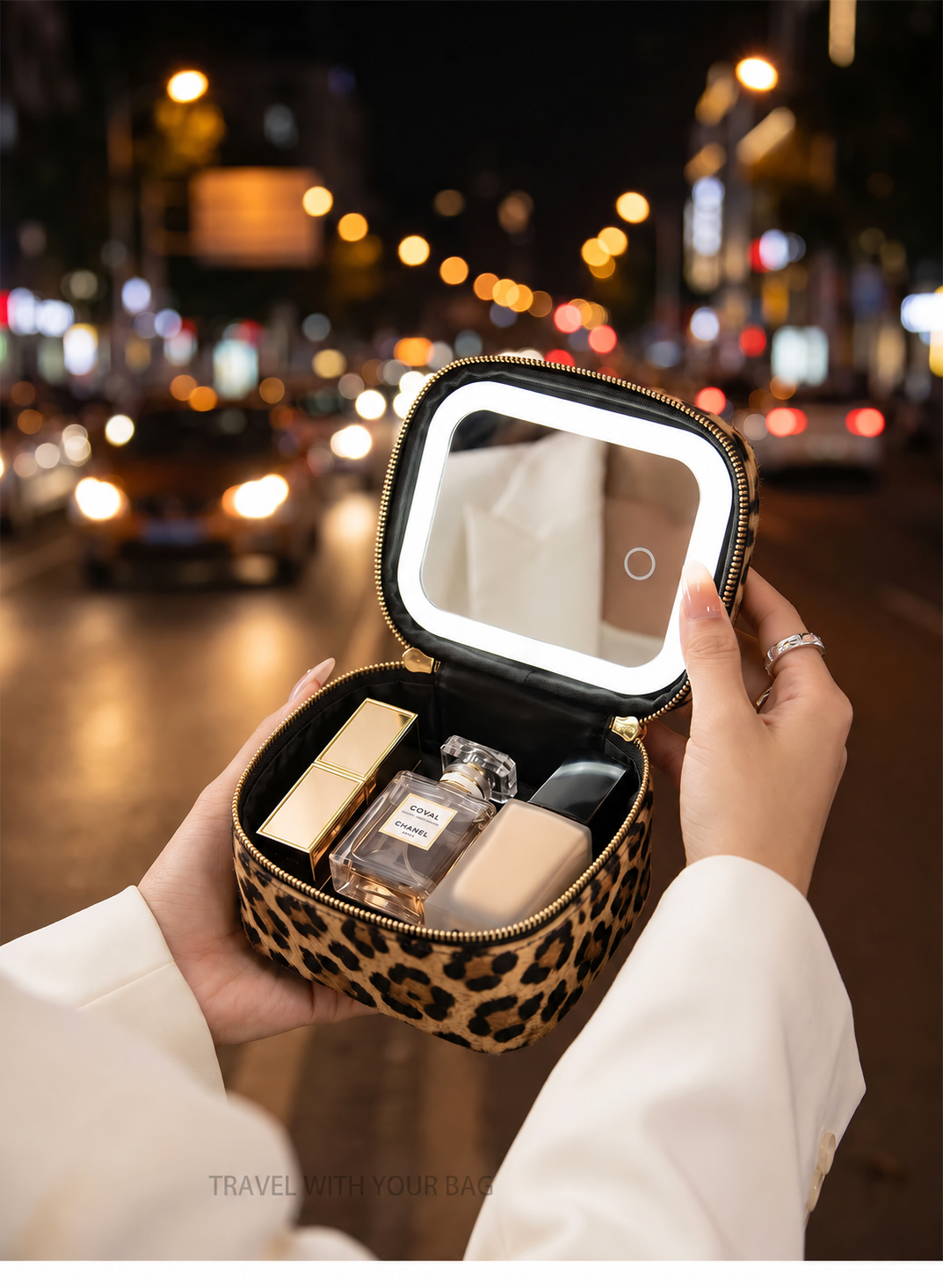
Small products amplify packing-volume decisions
Flat pouches stack efficiently and, when they use little reinforcement, can reduce shipped air. Boxy and cylindrical cases create stronger shelf presentation but occupy more carton space. Compressing them may mark embossed faces, lids, round panels or mirrors.
Compare the packed dimensions, units per carton, shape recovery and hardware-contact protection alongside the unit quotation. For colour assortments, also confirm whether every colour can share one lining, zipper and hardware specification without creating separate component minimums.
Allocate the logo panel around the structure
A flat pouch offers a broad front panel. A boxy case may use the lid or front wall, a cylinder may use the centre band or lid, and a brush roll changes what is visible when open and closed. Mark the usable area on the pattern after allowing for seams, folds, emboss texture and pile direction.
Keep material identity separate from performance. A PU face may be wipeable without making the complete bag waterproof. Legacy terms such as “suede”, “polyester” or “mirror case” are not substitutes for the production bill of materials and approved physical sample.
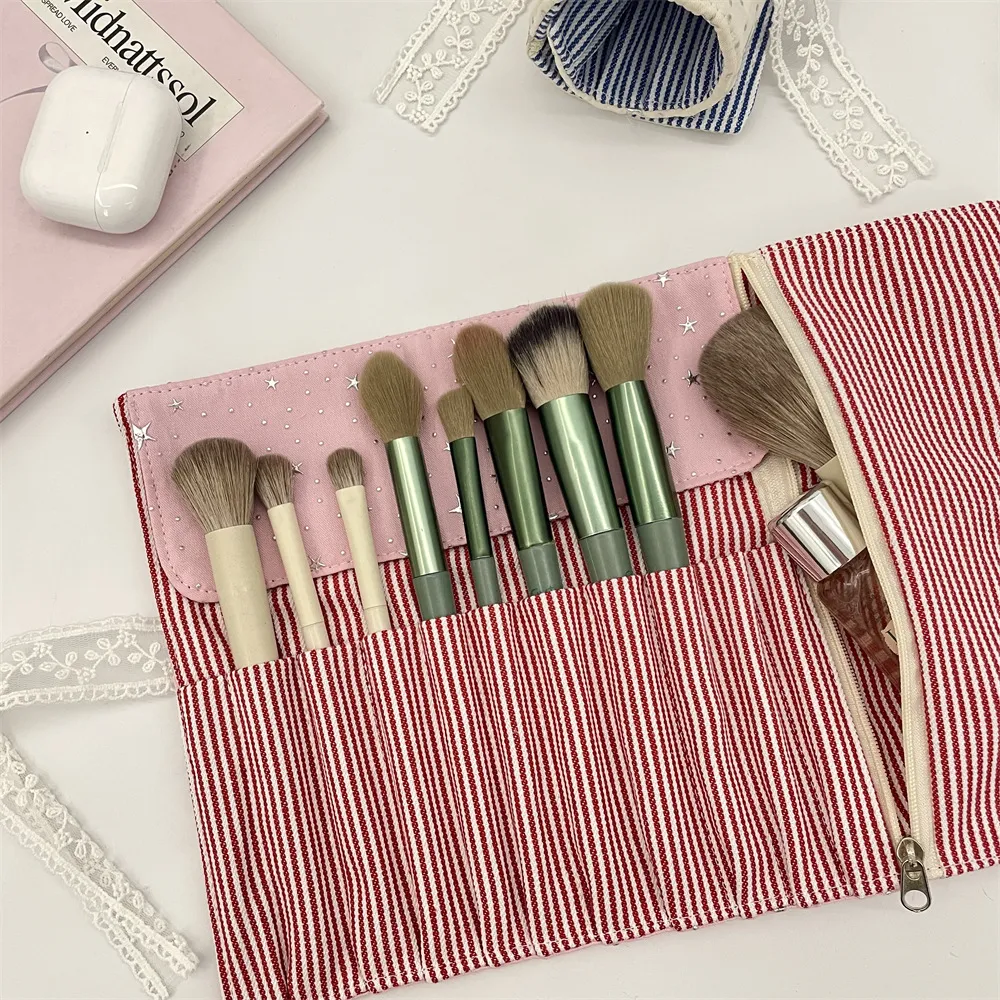
Do not treat “it does not fit” as one failure
When the intended item does not fit a sample, increasing every outside dimension can create a larger carton without fixing the real restriction. Separate the cause into entry clearance, usable internal volume, reinforcement thickness, lid interference or item arrangement. A bottle may fit inside the body but still fail to pass the shortened zipper opening. A mirror lid may remain under pressure because of its protective stack or pocket position rather than the nominal case height.
| Observed symptom | Evidence to record | Decision to test first |
|---|---|---|
| Item catches at entry | Clear zipper length, end seam allowance and insertion angle | Correct the opening before enlarging the body |
| Closure remains under pressure | Usable height, reinforcement, lid interior and item map | Isolate the interfering layer or position |
| Shape changes after packing | Packed dimensions, stacking direction and recovery interval | Review reinforcement and carton layout together |
| Logo panel ripples or folds | Process position, surface direction, backing and fold line | Revise the usable pattern area and application settings |
A controlled comparison that changes one variable at a time is more useful than a visually improved second sample with several undocumented changes. Record why the selected revision solved the observed problem before it becomes the production reference.
Sample approval checklist before production
- Record finished external and usable internal dimensions on an arrowed drawing.
- Load the intended retail kit and check insertion, removal and closure.
- List the outer, lining, reinforcement, zipper, puller and label in the BOM.
- Approve logo position, size, colour and reverse-side finish on the actual material.
- Open the packed sample and inspect shape, surface marking, mirror protection and hardware contact.
- Require written approval for proposed substitutions before production.
Use our bag tech pack guide and custom bag MOQ guide to connect the selected structure with a quote-ready brief.
Frequently asked questions
Should a small cosmetic pouch be selected by shape first?
Start with the intended contents, use, retail position and packing condition. Then choose the opening, depth and standing behaviour needed for that kit.
What is the difference between a flat pouch and a gusseted pouch?
A flat format packs efficiently and offers a broad branding panel. A gusset adds capacity and standing behaviour but increases finished thickness and construction steps.
Can a factory quote from photos alone?
Photos can start a budget discussion, but a production quote needs finished dimensions, materials, lining, zipper, branding, quantities by colour, packing and delivery terms.
What should be placed in the sample during approval?
Use the limiting real items: the longest brush, widest compact and tallest capped bottle in the intended retail kit, then check insertion and loaded closure.
Build a quote-ready small pouch brief
Share the contents, preferred structure, dimensions, materials, quantities by colour, logo, packing and delivery market.
Send an OEM enquiry