Custom Checkerboard Makeup Bags — OEM/ODM Production
A checkerboard makeup bag needs more than a colour request in the factory brief. MerrisBags can discuss OEM/ODM development around your chosen check scale, the way the repeat meets the seams and the logo position. Supply a marked reference so the manufacturing enquiry addresses the finished pattern placement as well as the fabric. See our OEM development process.
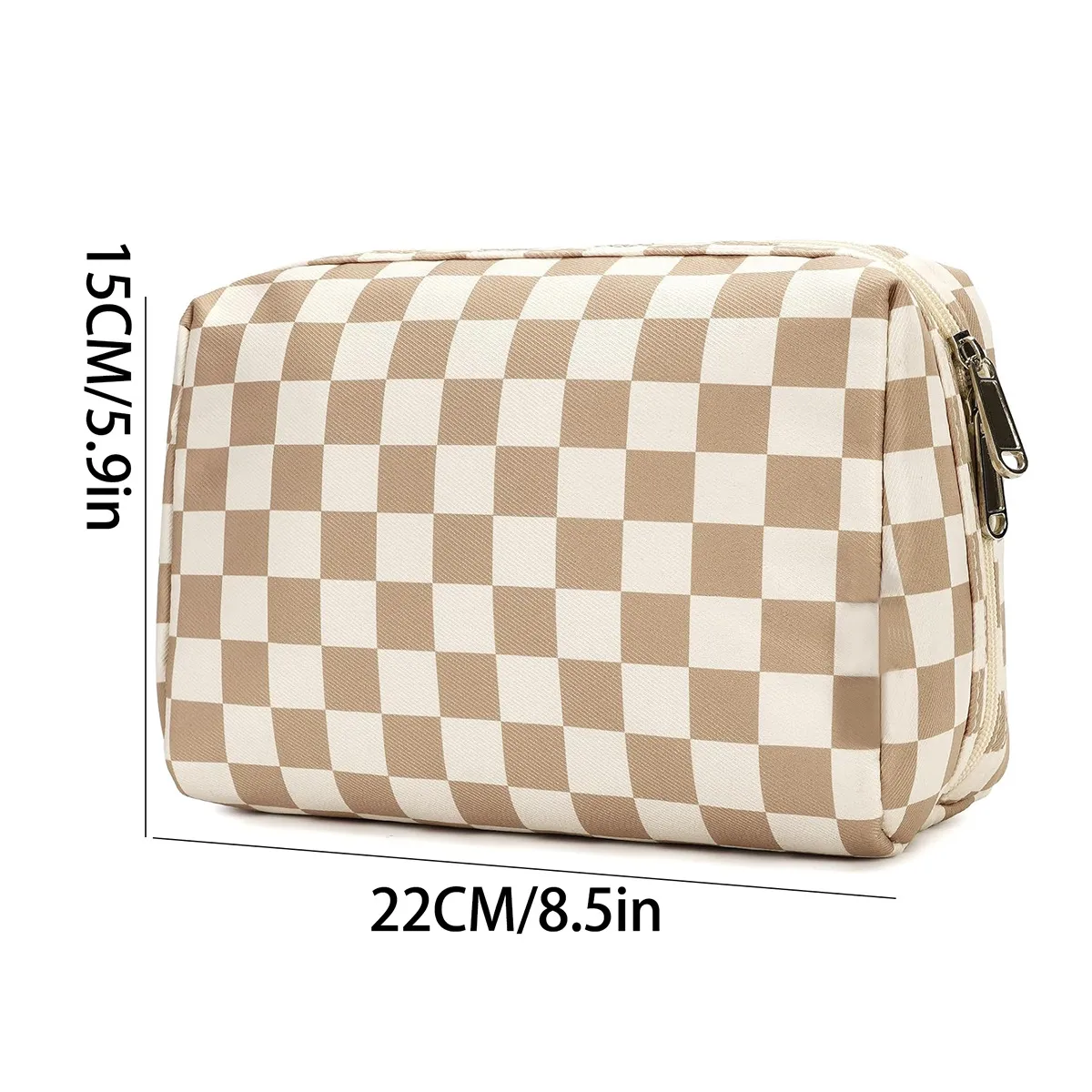
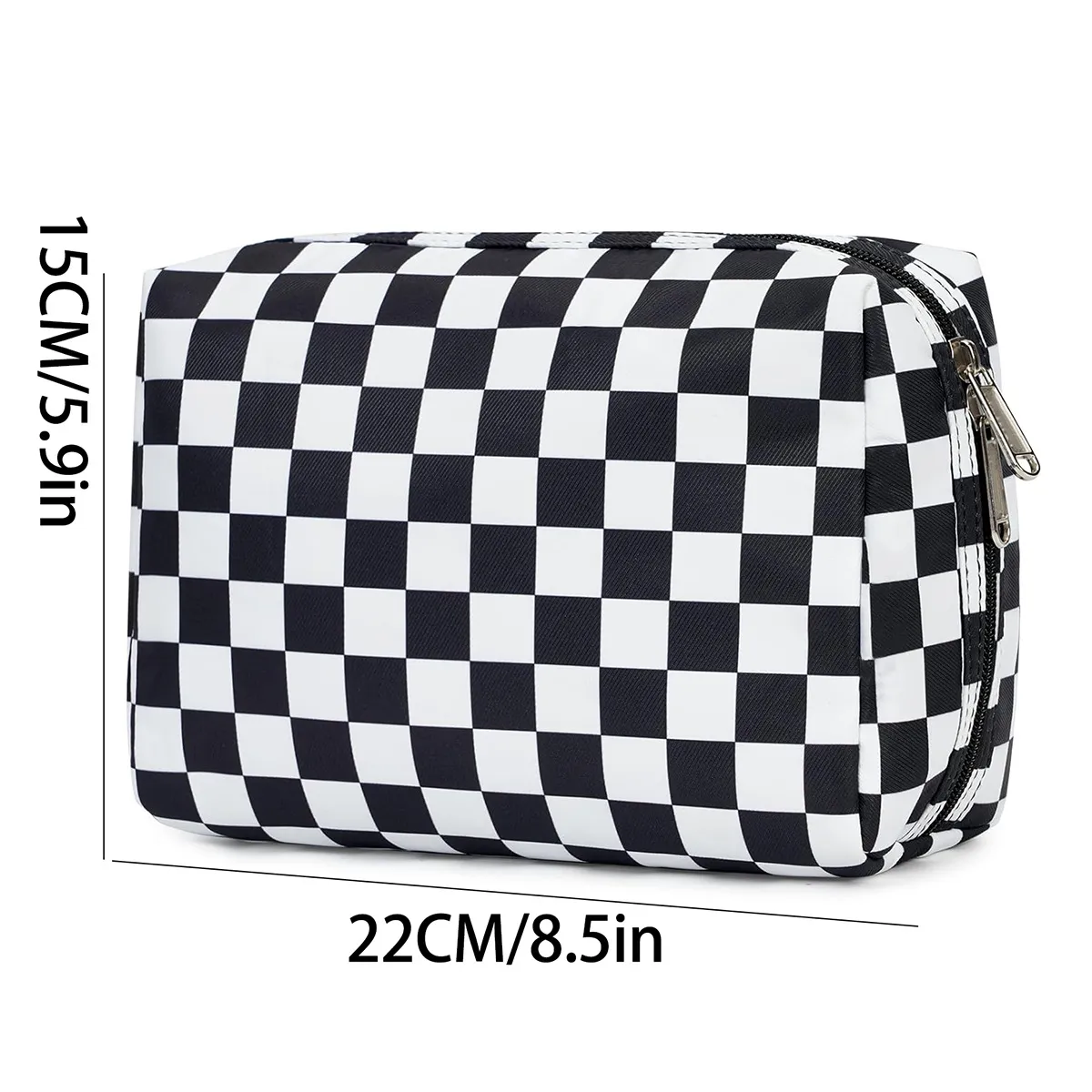
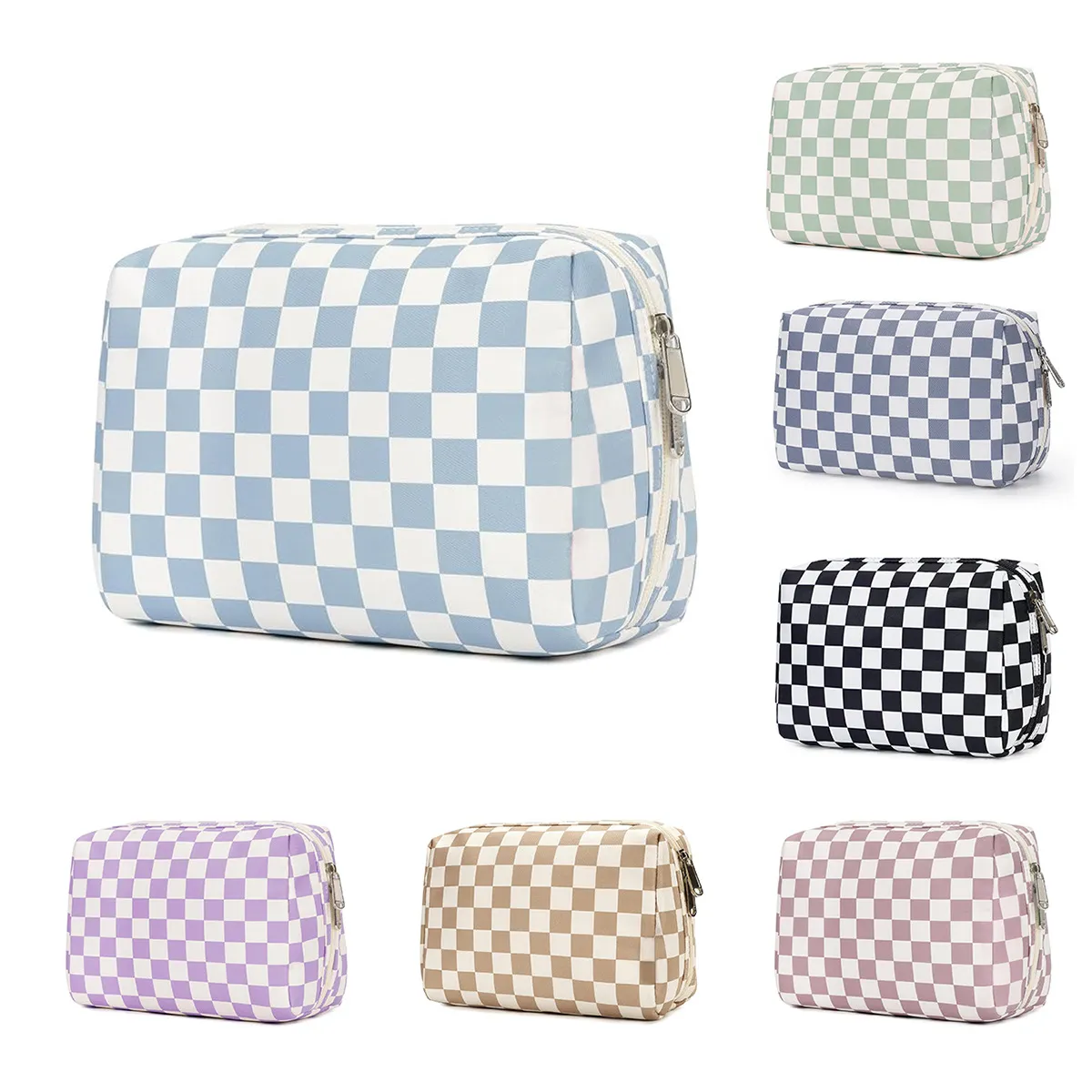
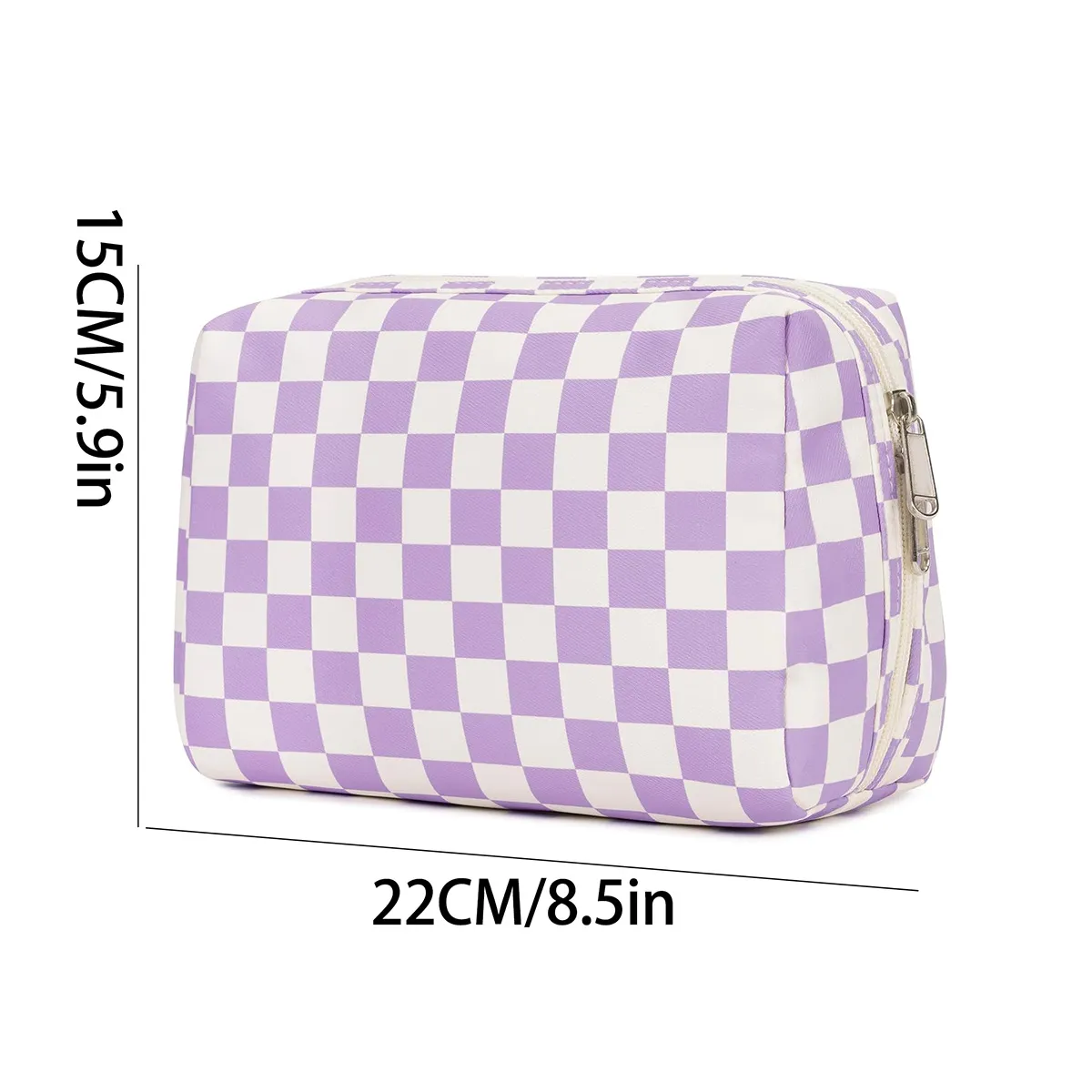
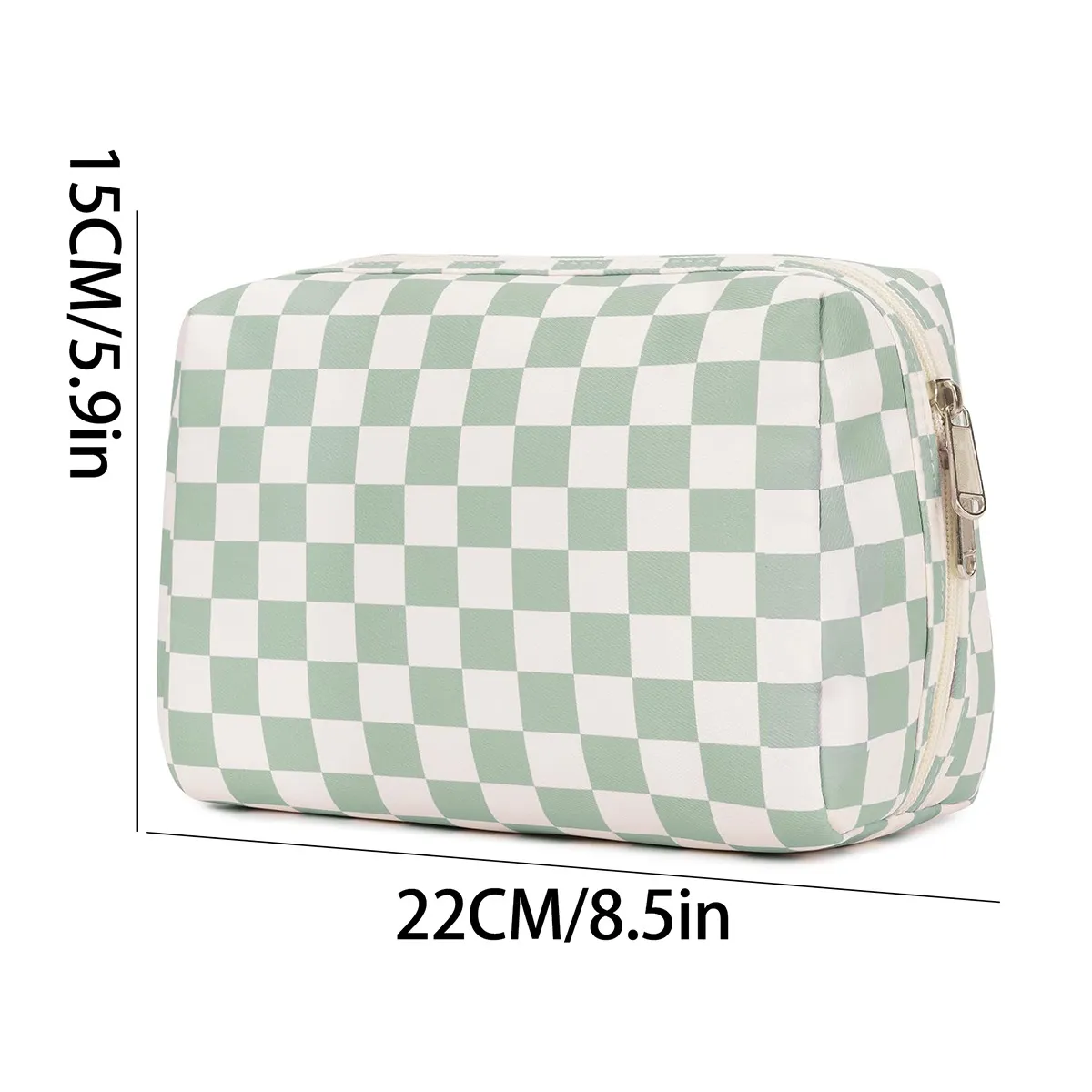
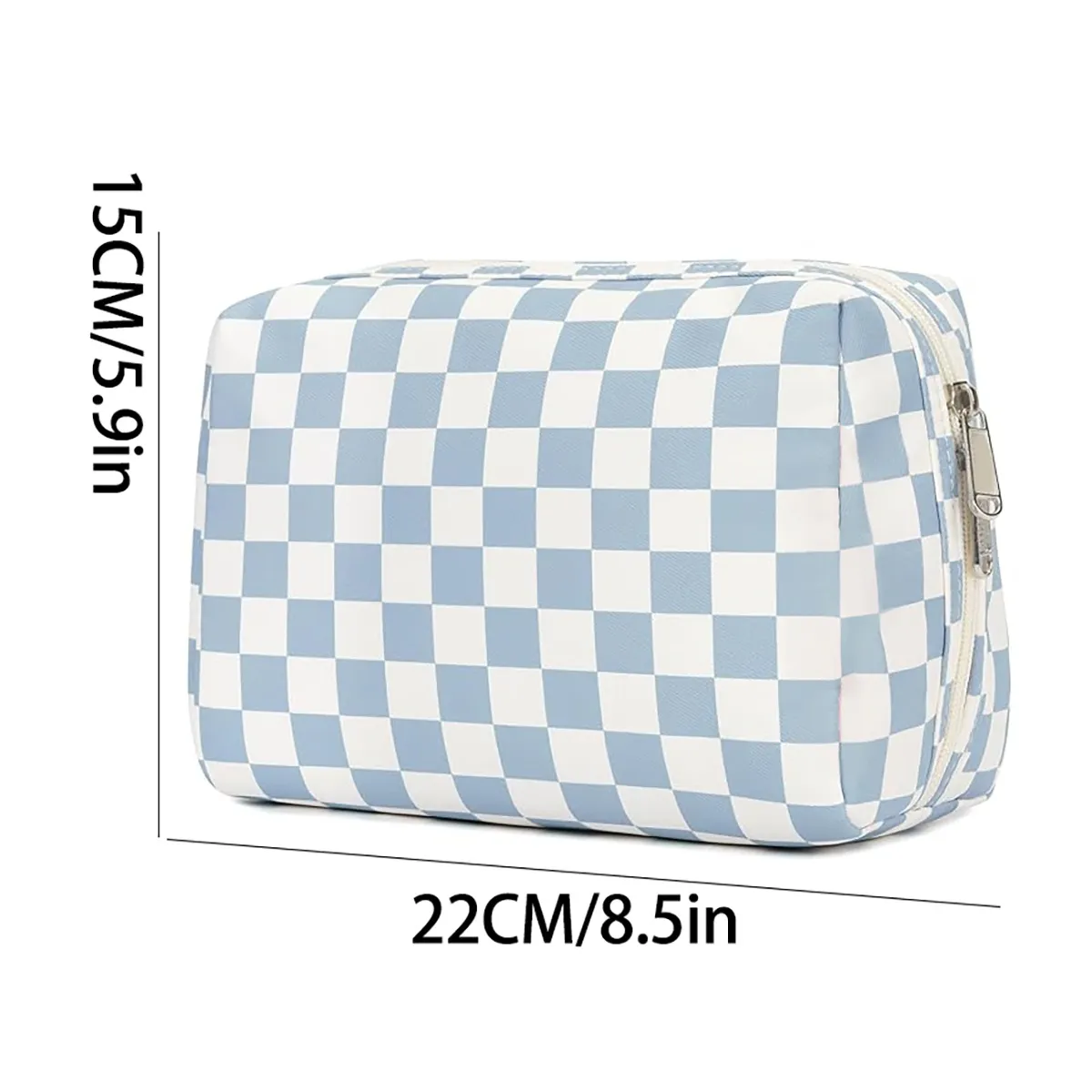
A box-shaped makeup pouch with a two-colour checkerboard pattern and twin zipper pulls. The reference photographs show neutral, black-and-white and pastel combinations. For your own collection, approve the square size, panel placement and logo position together so the
pattern still reads clearly around the finished corners.
Specify the checkerboard repeat and colour together
Product reference reviewed: 27 October 2026 · MerrisBags
This checkerboard cosmetic bag is a portable, box-shaped pouch for branded makeup and accessory collections. Its alternating squares run across the front and gusset. In a custom order, define the repeat scale, cutting position and seam appearance before approving
colourways. Check the artwork on the sewn pouch: a flat print proof alone cannot show the effect of rounded corners and zipper seams.
Reference measurements and the fabric brief
The table distinguishes visible references from choices to confirm. The photographs do not establish fibre composition, fabric weight, print method or waterproof performance.
Photo references and existing development specifications
Item / SKU
mr-bp-001 · checkerboard cosmetic pouch
Width and height
22 cm (W) × 15 cm (H), as labelled in the reference photographs
Depth
8 cm in the existing text specification; confirm with the finished sample
Outer textile
Polyester / canvas options listed in the existing brief; choose a single agreed fabric and backing in the BOM
Lining
190T polyester is the existing development reference; agree colour, finish and cleaning method by sample
Pattern specification
Two-colour alternating squares; define the size of one square and the complete artwork repeat
Zipper
Two pulls shown in the photographs; confirm track type, opening travel and hardware finish
Colourways
Reference photos show brown, black, blue, lavender and green combinations; approve each production colour by swatch
Interior and carry details
Specify dividers or a carrying loop separately; the closed product photographs do not establish the interior layout
Packing
Confirm packed dimensions, shape support and carton quantity after approving the filled sample
PATTERN APPROVAL
Approve the checkerboard on a sewn sample
Fix the square size
Supply artwork at the intended production scale. Mark the measurement of one square, both colours and the repeat direction. A larger repeat can leave a different number of full squares on the face even when the pouch dimensions stay unchanged.
Mark a cutting reference
Choose a recognisable square or intersection as the front-panel reference. Identify where the zipper line and side seam meet the artwork. If a motif must align across a seam, record that as a specific requirement and quote its cutting allowance.
Review the corners and side panels
Close the filled sample and inspect it from the front, side and above. Rounded corners can bend the apparent grid. Agree the acceptable appearance and reference photographs rather than assuming every cut square will look perfectly square after sewing.
Keep the logo readable on alternating squares
A mark crossing light and dark squares can lose contrast in part of the artwork. Review the logo at its actual size on the intended location, then compare a small plain patch, a woven label, a pull-tab detail or direct printing. These are development choices; the
attachment and print method still need to suit the selected fabric.
Choose the design priority before approving the first colour. A logo centred on a square may shift relative to the pouch centre when the repeat scale changes. Keep the repeat and logo coordinates in the same drawing so a new colourway does not accidentally change the
layout.
What changes the checkerboard pouch quote?
The square size, print process, repeat alignment requirement, colour count and number of colourways all belong in the quotation brief. Matching a motif over several panels can change the cutting layout. Ask for those requirements to be identified in the quote instead of
comparing prices for different artwork and construction assumptions.
COMMERCIAL REFERENCE Existing published reference: US$1.50–6.50 per unit, FOB Shenzhen, at a reference MOQ of 500 units. This broad range is not a project quotation. Send your fabric, artwork, dimensions, quantity by colour and packing requirements for a
dated price and sample proposal.
Attach the full repeat file, a marked front view, the square size, colour references, finished dimensions, lining choice, logo file and target quantity by colour. Include the contents list if the pouch is part of a makeup gift kit.
Can we change the size of the checkerboard squares?
Yes, include the measurement of one square and the artwork repeat at production scale. Review it on the proposed front-panel size because changing the repeat changes how many whole and partial squares appear near the seams.
Will the checks match at every side seam?
Continuous alignment is not automatic. Specify the seams that matter, the cutting reference and the acceptable offset. Approve a sewn sample and agree any extra material or cutting allowance before treating matching as an order requirement.
Are the squares printed, woven or stitched?
The photographs show a checkerboard appearance but do not establish the production method. Confirm the chosen fabric and pattern process with the supplier, then retain a physical material reference. Do not infer a woven or quilted structure from the graphic
alone.
What are the reference dimensions?
The product photographs label the width as 22 cm and the height as 15 cm. The existing written specification lists an 8 cm depth, which needs sample confirmation. Record width, height and depth in that order when requesting a size change.
Where should our logo sit on the grid?
Mark the logo location relative to both the panel edges and a recognisable square. Check the artwork over light and dark areas. A plain patch or label can provide a consistent background when direct printing does not remain readable.
Is the 190T lining waterproof?
190T describes a textile specification; it does not by itself establish the finished lining or bag as waterproof. Agree the material finish, seams and any required test before making a protection claim for the packed cosmetics.
Can several checkerboard colourways share an order?
Send the quantity for each colourway rather than only a total. Print setup and material minimums can differ between colours; the published reference MOQ is 500 units, with the final colour split confirmed in the quotation.
What should we approve before repeat production?
Retain the artwork revision, square dimensions, material and colour swatches, marked panel layout and sewn sample. Recheck placement if the pouch size, print repeat, fabric or logo file changes; an old flat proof is not enough to approve a revised layout.