Scope: This guide is for brands, distributors and corporate procurement teams developing made-to-order cosmetic pouches. It is not a stock-product buying guide, and MerrisBags does not sell individual retail units or provide dropshipping.
Five sample-to-bulk defects and how to specify them
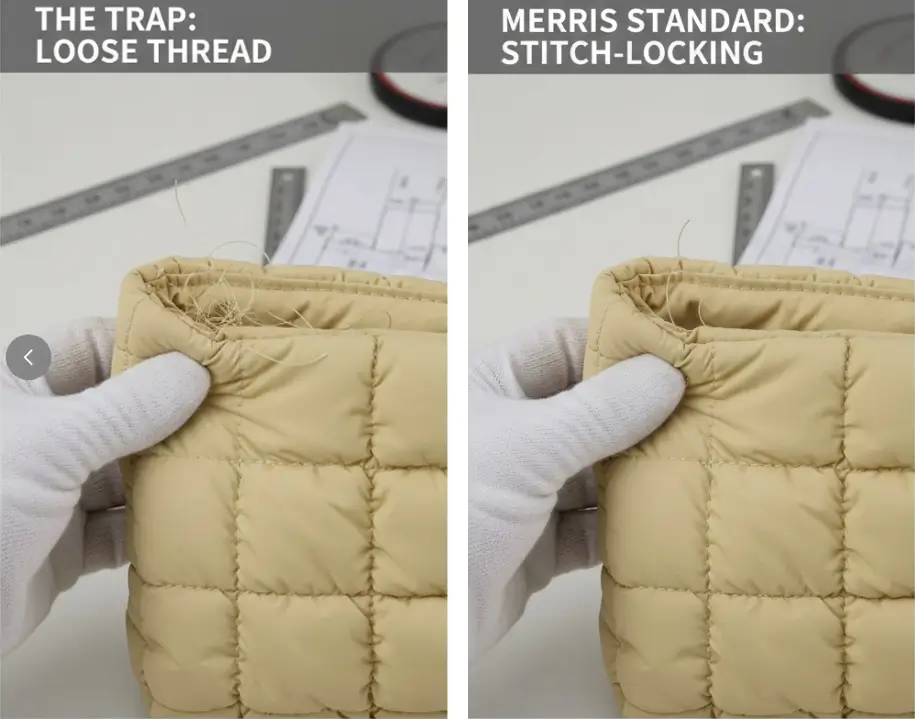
Seams that open after a loose thread is pulled
Why it happens: A sample can look clean after trimming while still having an unsecured stitch end. On quilted panels, one loose thread may affect a larger decorative line as well as the joining seam.
Put in the approval record: stitch type, stitches per unit length where critical, back-tack or bartack locations, acceptable thread tails and the points that receive a pull check. Mark these locations on a photo of the signed sample.
Bulk check: Inspect zipper ends, handle anchors, side-seam junctions and quilting endpoints. A pulled thread must not continue to run or open the seam. Define the sample size and pass/fail rule in the inspection plan.
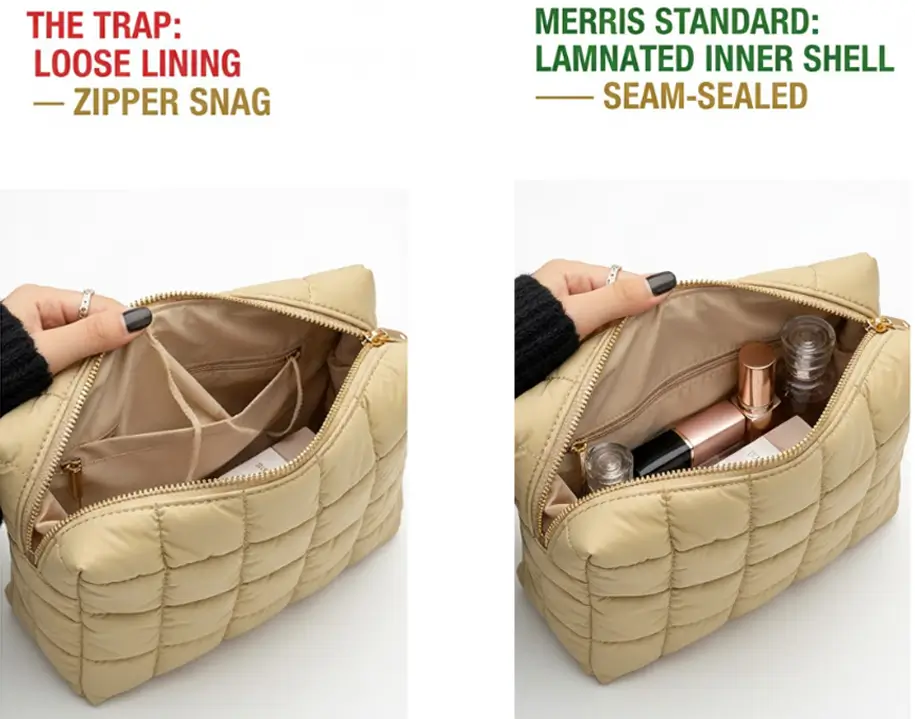
Lining caught by the zipper
Why it happens: A loose lining can move toward the zipper even when the first opening cycle is smooth. The risk changes with lining stiffness, bag fill and the way the zipper tape is assembled.
Put in the approval record: lining material, attachment method, seam allowance and minimum clearance at the tightest part of the opening. Photograph the interior with the bag both empty and filled with the intended contents.
Bulk check: Cycle the zipper with the pouch empty and normally filled. Reject units where the lining enters the teeth, restricts the slider or pulls free at the seam.
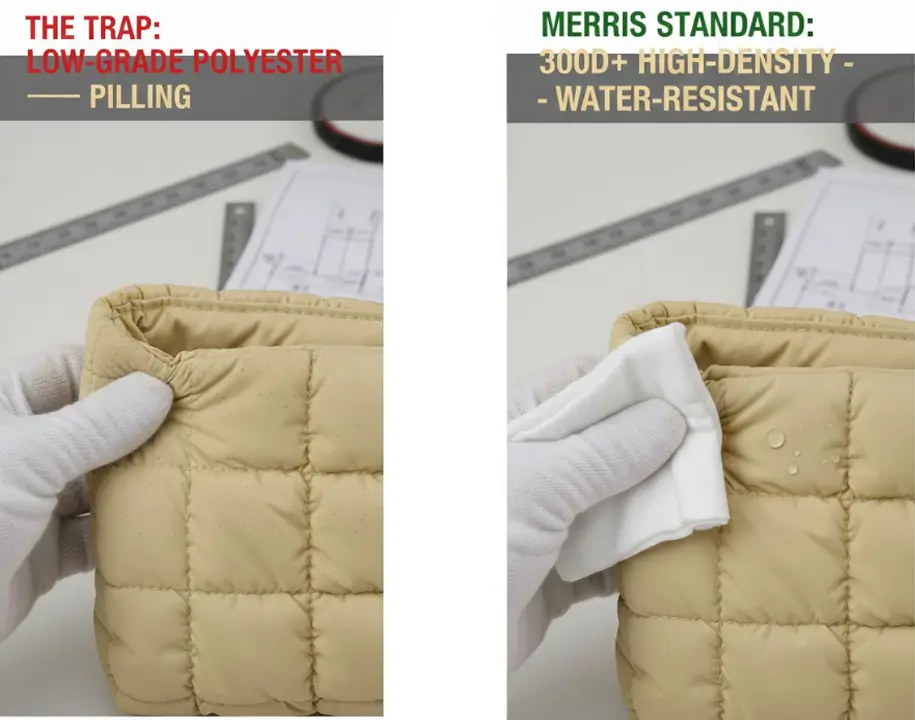
Material that looks or performs differently in bulk
Why it happens: Two fabrics with the same generic name can differ in yarn, weave, coating, weight, colour and hand feel. Substitution is difficult to detect if the purchase order references only “polyester” or a screen image.
Put in the approval record: supplier or mill reference where available, fibre declaration, construction, weight or denier as relevant, colour standard, coating and the approved physical swatch. Name the test method and acceptance value only when the program actually requires it.
Bulk check: Compare incoming material with the sealed swatch before cutting. Hold production when shade, surface, weight or coating differs outside the agreed tolerance.
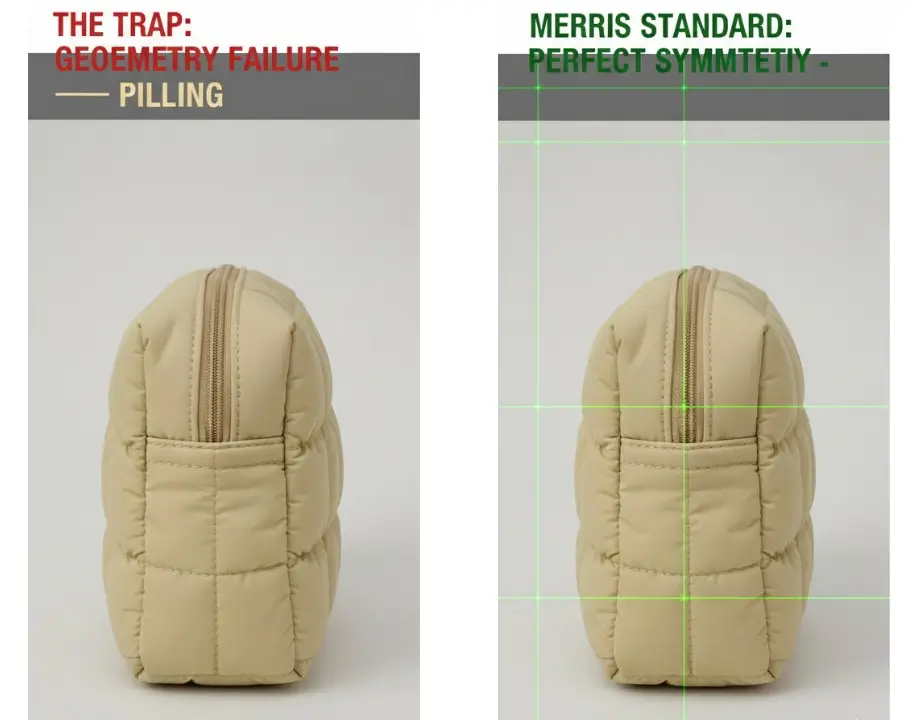
Quilting or printed geometry that drifts at seams
Why it happens: Quilting, print repeats and layered materials can shift during cutting and sewing. A small change at the pattern edge becomes obvious where front, side and base panels meet.
Put in the approval record: centre line, motif orientation, repeat position, quilting scale and the seam junctions that are visually critical. State the dimensional tolerance at those points instead of asking for “perfect symmetry.”
Bulk check: Lay the bag on a marked flat surface and compare the selected reference points with the approved sample. Measure the same points on every inspected unit.
Hardware finish that changes, peels or corrodes
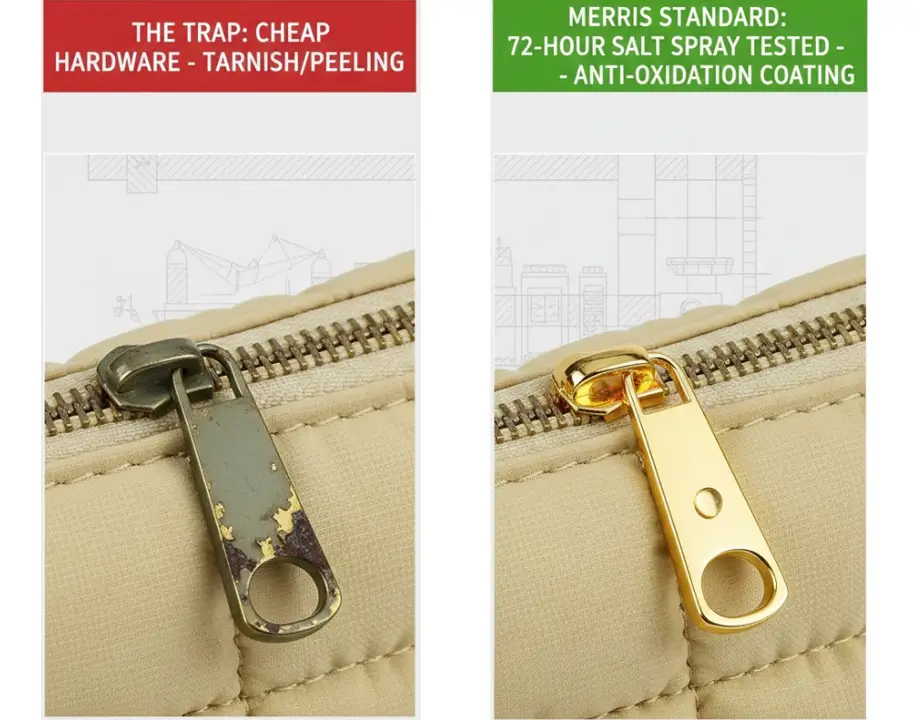
Why it happens: Two zipper pulls can share the same gold colour while using different base materials and finishes. Humidity, cosmetics and repeated handling can expose those differences after delivery.
Put in the approval record: hardware material, finish code or approved trim card, colour range and any required abrasion or corrosion test. Do not copy a test duration from another product without confirming the buyer’s market and use case.
Bulk check: Compare colour under consistent light, inspect edges and contact points, cycle moving parts and review the specified test report when the purchase order requires one.
Purchase-order controls that prevent the five defects
| Control record | What it should identify | Release point |
|---|---|---|
| Signed sample | Exterior, interior, workmanship and labelled exceptions | Before bulk material cutting |
| Bill of materials | Shell, lining, padding, zipper, puller, thread, logo and packaging | Before purchasing production materials |
| Measurement chart | Finished dimensions, measurement method and tolerances | Pattern and pre-production sample approval |
| Colour and trim references | Physical swatches, colour standard, hardware finish and acceptable range | Before dyeing, printing or plating |
| Inspection plan | Critical, major and minor defect definitions; sample size; acceptance rule | Agreed in the purchase order |
| Packing specification | Folding, inserts, individual packing, carton assortment and carton marks | Before final inspection |
What to send with a cosmetic pouch RFQ
Send the intended contents, finished dimensions, material direction, artwork files, colour references, target market, order quantity by colour, packaging requirement and target delivery window. If a performance or regulatory test is required, name the standard, method and acceptance value. The factory can then explain which choices affect sampling, material minimums, tooling, unit cost and lead time before the order is placed.
For a product-specific starting point, compare the pastel diamond-quilted pouch, the quilted wristlet pouch and the double-zip Oxford pouch. Each page separates the construction decisions so the models do not compete for the same search intent.
Send your specification for a sample review
We will review the construction, identify missing approval points and quote a made-to-order B2B sample and production program. No ready stock, individual retail sales or dropshipping.
Send Specifications for Review