For a private-label quilted organizer, send MerrisBags a list of what belongs in the gathered interior sections and what stays in the centre. That gives the factory a practical starting point for OEM development of the lining and storage layout, while the channel stitching and proposed embroidery are considered together. See our OEM development process.
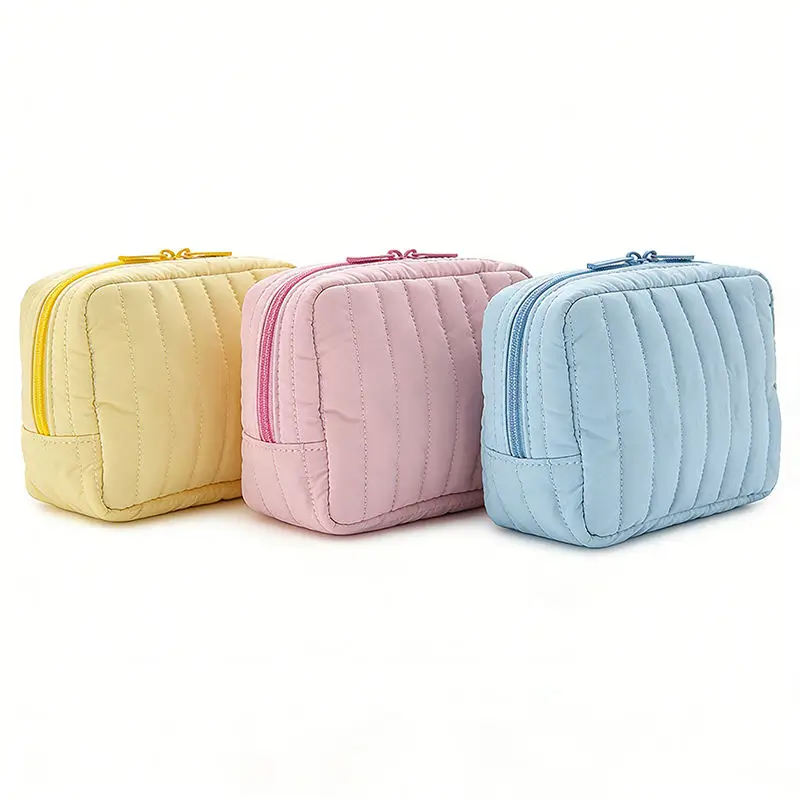
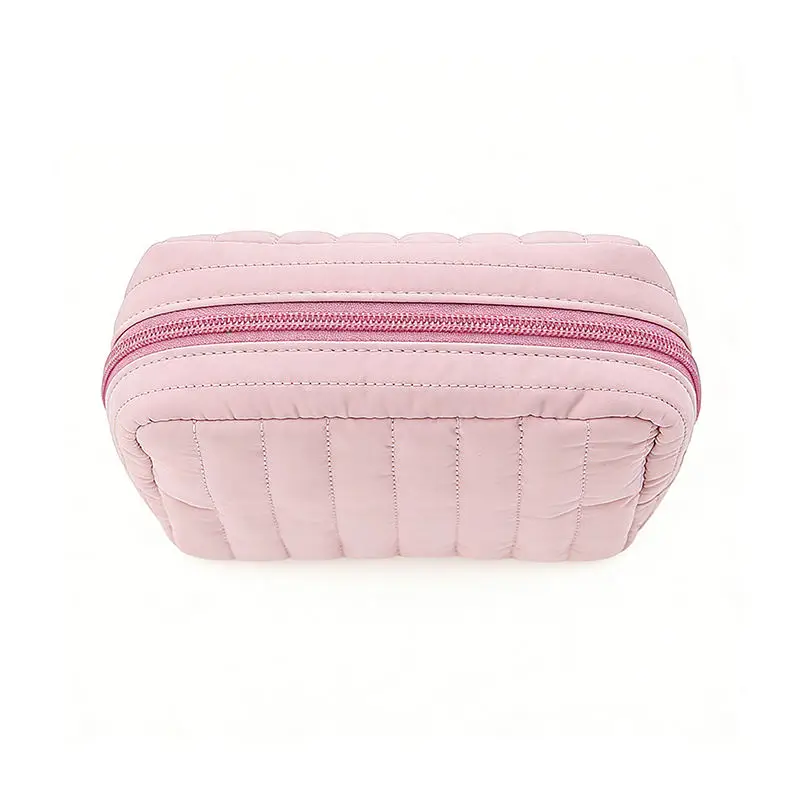
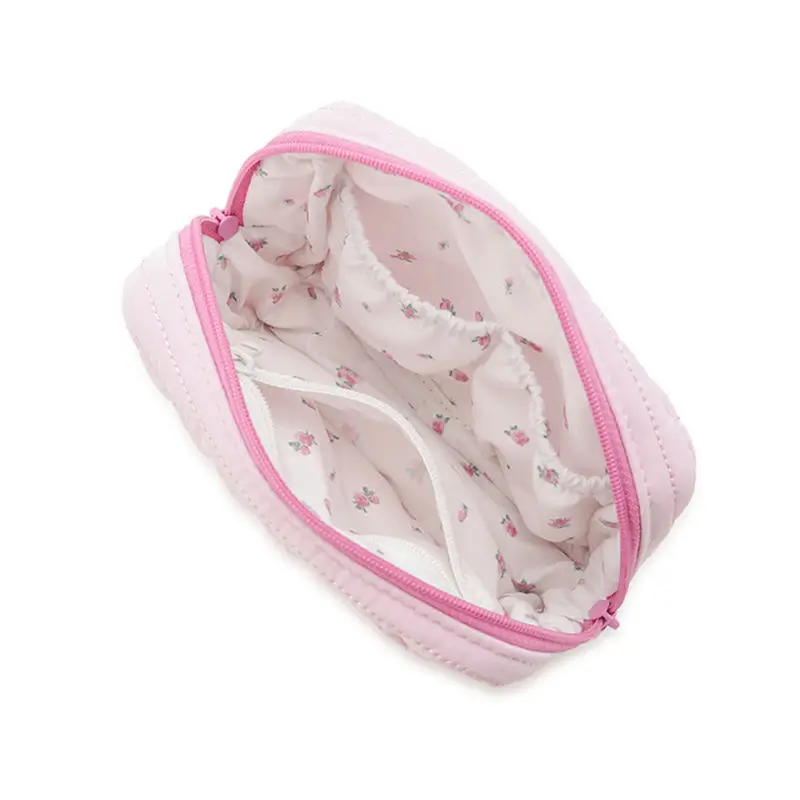
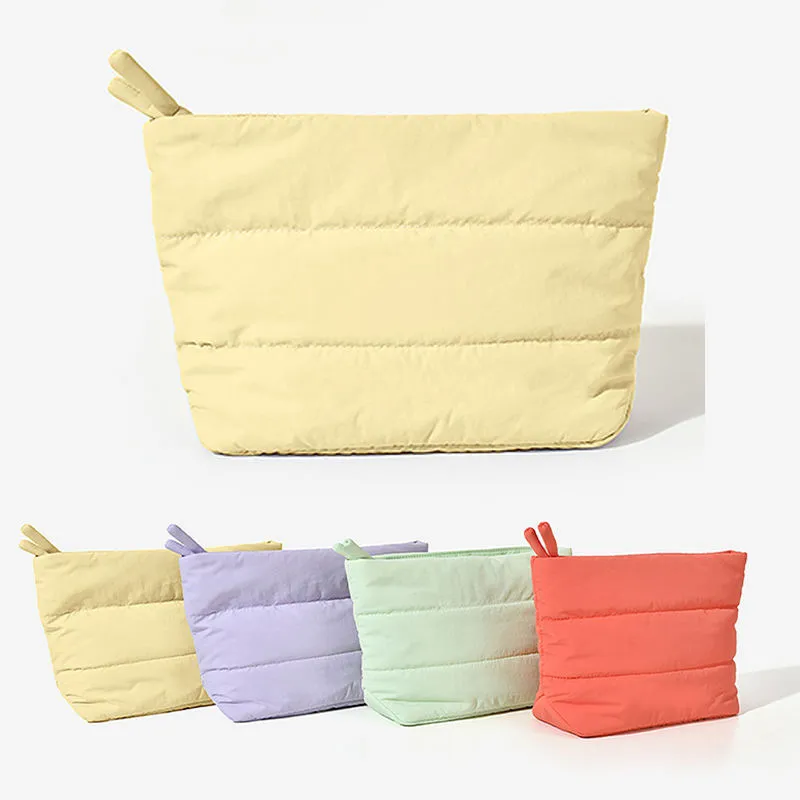
Vertical quilted channels run down this rounded, box-shaped cosmetic bag. The reference range pairs pale yellow, pink and blue shells with coordinating zippers; the open pink sample shows a floral lining and gathered storage sections. Use the interior layout and embroidery placement as the starting points for a branded version.
Product reference reviewed: 27 October 2026 · MerrisBags
This pastel quilted makeup bag combines a rounded rectangular body with vertical channel stitching. Its open-sample photograph shows floral lining and elasticated storage sections around a central packing area. For a custom cosmetic organizer, choose what those sections need to hold, then review the lining, pocket mouths and zipper clearance with the pouch filled. The stitched logo shown on the pink reference is an embroidery example to approve separately.
Open pink reference: floral lining and gathered internal storage sections. Pocket count and dimensions are agreed on the production sample.
INSIDE THE REFERENCE
Give the inner pockets a job
A small bottle, a compact and a brush need different kinds of access. Send the actual items or their dimensions and mark which should sit in a gathered pocket and which should remain in the central space. Check that the pocket mouth holds an item without making it difficult to remove. Do this with the zipper closed as well as open: a loaded pocket can reduce the room available beside it.
The floral fabric is visible in the open reference, but the photograph does not establish its fibre content or cleaning performance. Ask for a lining swatch and review the printed motif next to your products. If you prefer a plain lining, confirm the replacement fabric and the finished pocket construction together.
What the photographs show, and what the order must define
These are product references, not a measured bill of materials. Confirm the materials and dimensions against a signed drawing and physical sample.
Visible construction and development details to confirm
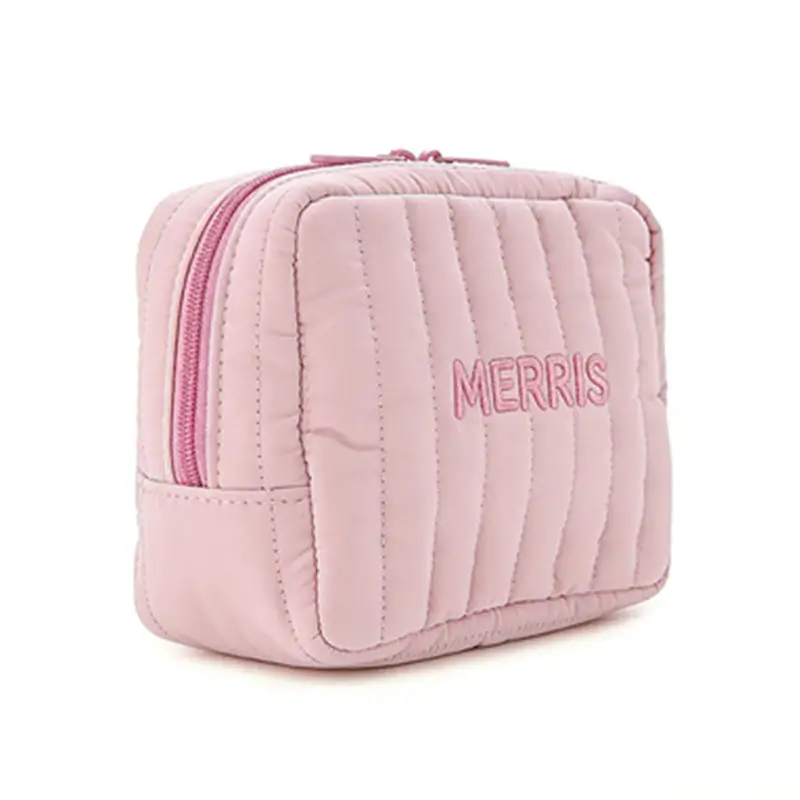
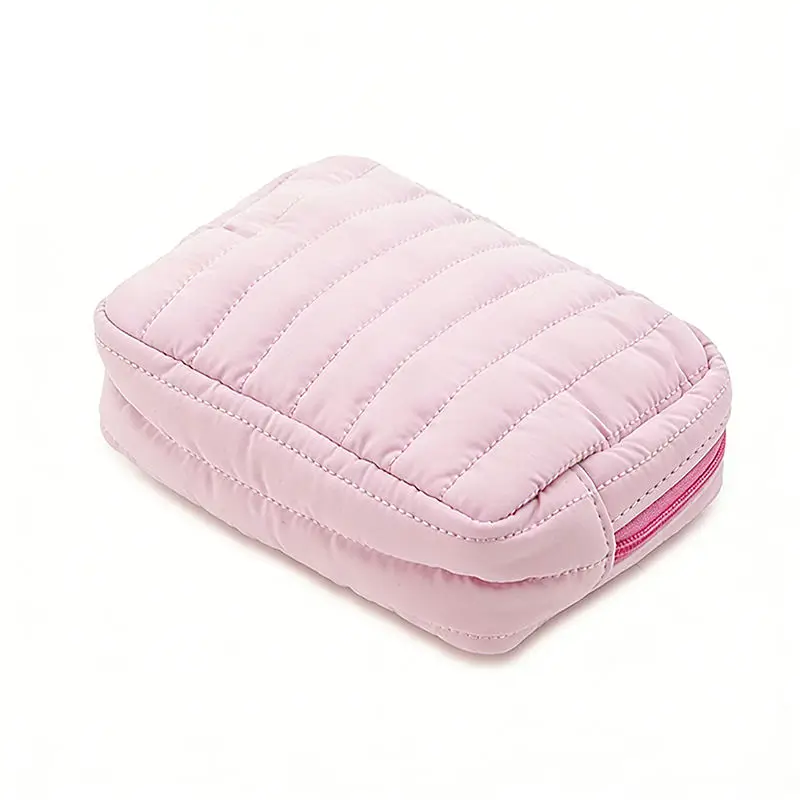
Straight channels visible on the front and back panels; spacing agreed on a panel sample
Outer fabric
Existing development reference: 300T nylon. Confirm fibre composition, backing and finish in the material sheet
Padding
Polyester padding listed in the existing reference; thickness, weight and finished loft require approval
Lining
Floral printed lining shown in the pink open sample; composition and any plain-fabric alternative to be confirmed
Interior layout
Gathered, elasticated storage sections with a central space; specify pocket count, openings and item fit
Zipper
Coordinating tape and two pulls shown; confirm zipper type, colour and opening travel
Dimensions
Custom finished width × height × depth to be recorded on the drawing; no measured dimensions are shown in these photographs
Branding
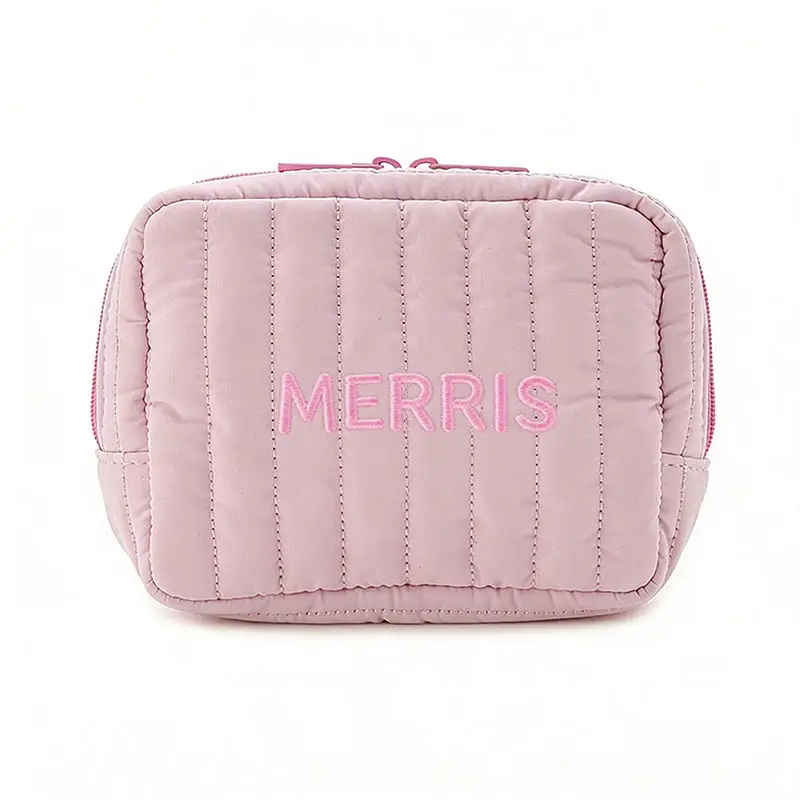
Stitched lettering shown on the pink sample; approve artwork size, thread colour and its relation to quilt channels
Packing
Agree shape support and packing pressure around the padded panels and internal pockets
Embroidery and quilting need one shared layout
The pink reference places lettering across several vertical channels. Mark the logo relative to the panel edges and channel lines, rather than centring it only on a loose fabric swatch. A logo that looks balanced before quilting may appear uneven once the fabric is padded and sewn into a curved panel.
Review thread coverage, backing, surface puckering and the feel on the lining side using the chosen material combination. Ask the sample team to confirm the embroidery and quilting sequence for that construction. Keep the approved stitch-out with the finished sample when preparing additional colourways.
Review each pastel as a complete combination
Pale shell fabric can look different next to a darker zipper, bright embroidery thread or a floral lining. Put shell, padding, lining, zipper tape, thread and logo together under the agreed viewing conditions. Approve yellow, pink and blue as individual combinations; the same trim colour can create a different contrast on each shell.
A thicker or darker backing can also alter the way a pale outer fabric looks. Review the assembled panel before using an isolated colour chip as the bulk reference. Record any changes to the lining or padding when approving a replacement material.
A useful sample request starts with the contents
Send the contents list, finished size, pocket placement sketch, desired quilt spacing, shell and lining references, embroidery file and quantity for each colour. Include the intended individual pack if the padded shape must be retained for retail presentation.
Published commercial reference: US$1.58–2.15 per unit, FOB Shenzhen, at a reference MOQ of 500 units. This is the existing reference range, not a current project quotation. The agreed pocket layout, material combination, embroidery, colour split and packaging determine the dated quote.
The reference photographs show straight vertical channels on the main panels. A diamond pattern would require a different quilting layout. Use the channel direction and spacing in the sample brief so the reference is not confused with crossed or grid quilting.
Can we change the floral lining to a plain fabric?
Request the proposed lining as a physical swatch and review it in the assembled pocket layout. A different fabric can change the pocket mouth, bulk and colour seen beside the pale shell. Confirm composition and cleaning requirements before approving the change.
Can the gathered pockets be sized for our cosmetics?
Provide the item dimensions and identify the storage position for each item. Approve pocket width, depth, elastic opening and extraction clearance on a filled sample. The photographed interior is a reference arrangement, not proof that a particular bottle or brush will fit.
Can an embroidered logo cross the quilt channels?
The pink example shows lettering over vertical stitching, but your artwork still needs its own stitch-out. Review how the lettering sits over padded channels, whether the fabric puckers and how the backing feels inside. Approve the logo on an assembled panel, not only in a digital preview.
Does the padding protect fragile glass bottles?
Visible padding alone does not establish impact protection for glass. Define the intended contents and any required evaluation before making a protection claim. Inserts, pocket separation and shipping packaging need to be considered with the filled pouch.
How do we prevent the quilted shape arriving flattened?
Agree packing pressure and any shape support using the actual material combination. Unpack a representative sample and review the channel loft, pocket openings, zipper movement and surface creases. Packing approval should follow that check rather than a photograph of an empty flattened pouch.