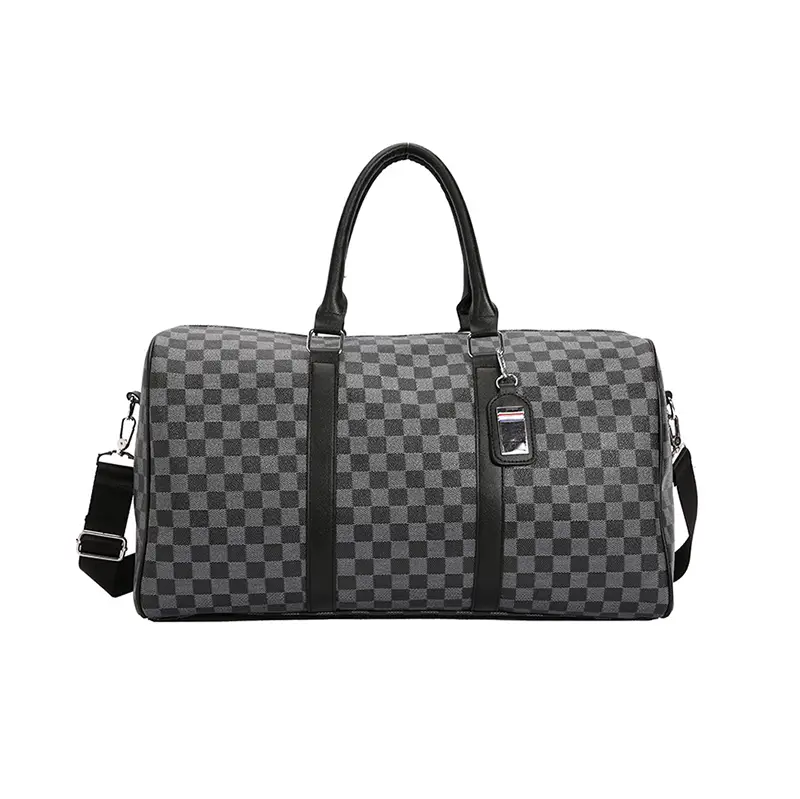
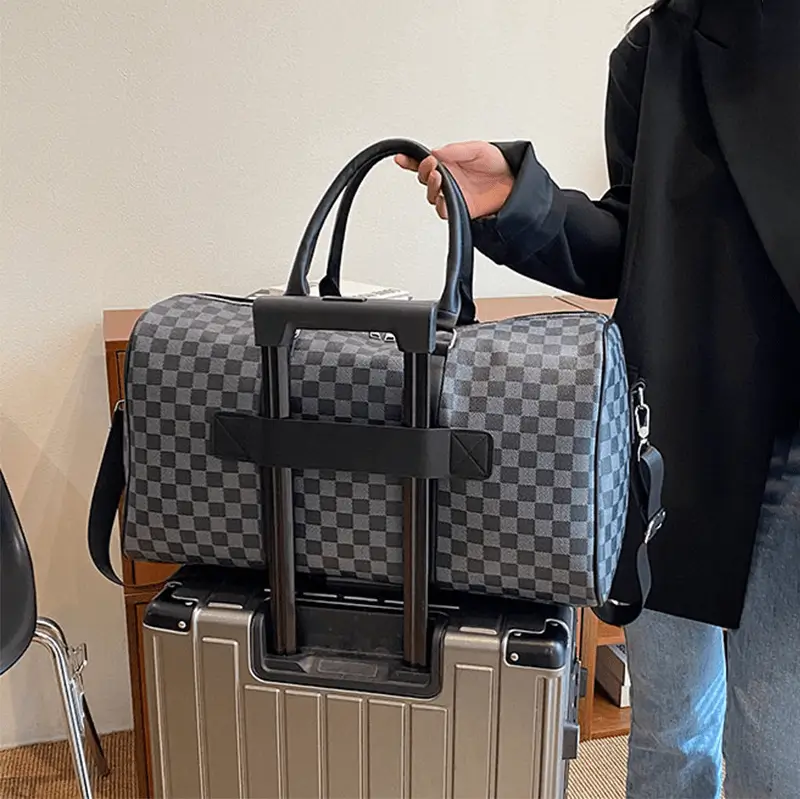
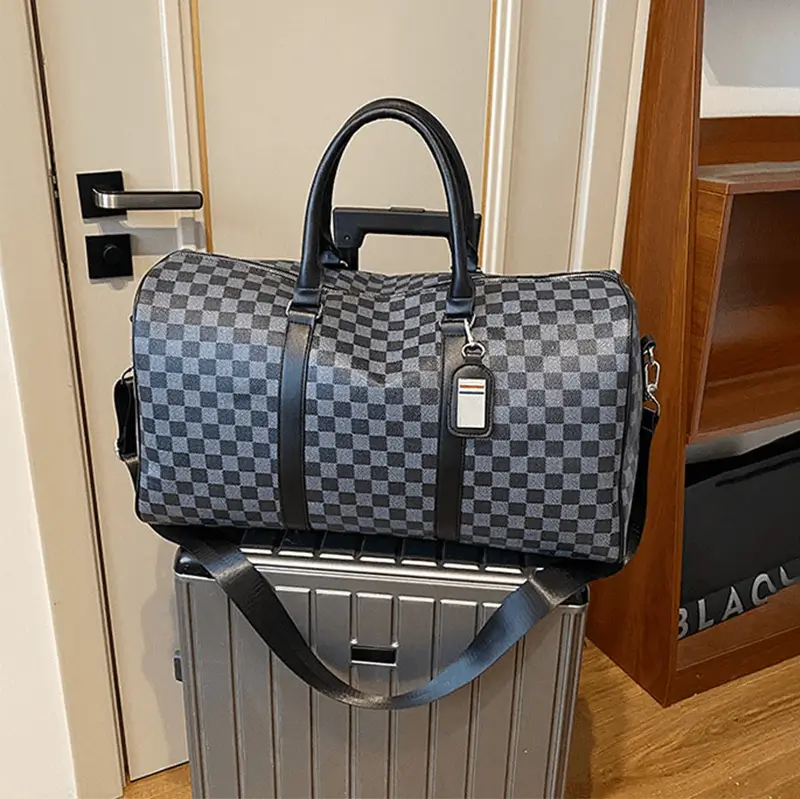
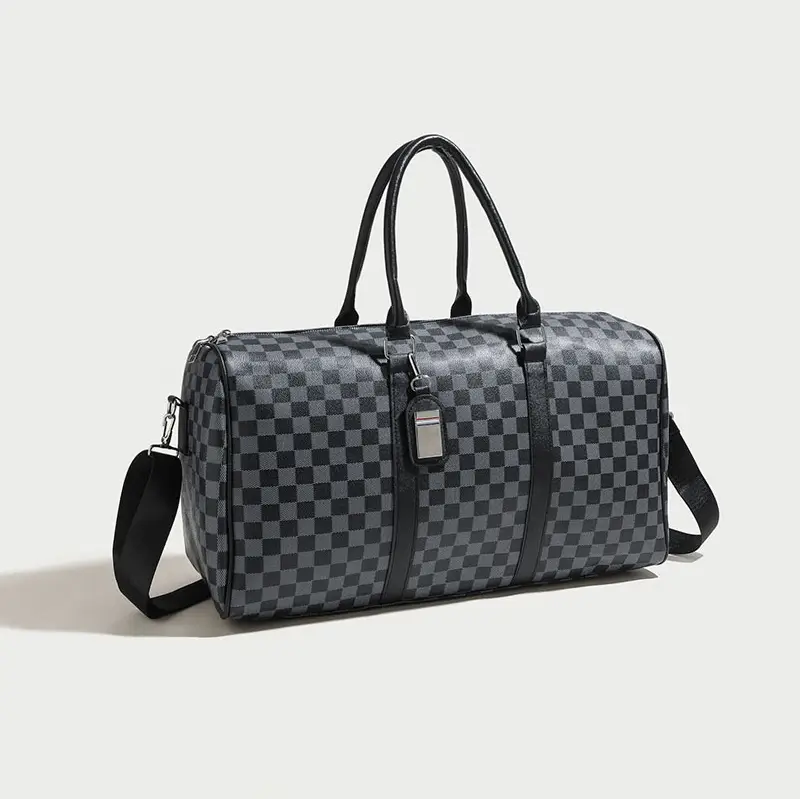
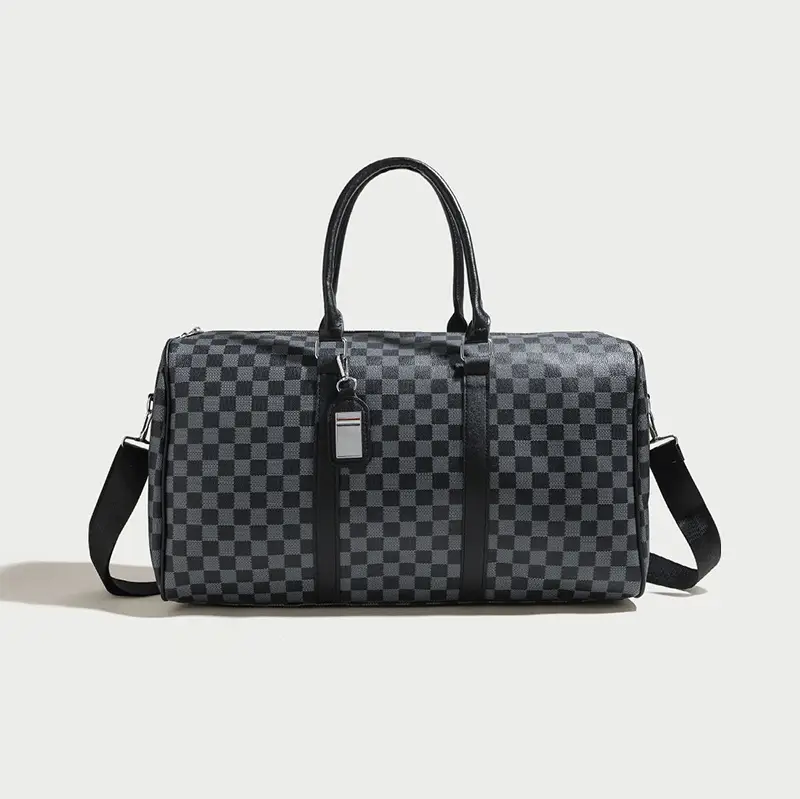
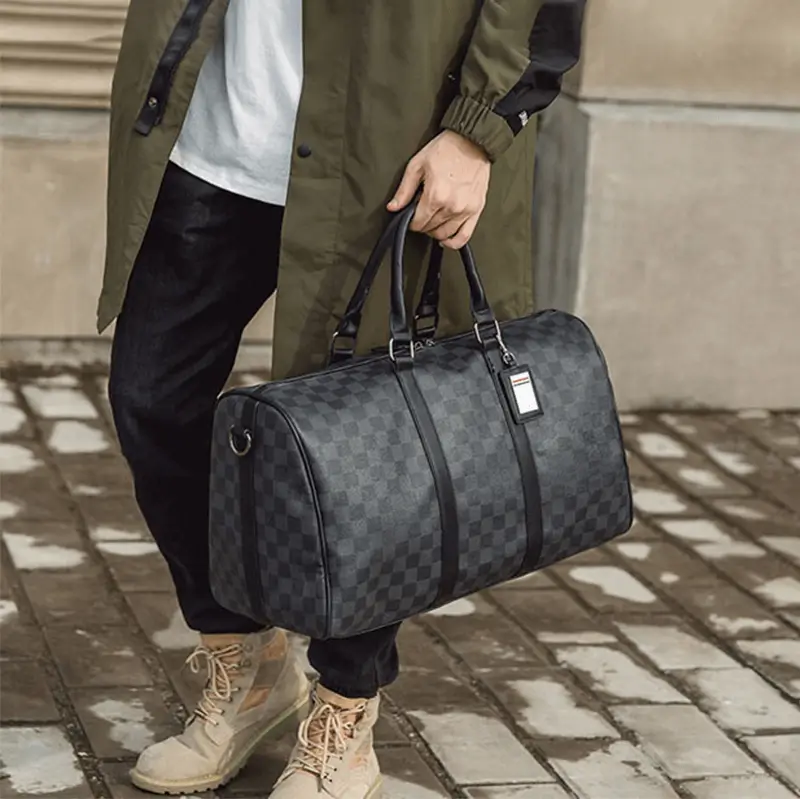
This reference pairs a checkerboard body with a rear band that slides over a suitcase handle. For a custom order, send the trolley handle width and intended packing list; the sleeve fit and loaded balance need to be checked together.
Match the rear sleeve to the luggage you actually sell
The rear photograph shows a horizontal trolley band. Agree its clear opening, position and attachment reinforcement using the intended suitcase. Check that the loaded duffel sits steadily and that the shoulder strap can be stowed away from the wheels. A photograph on one suitcase does not establish universal compatibility.
Keep the checkerboard straight across a sewn body
The small alternating squares make a tilted seam easy to notice. Mark the grain direction and any controlled alignment on front, end and zipper panels. Ask for a sewn sample, then define acceptable pattern shift at seams. Matching every square may change cutting yield and the quotation.
Choose the shell by touch, backing and cleaning requirements
The reference has a leather-look surface, but the images do not identify genuine leather, PU, PVC or a coated textile. Compare physical swatches for surface feel, thickness, backing, crease recovery and colour transfer. If genuine leather is specified, record its type and finish separately from synthetic alternatives; request documentation for the actual selected material.
Turn the trim set into your own collection
Black longitudinal bands continue into the handle assembly, while silver-tone clips and a hanging tag add contrast. Beyond private labelling, discuss handle drop, strap width, tag shape, zipper pull, lining colour and internal storage. OEM can revise this reference; ODM work can start from new proportions and a different pocket layout. Confirm pattern and tooling charges before sampling.
Give purchasing one approval record to reorder against
Keep the signed sample, colour swatches, bill of materials, artwork version and packing method together. The supplied photographs do not show the interior, so request an open sample before deciding on dividers or device protection. Record measured dimensions and packing capacity from that sample rather than assigning an unverified litre figure.
Resolve these purchasing questions before the deposit
Comparable quotations
Separate shell, lining, strap, tag, branding, sample or tooling fees, export packing and freight basis. Confirm whether the reference price covers your final construction.
Approval and timing
Set a sample deadline, who approves it and when the production lead time starts. Material or artwork changes need a revised schedule before release.
Inspection acceptance
Agree check-pattern tolerance, colour limits, zipper operation, handle attachments and a loaded trolley-fit check. Define the inspection method and remedy for a failed check in writing.
Transit presentation
Test stuffing, handle protection and tag placement in the proposed carton. Review the bag after unpacking for dents, creases or hardware marks.
Supply continuity
Identify approved shell, trim and hardware references. Require approval before a supplier or material substitution, with a retained sample for repeat orders.
Is this checkerboard duffel made from genuine leather?
The photographs show a leather-look checkerboard surface but do not establish its composition. Request physical swatches and a material specification. Genuine leather, synthetic leather and coated textile options need separate approval and quotations.
Can you change the trolley sleeve for our suitcase range?
Discuss the handle width, sleeve opening and attachment position with the factory. Supply a suitcase or measured drawing, then approve the fit and stability with the intended load. The pictured sleeve does not guarantee a fit on every trolley.
What can we customise besides a logo?
Options to discuss include body dimensions, check scale and colours, handle drop, shoulder strap, trolley sleeve, zipper pulls, hanging tag, lining, pockets and packing. New pattern work or hardware tooling should be itemised separately from bulk production.
How should we approve checkerboard alignment?
Identify the panels and seams where matching matters on the cutting drawing. Use the sewn approval sample to set a visible tolerance. Confirm any effect on material consumption before comparing a matched-pattern quote with an unrestricted cutting quote.
What are the MOQ, price and delivery terms?
The existing reference MOQ is 500 pieces, subject to material, colour split and construction confirmation. The displayed price is a planning reference. Request a dated quote with accessory inclusion, sampling fees, packing and delivery basis; agree lead time after sample approval.
What prevents differences on a repeat private-label order?
Retain the approved bag, material swatches, hardware references and artwork revision. Put substitution approval, colour comparison and inspection criteria into the purchase specification. Review a pre-production sample when a source or construction changes.