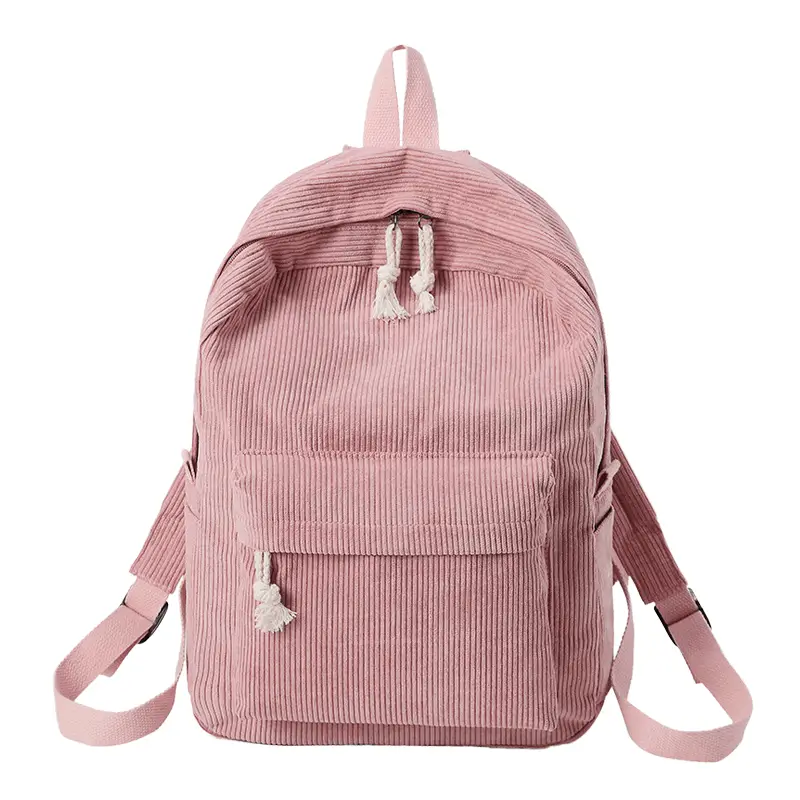
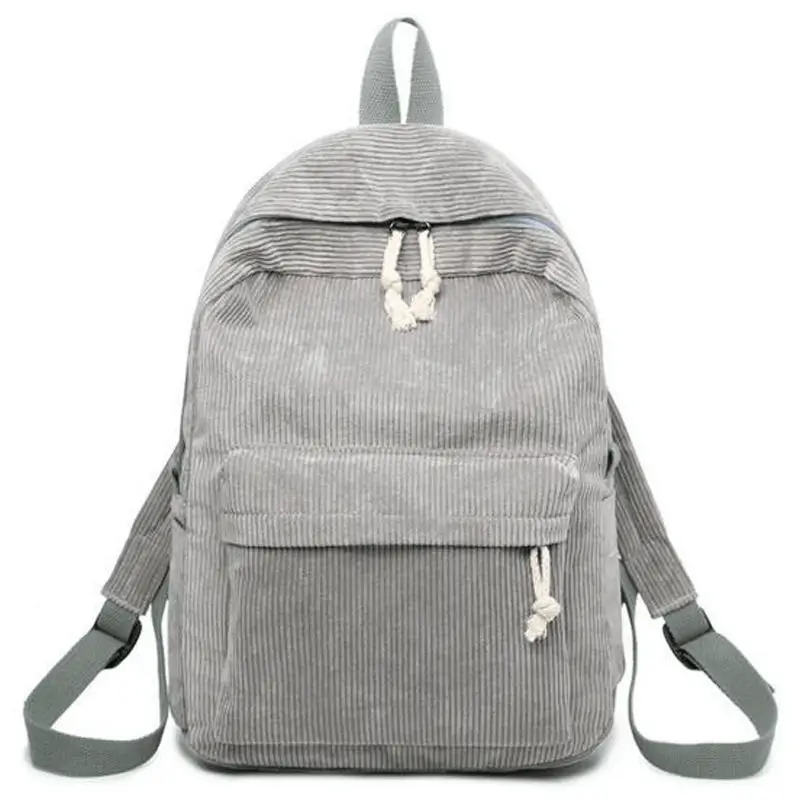
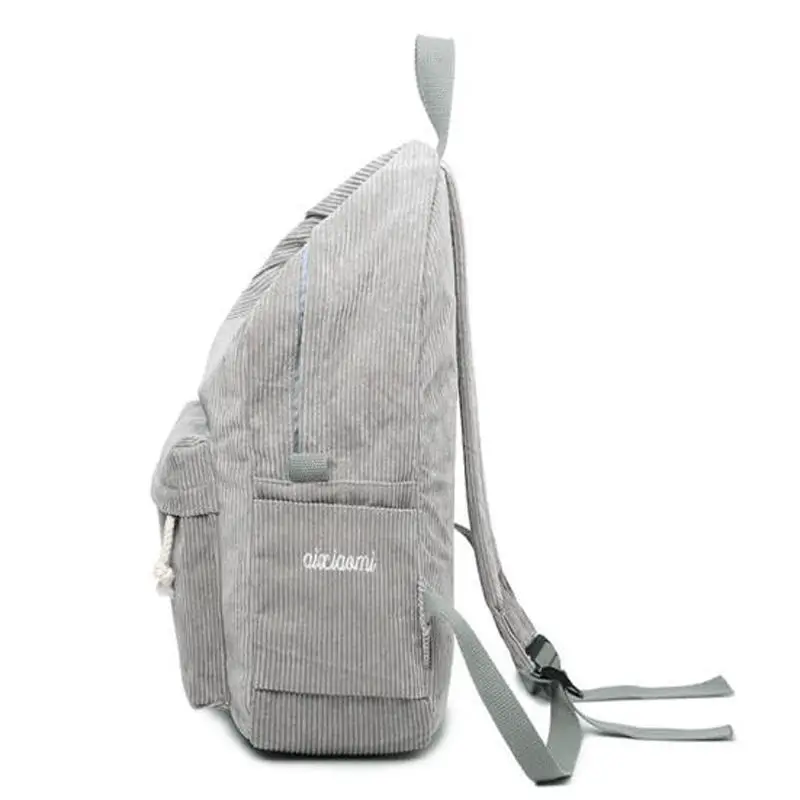
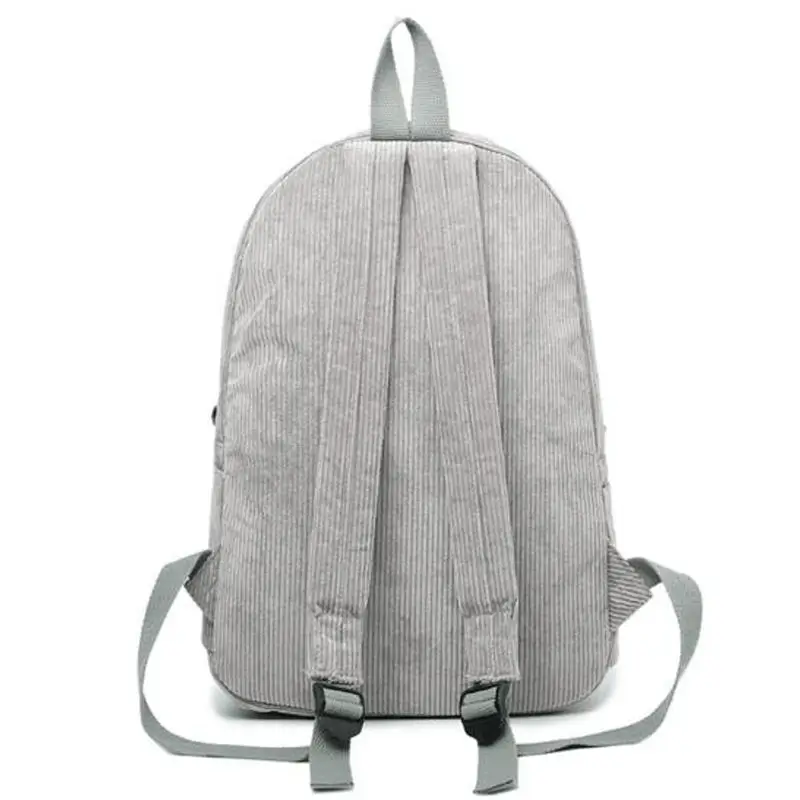
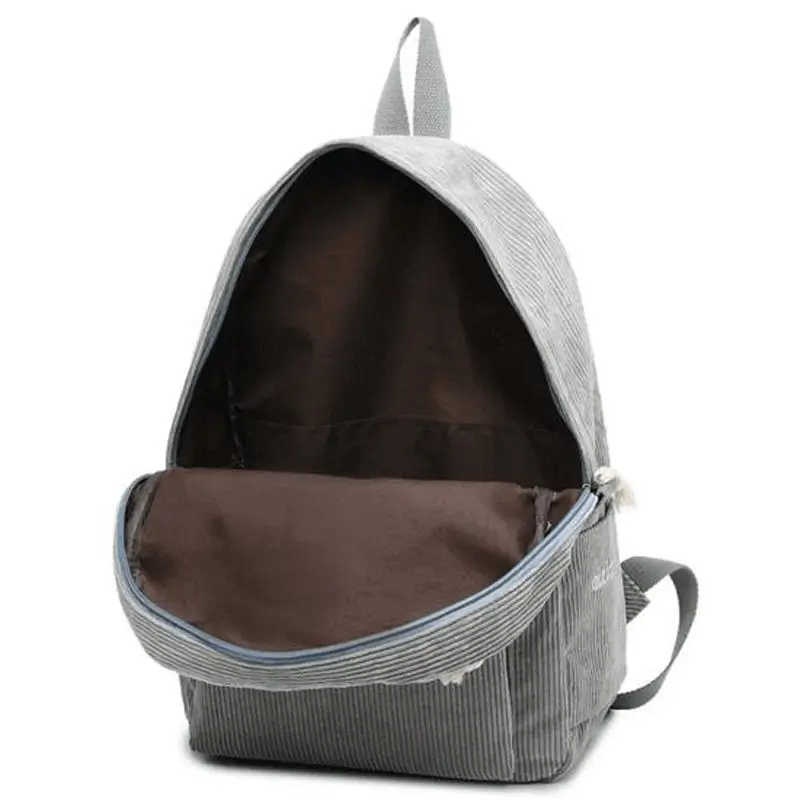
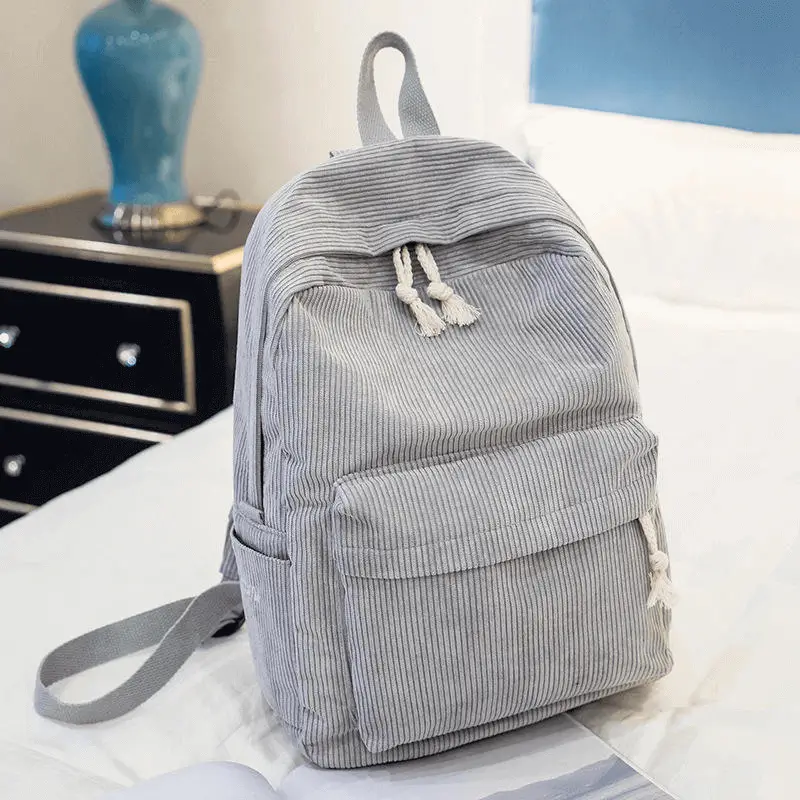
The body and front pocket show upright corduroy ribs, while the upper band runs across them. That change in direction is part of the reference design. Before selecting a colour, decide whether your version should keep that contrast or align the ribs throughout the visible panels.
Choose a texture with a swatch, not a fabric name
Compare rib spacing, pile height, hand feel and backing on actual material. Specify nap direction on the cutting pattern as well as the rib direction; review panels together under consistent light. The photographs do not establish cotton content, an 8-wale count or a fabric weight. A softer shell may need a different support layer to hold the rounded top and front pocket.
The dark lining deserves its own decision
The open grey reference shows a dark brown-looking interior and a broad curved opening. It does not establish laptop padding or a detailed organizer layout. Select a lining colour that helps users see their contents, then sketch any zip pocket, slip section or key loop you want added. Confirm that the front pocket remains easy to use once the main compartment is filled.
Rope pulls, straps and stitching can change together
The pale knotted pulls are visible on both the main and front zippers. Set cord thickness, exposed length and end finish with the zipper specification. The back view shows adjustable webbing beneath corduroy-faced shoulder straps; specify the adjustment range and finished strap width on a sample. Embroidery, a woven label or a small patch can be discussed, but each should be reviewed on the pile surface before the final position is fixed.
Choose how far the development should go
A brand mark on the existing outline is one route. A new size, changed pocket opening, different lining or revised strap pattern is a broader OEM brief. For an ODM project, send the target retail use, contents and visual references so a proposed pattern can be reviewed. The scope, sample work and component minimums should be clear before the project is priced.
Fabric & colour
Compare available corduroy qualities and colour swatches; confirm composition, weight, backing and colour requirements.
Pattern & storage
Develop body proportions, front and side pocket openings, internal sections and strap lengths around actual contents.
Finish & presentation
Review embroidery or labels, rope pulls, zipper finish, care label wording, hangtags and retail packaging as separate choices.
Keep one sample set for the factory and material suppliers
Retain the approved shell, lining, rope, zipper tape and webbing with the finished sample. Mark nap arrows and panel orientation on the pattern, record finished measurements and approve any material substitution before cutting. Agree packing so the pile and rounded top can be reviewed after unpacking. This connects the fabric supply, sewing brief and repeat-order check to the same reference.
Discuss corduroy quality, colour, rib and nap direction, body size, pocket openings, internal storage, shoulder straps, rope pulls and packaging. Mark which items change from the reference so sampling and material sourcing can be scoped separately.
Is this an 8-wale cotton corduroy backpack?
The surface is visibly ribbed, but the available images do not verify fibre composition or wale count. Request a physical swatch and a written material specification before using cotton content, fabric weight or rib-count claims in your own product listing.
Can embroidery be added to the corduroy surface?
Embroidery can be discussed alongside a woven label or a patch. Review stitch size, backing and placement on the selected pile fabric so fine detail stays readable without flattening a large area. Confirm the result on the actual material before approving production.
Can we change the lining and add an organizer?
Yes, propose the lining colour and the items an organizer should hold. The open reference shows a dark interior but does not prove a laptop sleeve or fixed pocket layout. Agree a drawing and test the added sections with the intended contents in a sample.
What size and capacity is the reference backpack?
No verified measurements, litre capacity or finished weight accompany these images. The former 16-litre and 490-gram descriptions should not be treated as approved specifications. Send your contents and target dimensions, then request a measured sample.
How do you quote a custom corduroy backpack order?
Provide total units, colour quantities, fabric targets, pattern changes, artwork and packaging. The existing MOQ reference is 500 pieces, subject to confirmation. Ask for fabric minimums, sample scope and the production price to be stated against the same approved specification.